
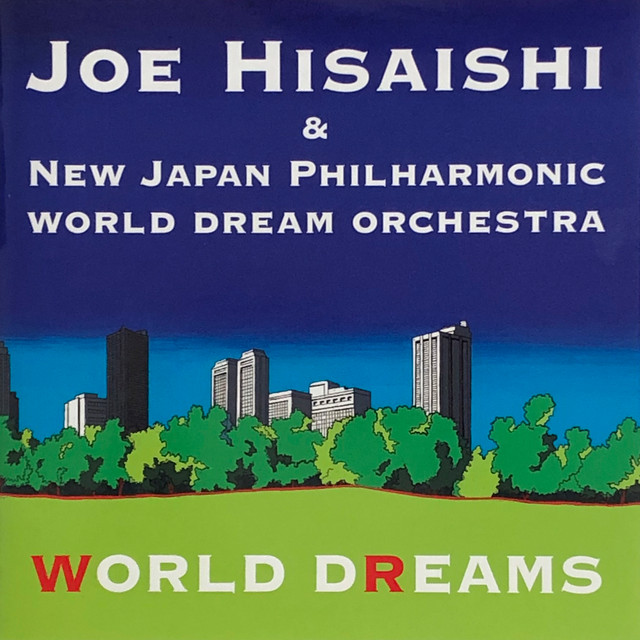
Album: World Dream Orchestra
A Conductor in Waiting
For much of the 1990s and into the early 2000s, when Joe Hisaishi performed with an orchestra, he did not stand on the podium. He sat at the piano.
The conducting was entrusted to Kim Hong-jae — a Korean-born conductor based in Japan with whom Hisaishi had built one of the most productive partnerships in Japanese concert life. The arrangement made obvious sense. Hisaishi was the composer, the pianist, the creative mind behind the music. Kim was the conductor. Between them, over years of concerts and recordings, a deep mutual trust had formed. The division of labour felt natural, even inevitable.
But when a new project began to take shape — a collaboration with the New Japan Philharmonic unlike anything Hisaishi had attempted before — he made a different choice. This time, he would stand on the podium himself.
The decision was not simply practical. It was, in some sense, philosophical. Hisaishi had been thinking about what it meant to be a complete musician. The historical record showed that the great composers of the past — Beethoven among them — had conducted their own music as a matter of course. They had not handed the baton to someone else. They had stood in front of the orchestra and taken responsibility for the sound. If he wanted to be, in the fullest sense of the word, a true musician — not only a composer, not only a pianist, but someone who could bring music to life in real time — he would have to learn to do the same.
The project was called World Dream Orchestra. And what happened in the course of making it changed the direction of his career.
A New Kind of Project
The concept Hisaishi had in mind was boldly, almost defiantly, populist. He wanted to build a programme around a suite called Hardboiled Orchestra — music for brass instruments playing at full force, generating heat, generating sweat, generating noise. Like eating hot ramen on a summer’s day, he later said. The discomfort was the point. The release that followed was the point.
Around this central suite, he began building the rest of the programme. He reached for pieces he had never arranged before — not his own music, but other composers’. Mission: Impossible. The James Bond theme. Music from the world of film and television that sat at the intersection of popular culture and orchestral craft. It was unfamiliar territory for him, and he found it instructive.
And yet something was wrong. He had the concept. He had the arrangements. He had the orchestra. But the more he worked, the more a question surfaced that he could not quiet: What am I actually trying to do with this? What, beyond the spectacle, was the reason for this music to exist?

A Piece Written Under Compulsion
The answer came from outside the music entirely.
As Hisaishi worked on the World Dream Orchestra project, the images that filled the news were of a world in crisis. Wars in Afghanistan and Iraq. Footage of civilians — ordinary people, children — fleeing through streets that had become unrecognisable. He found himself sitting with these images, unable to separate them from the work he was doing.
In his diary 35mm Nikki, he describes what happened next. He had been thinking about writing something in the spirit of a festive overture — a ceremonial piece, celebratory in character. Instead, what came to him was something quieter. Something that spoke in a different register. The melody that arrived was gentle, searching, and strangely hymn-like: not minor, not despairing, but carrying what he called a kind of national-anthem dignity. A melody that asked a question of its time rather than avoiding it.
Is this what we have lived for? Is this our dream?
He composed the piece in a state of unusual intensity — possessed, he said, was the only word for it. The full score for triple-wind orchestra was completed at a speed that surprised him. The title came without hesitation: World Dreams. And the name he had chosen almost casually for the project — World Dream Orchestra — suddenly revealed itself as something more than a label. It was the concept. It had been the concept all along.
The Moment the Orchestra Became One
The recording sessions took place in 2004. Recording days are, by their nature, professional occasions. Musicians arrive prepared. Tempos are agreed. Balance is adjusted. The work is done efficiently, because studio time is expensive and everyone has other commitments. Emotional display is generally considered a sign of insufficient preparation.
The session for World Dreams was different.
Before the first take, Hisaishi stepped onto the podium and spoke to the orchestra. He told them what the piece was about. He told them about the images that had been in his head while he composed it. He told them what question the music was trying to ask.
He had always believed, he writes in 35mm Nikki, that emotional intensity was the enemy of musical performance — that feeling too much in the moment was a distraction from the technical precision the music required. On this occasion, he could not hold to that principle. Something rose in him that he could not suppress. He raised his arms and began.
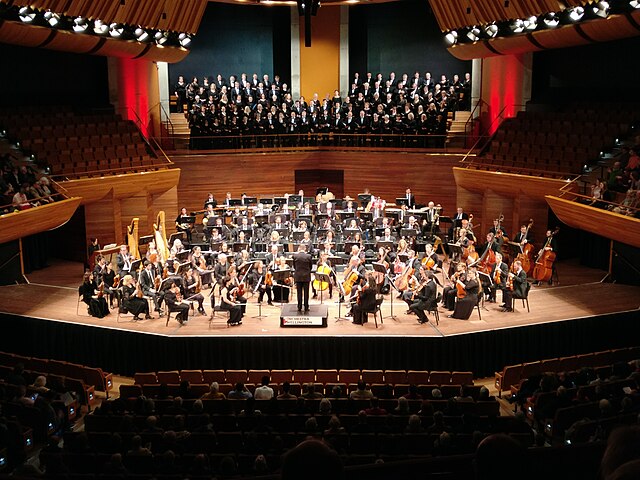
What came back at him from the orchestra was unlike anything he had ever heard. The musicians were not simply playing the notes. They were inside the music. And in that moment, he writes, they became one — Hisaishi and the New Japan Philharmonic, the conductor and the ensemble, the question and the sound.
The Door That Opened
World Dream Orchestra ran in two distinct phases. The first centred on Hardboiled Orchestra and the arrangements of other composers’ work — the project as originally conceived. The second evolved into something more personal: symphonic reworkings of Hisaishi’s own scores for Miyazaki’s films, reimagined for the concert hall with full orchestral forces.
But the significance of the project extends far beyond its repertoire. For Hisaishi, standing in front of the New Japan Philharmonic — not as a composer handing over a score to someone else, but as the person responsible for bringing the music to life in real time — was a transformation. He had trusted Kim Hong-jae with the baton for years, with great results. This was different. This was a sustained, committed engagement with conducting as a craft: with the physical and musical relationship between a conductor and an orchestra, with the way music changes when it is shaped by a living presence rather than written instructions.
It was a door. And once opened, he walked through it without looking back.
The conducting career that followed — the appearances with the Berlin Philharmonic, the recordings of Beethoven and Mahler and Dvořák, the annual concerts that have become landmarks in the European classical calendar — all of it traces back, in some essential way, to a project that began with brass instruments playing too loud in summer, and found its soul in a piece written for a world that had lost its way.
The question World Dreams asked has not dated. Hisaishi is still asking it, in every concert hall he enters.
Source: Joe Hisaishi, 35mm Nikki (Takarajimasha, 2007)
Listen to the album below.