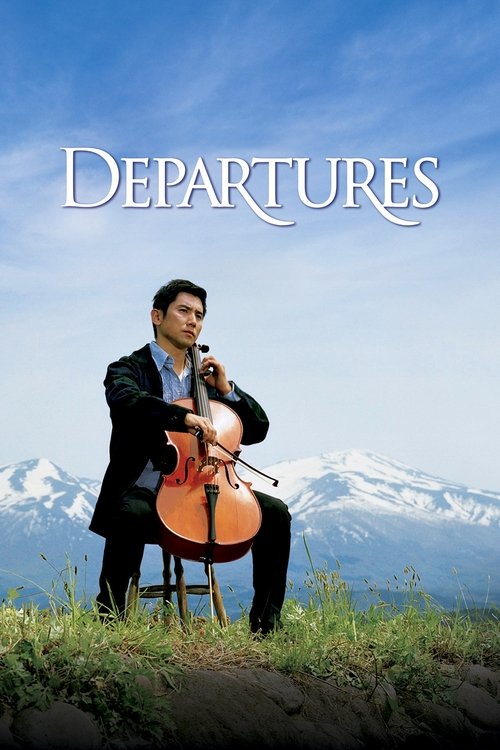
Yojiro Takita’s 2008 masterpiece “Departures” tells the deceptively simple story of Daigo, a cellist whose orchestra disbands, forcing him to return to his modest hometown with his wife. In a twist of fate that becomes the film’s emotional anchor, Daigo mistakenly applies for a job at what he believes is a travel agency, only to discover he’s been hired as an assistant undertaker. What unfolds is a profound meditation on mortality, tradition, and the unexpected dignity found in caring for the deceased—a subject rarely explored with such tenderness in cinema.
The film’s international success was remarkable, particularly in Europe where audiences embraced its contemplative approach to death and meaning. “Departures” became the first Japanese film in decades to achieve widespread European distribution and critical acclaim, earning the Academy Award for Best Foreign Language Film in 2009. European critics were particularly moved by the film’s humanistic perspective and its challenge to Western taboos surrounding death rituals. The movie resonated across the continent, sparking conversations about mortality and cultural practices that had largely faded from public discourse.
At the heart of this emotional resonance lies Joe Hisaishi’s extraordinary musical score, which elevates “Departures” from a touching drama to a transcendent cinematic experience. Hisaishi’s composition represents some of his finest work, demonstrating his masterful ability to distill complex human emotions into achingly beautiful melodies. The score functions not merely as accompaniment but as a central character in the narrative, often articulating what the characters cannot express in words.
Hisaishi employs a compositional strategy that mirrors the film’s exploration of beauty within taboo. The score juxtaposes serene, classical instrumentation—particularly the cello, Daigo’s own instrument—with subtle modern elements, reflecting the protagonist’s journey between his artistic past and unexpected present. The main theme, hauntingly beautiful and instantly recognizable, encapsulates the film’s central paradox: that death, while final, can be approached with grace and even reverence.
The music’s relationship to the visual narrative is particularly sophisticated. When Daigo performs the ritual washing and preparation of deceased bodies, Hisaishi’s compositions reach profound depths of emotional clarity. Rather than employing mournful or dramatic orchestration, the composer chooses restraint and delicacy. Solo cello passages float over gentle string arrangements, suggesting both the fragility and dignity of human life. This minimalist approach allows viewers to fully absorb the visual poetry of Takita’s cinematography while being emotionally guided by Hisaishi’s subtle instrumental conversations.
The score’s treatment of family relationships—particularly between Daigo and his estranged father—demonstrates Hisaishi’s psychological sophistication. Tender melodic phrases gradually build emotional complexity, mirroring Daigo’s own journey toward understanding and forgiveness. The music never manipulates; instead, it reveals emotional truths that complement the narrative’s gradual unfolding.
What distinguishes Hisaishi’s work here is his understanding that “Departures” required music capable of sanctifying the ordinary. His compositions transform the mundane tasks of an undertaker into moments of profound human connection. The score celebrates life through its contemplation of death, creating a musical experience that lingers long after the credits roll. For European audiences encountering this film, Hisaishi’s music became a universal language, transcending cultural boundaries and touching something essential in the human experience—our shared mortality and the beauty we can create in acknowledging it.