Takeshi Kitano’s 1991 film ‘A Scene at the Sea’ tells a deceptively simple yet profoundly moving story about a deaf garbage collector who discovers an abandoned surfboard and becomes determined to master the sport. Encouraged by his equally deaf girlfriend, the protagonist pursues his unlikely dream with quiet determination, transforming a piece of discarded trash into a gateway to personal transformation and joy. What could easily have been a conventional underdog narrative becomes, in Kitano’s hands, something far more poetic and contemplative—a meditation on human resilience, connection, and the pursuit of beauty in unexpected places.
The film marked an important moment in Kitano’s career, showcasing his ability to craft tender, humanistic stories beneath a deceptively minimalist surface. While it received respectful critical attention upon its release, ‘A Scene at the Sea’ has gradually gained recognition as one of Kitano’s most essential works, particularly among international audiences who appreciate its universal themes transcending cultural boundaries. European critics and cinephiles have come to regard it as a gem of 1990s cinema, a film that defies easy categorization and rewards repeated viewings with its careful attention to human dignity and quiet grace.
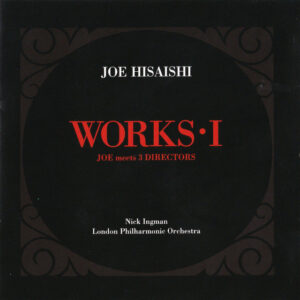
Yet the film’s emotional resonance owes immensely to Joe Hisaishi’s extraordinary musical score, which functions not merely as accompaniment but as a fundamental voice in the narrative itself. Hisaishi understood intuitively that a story about deaf characters required a score that communicated on levels beyond conventional dialogue. His approach transforms the music into a form of emotional expression that mirrors the characters’ own modes of communication—through gesture, observation, and feeling rather than words.
The score’s central motif is hauntingly beautiful, a gentle melodic theme that captures both the protagonist’s yearning dreams and the quiet contentment of his relationship with his girlfriend. Hisaishi employs this theme with remarkable restraint, allowing it to emerge and recede like waves, quite literally mirroring the film’s surfing sequences. The orchestration favors warm, organic timbres—strings, woodwinds, and piano predominate—creating an intimate, humanistic soundscape that never overwhelms the film’s delicate visual poetry.
What distinguishes Hisaishi’s work here is his compositional maturity and emotional intelligence. Rather than bombastic swells designed to manipulate viewer sentiment, he crafts subtle harmonic progressions and tender voicings that acknowledge the characters’ inner lives without sentimentality. When the protagonist sits alone with his surfboard, or shares a quiet moment with his girlfriend, Hisaishi’s music hovers gently, sometimes barely present, allowing the visual images their full dramatic weight while providing emotional context that deepens without dictating response.
The score’s later sequences, accompanying the surfing sequences, show Hisaishi at his most inventive. Here, the music becomes kinetic and flowing, capturing both the physical grace of surfing and the spiritual liberation it represents for the protagonist. Yet even these more energetic passages maintain the score’s essential character—they never descend into bombast, instead offering something more precious: the musical equivalent of wind and water, movement and freedom.
Ultimately, Hisaishi’s score for ‘A Scene at the Sea’ exemplifies why he remains one cinema’s greatest living composers. His music doesn’t just accompany Kitano’s images; it completes them, providing the emotional vocabulary for a story about characters whose own voices are silent. This is filmmaking and scoring at their most collaborative and profound.