
The Hidden Theme
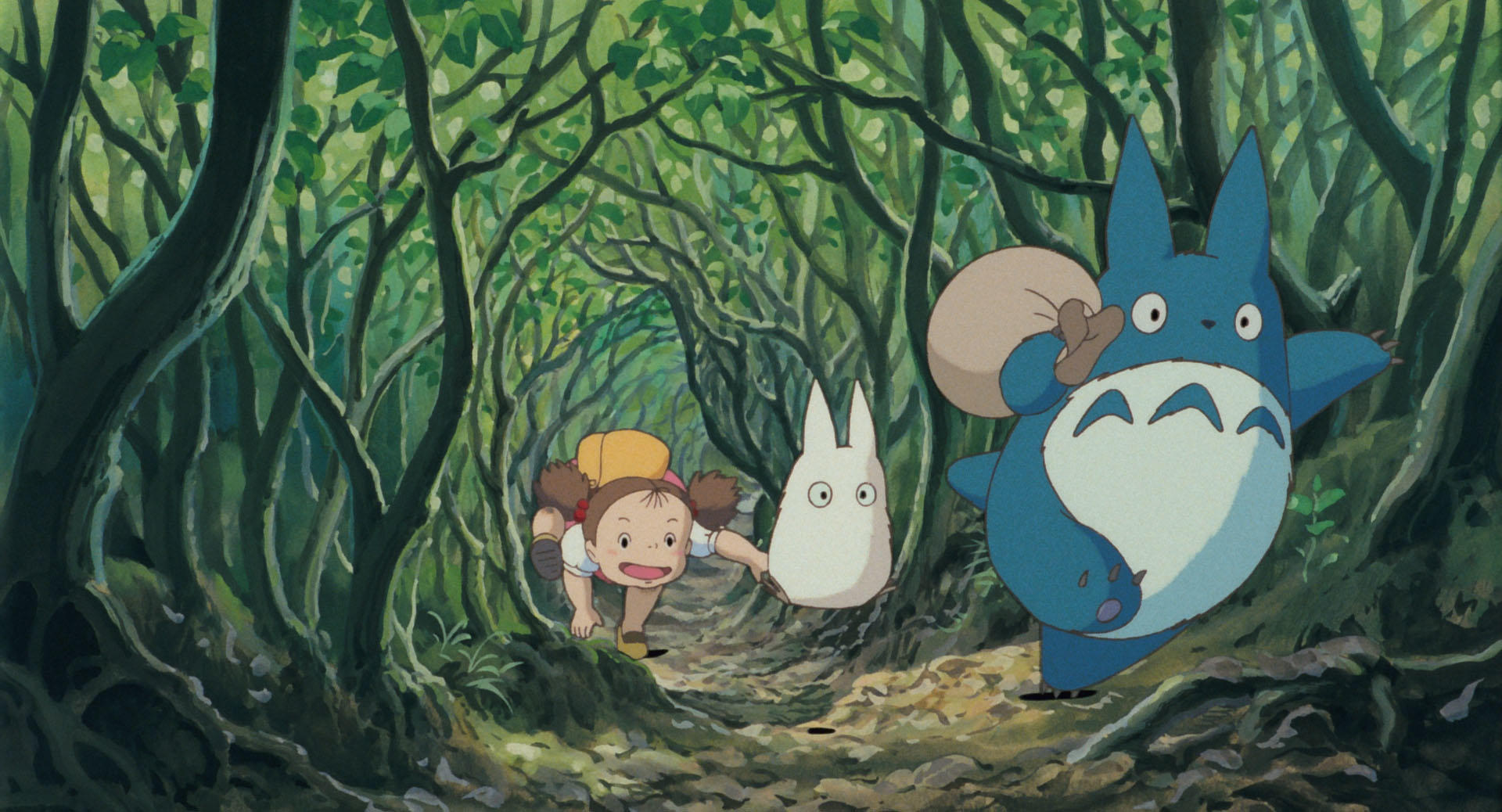
Ask anyone to name the music of My Neighbour Totoro, and they will almost certainly sing the same melody. The opening theme — cheerful, instantly recognisable, impossible to forget — has become one of the most beloved pieces of music in Japanese cinema. It is the sound of childhood, of summer, of something just beyond the ordinary world.
But Joe Hisaishi himself has called it the hidden theme of the film — the piece he considers the true emotional core of Totoro, running beneath the surface like a quiet current. The piece is Kaze no Toorimiichi — known in English as The Path of the Wind — and its story is as unusual as the music itself.
A Song Written for No Film
Kaze no Toorimiichi was not written for Totoro. It was not written for any film at all.
Hisaishi had composed the piece independently, holding onto it as something personal and unplaced — a melody he valued but had not yet found a home for. In the world of film composing, this is not unusual. Composers accumulate ideas, sketches, complete pieces that wait for the right moment. Most of them wait indefinitely. Some are absorbed into other works and lose their original identity. A few, very occasionally, find exactly the place they were always meant to be.
When Hisaishi watched the rushes of Totoro, something clicked into place. The feeling, as he later described it, was one of sudden certainty: this song was born to be used here. The ethnic quality of the melody, its particular atmosphere of stillness and natural wonder, seemed to fit the world of the film not as a compromise or an approximation, but as a perfect match. The piece had been waiting. The film had arrived.
The World of Totoro, as Hisaishi Saw It
To understand why Kaze no Toorimiichi belonged in Totoro, it helps to understand how Hisaishi thought about the film’s world. His account, written in 1992, is precise and revealing:
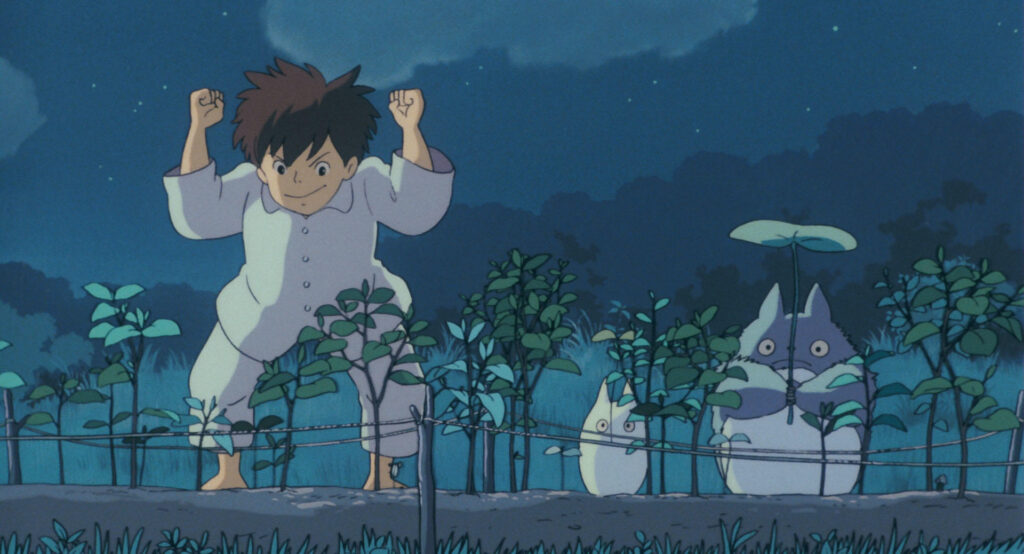
My Neighbour Totoro is not a dramatic film. The strange creature Totoro and the cat-bus enrich the imagination of the work — but they exist alongside a very realistic depiction of everyday detail: three children riding a bicycle together, a primary school classroom, the textures of rural life. Totoro and the cat-bus are seen from within this realistic dimension. This is not Disney fantasy. The world of Totoro emerges from the accumulation of ordinary events, and from the human warmth that runs beneath them.
Joe Hisaishi, I Am — Haruka Naru Ongaku no Michi e (1992)
This was a clear directive for the music. Fantasy scoring — the kind of broad, sweeping orchestration that signals wonder and magic — would have been wrong for a film that located its magic in the texture of the everyday. The music needed to feel rooted in the real world even as it evoked something just beyond it. Kaze no Toorimiichi, with its ethnic quality and its atmosphere of quiet, unhurried presence, embodied exactly this balance.
The Minimalist Underneath
Listeners who know Hisaishi’s broader work will recognise something in Kaze no Toorimiichi that goes beyond its surface beauty. Beneath the melody, the accompaniment moves in short, repeating patterns — the same brief figure cycling quietly while the tune unfolds above it. This is the logic of minimalist music: not development in the traditional sense, but repetition as a kind of sustaining pulse, a foundation that holds the listener in place while the melody does its work.
Hisaishi’s roots in minimalist composition — the music of Terry Riley and Steve Reich that had shaped his thinking since his student years — are audible here not as a statement or a technique on display, but as something more natural: a way of building a world. The repeating accompaniment figures in Kaze no Toorimiichi function like the sound of the forest itself, a continuous background presence against which the melody moves like light through leaves.
When the piece was later arranged for orchestra, this minimalist quality was not lost. The short accompanying patterns were woven into the fuller texture — distributed across instruments, layered and varied — but the underlying principle remained. The orchestra breathed with the same quiet rhythm that the original had established.
A Song That Never Stopped Evolving
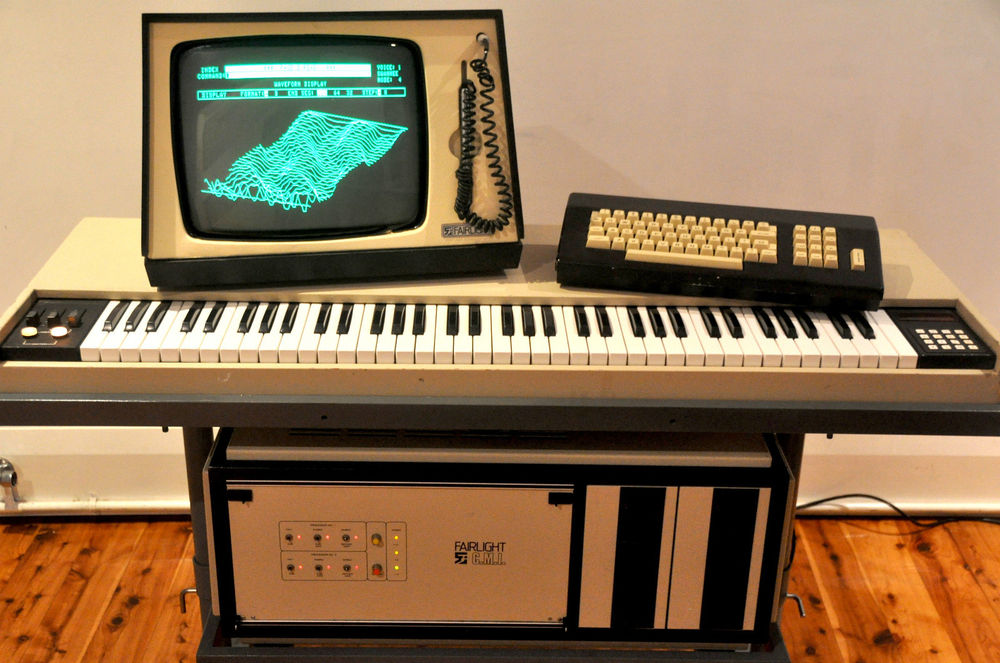
The original recording of Kaze no Toorimiichi was built from synthesisers — the layered, multi-timbral sound of the Fairlight CMI that defined so much of Hisaishi’s work in the late 1980s. It is a rich, slightly otherworldly sound: many voices woven together into something that feels both electronic and organic, both contemporary and ancient.
That was only the beginning.
In 1988, Hisaishi recorded a piano solo version for his album Piano Stories, where the piece appears under the alternative title The Wind Forest. Stripped of its synthesiser textures, the melody stood alone — intimate, exposed, and no less beautiful for the simplicity. A published score followed, allowing pianists around the world to encounter the piece on their own terms.
In concert, the piece continued to find new forms. From around 2000, Hisaishi began performing it as a duo — piano alongside a solo instrument, the melody passed between the two like a conversation. The clarinet came first, then the cello, then the violin. A 2006 performance with violinist Alexander Balanescu, filmed and shared online, became something of a phenomenon: the duo arrangement, with its extended cadenza in the final section, showed what the piece could do when given room to breathe and a second voice to speak with. The video spread widely, introducing the piece to listeners who had never encountered it in the film.
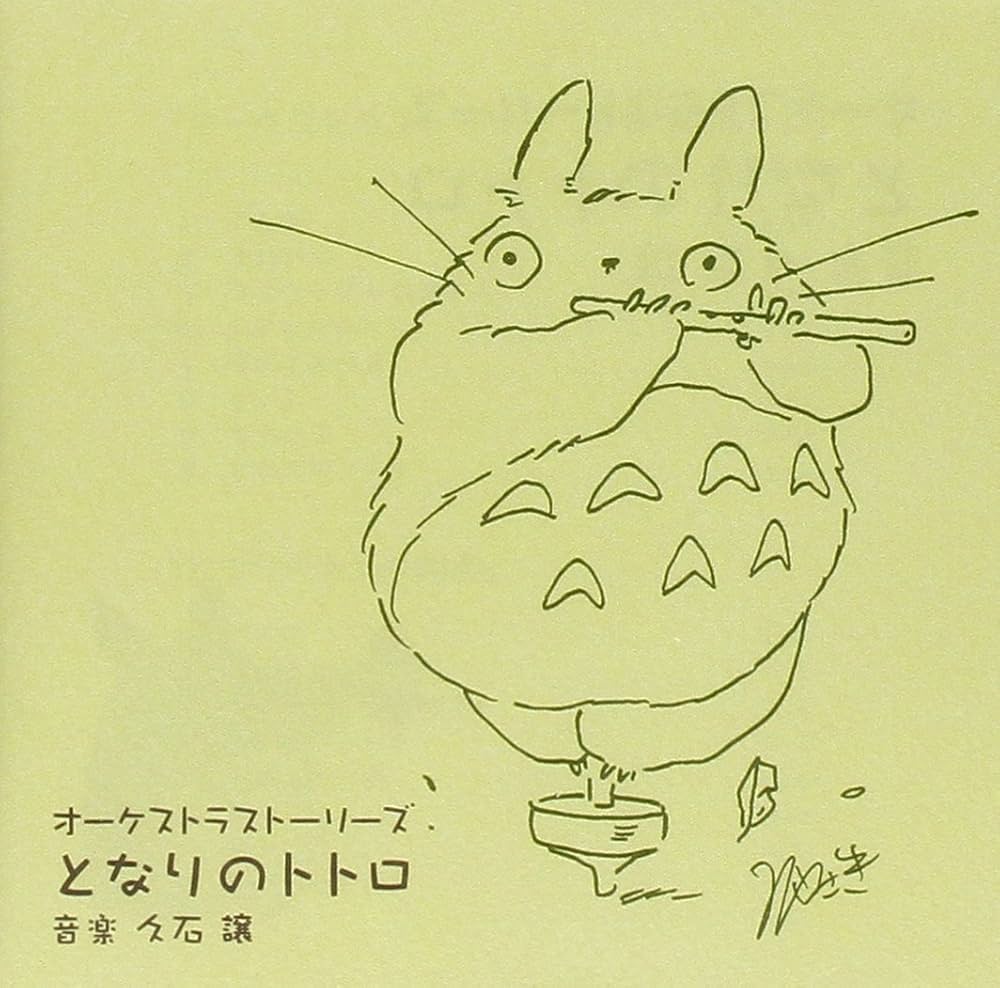
The orchestral versions added another dimension entirely. The 2002 recording with the New Japan Philharmonic, released as Orchestra Stories: My Neighbour Totoro, placed the piece at the heart of a full orchestral programme — its minimalist underpinning now expressed through strings, woodwinds, and the full orchestral palette. A published score followed, allowing the arrangement to travel beyond the recording. But Hisaishi did not stop there. The concert performances of subsequent years continued to develop and deepen the orchestration, each iteration drawing on the accumulated experience of the performances before it.
The orchestral journey did not end with the 2002 recording. In 2013, Hisaishi performed a new orchestral version at a public recording of the Yomiuri Nippon Symphony Orchestra’s Symphonic Live, later broadcast on Japanese television. The minimalist underpinning that had always been present became more pronounced — the repeating patterns more insistent, more structural, more central to the architecture of the arrangement. And the orchestral dynamics grew bolder: the contrasts between stillness and fullness, between the quiet forest and the wind moving through it, were drawn with a more confident hand. It was the same piece that audiences had known for twenty-five years, and yet it had grown into something larger.
Why It Endures
A piece of music that has existed in so many forms — synthesiser original, piano solo, duo with clarinet, duo with cello, duo with violin, full orchestra, percussion and keyboards — and that continues to evolve in live performance decades after its creation, is doing something that most music does not do. It is not being preserved. It is being lived in.
The reason, perhaps, is that Kaze no Toorimiichi was never just a film cue. It was a piece Hisaishi had written for himself, held close, and placed in the film only when he was certain it belonged there. That origin gives it a quality that purely functional music rarely has: the sense of a composer’s genuine attachment, the feeling that the piece matters to the person who wrote it in a way that goes beyond the commission or the deadline.
Combined with its minimalist foundations — the repeating patterns that sustain it, the ethnic quality that gives it its particular colour — and the film’s own philosophy of finding magic in the ordinary, the piece has proven itself to be one of those rare works of music that does not age. It simply deepens.
Some music settles. This piece has never stopped searching for its next form.
Sources: Joe Hisaishi, I Am — Haruka Naru Ongaku no Michi e (KADOKAWA, 1992)