
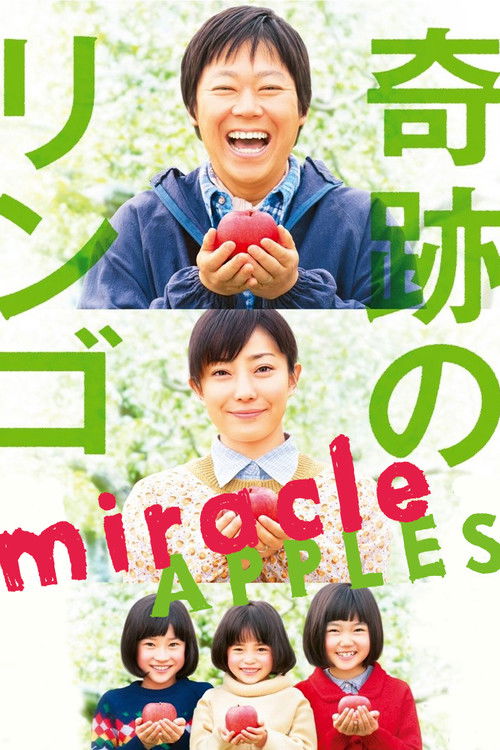
Yoshihiro Nakamura’s 2013 film ‘Miracle Apples’ tells the remarkable true story of Akinori Kimura, a determined farmer who decides to cultivate apples without chemical pesticides in Japan’s Aomori Prefecture. When his wife Mieko develops a severe allergic reaction to pesticides, Akinori makes the courageous decision to abandon conventional farming methods entirely. What follows is a decade-long odyssey of financial ruin, emotional despair, and ultimately, triumph. The film chronicles how this ordinary family’s extraordinary determination leads to a genuine agricultural miracle, transforming their impossible dream into reality and revolutionizing organic farming in Japan.
The film resonated deeply with Japanese audiences upon its release, becoming both a critical and commercial success. Viewers were captivated by its inspirational narrative and authentic portrayal of rural struggle, while international film festivals took notice of Nakamura’s sensitive direction and the film’s universal themes of perseverance and unconditional love. The story’s emotional authenticity—drawn directly from real events—gave the film a gravitas that elevated it beyond typical inspirational cinema, making it a meditation on sacrifice, faith, and human resilience that transcended cultural boundaries.
Yet it is Joe Hisaishi’s magnificent score that truly transforms ‘Miracle Apples’ into a spiritual experience. The legendary composer, celebrated for his decades-long collaboration with Hayao Miyazaki, brings his distinctive sensibility to this agricultural drama, creating music that serves as the film’s emotional heartbeat. Hisaishi understands intuitively that this is not merely a story about farming, but rather a profound journey of the human spirit. His score reflects this understanding through its thematic architecture and compositional philosophy.
The primary theme introduced early in the film embodies warmth and hope, built upon gentle piano melodies supported by subtle orchestration. This motif represents Akinori and Mieko’s love and determination, recurring throughout the narrative as their emotional anchor. As the family’s circumstances worsen and financial despair deepens, Hisaishi’s music darkens considerably. The orchestration becomes sparse and minor-keyed, the piano notes isolated and fragile, mirroring Akinori’s psychological state as he confronts suicidal ideation. The composer masterfully conveys the weight of impossible choice through elongated silences and hesitant harmonic progressions.
What distinguishes Hisaishi’s approach is his refusal to provide easy emotional manipulation. Rather than overwhelming scenes with grandiose instrumentation, he employs remarkable restraint. During the film’s most devastating moments, solo cello or violin passages accompany the visuals, creating intimate vulnerability. This minimalist strategy proves far more emotionally penetrating than any orchestral surge could achieve, allowing viewers to sit with the characters’ pain rather than being swept away by it.
As the narrative approaches its miraculous turning point, Hisaishi gradually reintroduces fuller orchestration and major key tonalities. The original theme returns, transformed and enriched, now incorporating elements of nature—subtle representations of cherry blossoms and seasonal cycles. The final sequences feature sweeping string arrangements that celebrate not just agricultural success, but spiritual renewal. Hisaishi’s music suggests that the family’s miracle transcends mere commercial achievement, representing instead a triumph of human goodness and authentic living.
Hisaishi’s score for ‘Miracle Apples’ demonstrates why he remains one cinema’s greatest composers, creating music that illuminates the transcendent potential within ordinary human struggle.