
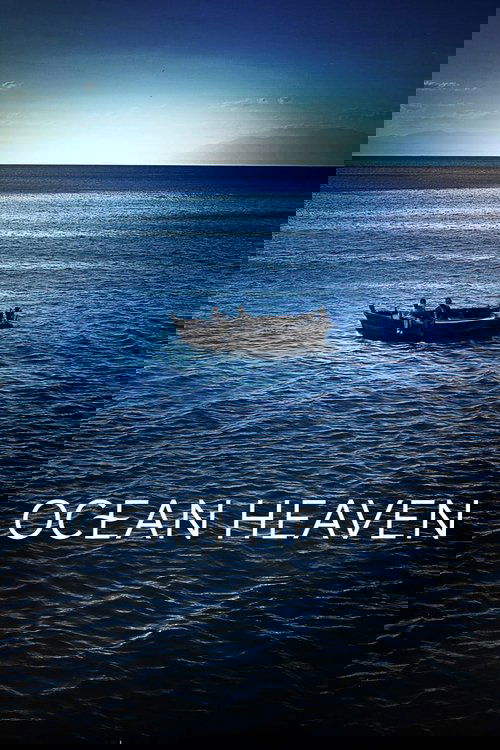
Ocean Heaven, the 2010 directorial debut of Chinese filmmaker Xue Xiaolu, tells the deeply moving story of a terminally ill father who dedicates his remaining time to teaching his autistic son the essential life skills needed to survive independently. Starring Geoffrey Rush as the father and Han Yun Ting as the son, the film is an intimate portrayal of unconditional parental love and the profound challenges families face when navigating autism and mortality. Rather than sensationalizing these heavy themes, the film opts for a gentle, observational approach that finds beauty in small moments of connection between parent and child.
Upon its release, Ocean Heaven resonated deeply with audiences across Asia and beyond, earning particular acclaim at international film festivals including the Tokyo Film Festival, where it won the Golden Audience Award. The film’s success wasn’t merely box office driven—it sparked important conversations about autism representation in cinema and the often-overlooked emotional labour of caregiving. European audiences, in particular, appreciated the film’s humanistic approach and its refusal to resort to melodramatic manipulation. The performances earned widespread praise, and critics acknowledged that the film’s emotional power stemmed from its authenticity and restraint.
Central to the film’s profound emotional resonance is the magnificent score by Joe Hisaishi, the legendary Japanese composer renowned for his work with Studio Ghibli and his distinctive ability to blend Western orchestral traditions with Japanese sensibilities. For Ocean Heaven, Hisaishi crafted a score that operates as a character in itself, serving as an invisible guide through the father-son relationship at the story’s heart. His compositional approach demonstrates remarkable sensitivity to the film’s quieter moments, where music becomes essential in communicating what words cannot express.
The score’s thematic foundation rests upon a central motif of profound simplicity—a gentle, ascending piano melody that represents the father’s love and his determination to leave a lasting legacy. This theme appears throughout the film in various incarnations, evolving and deepening as the narrative progresses. What makes Hisaishi’s work particularly masterful is how he resists the temptation to overwhelm these scenes with orchestral grandeur. Instead, he often keeps the arrangement sparse, allowing silence and space to breathe alongside the music, creating moments of devastating intimacy.
Hisaishi’s orchestration skillfully mirrors the visual storytelling, with his use of light strings and solo piano often accompanying scenes of tender instruction or breakthrough moments between father and son. When the film requires emotional climaxes, the composer gradually builds layers—adding subtle woodwind textures, carefully placed strings, and reserved brass work—rather than relying on sudden emotional explosions. This measured approach respects both the audience’s intelligence and the characters’ emotional journeys.
What distinguishes Hisaishi’s score is his understanding that autism and terminal illness need not be scored with melancholy darkness. Instead, he finds moments of quiet joy, gentle humour, and profound hope woven throughout his music. The score celebrates the father’s resourcefulness and the son’s small victories, suggesting that even within profound limitation and impending loss, life contains moments of genuine beauty and connection. This perspective elevates Ocean Heaven beyond a simple tragedy into something far more complex and ultimately more humanising—a meditation on love’s transformative power that Hisaishi’s magnificent score perfectly encapsulates.