
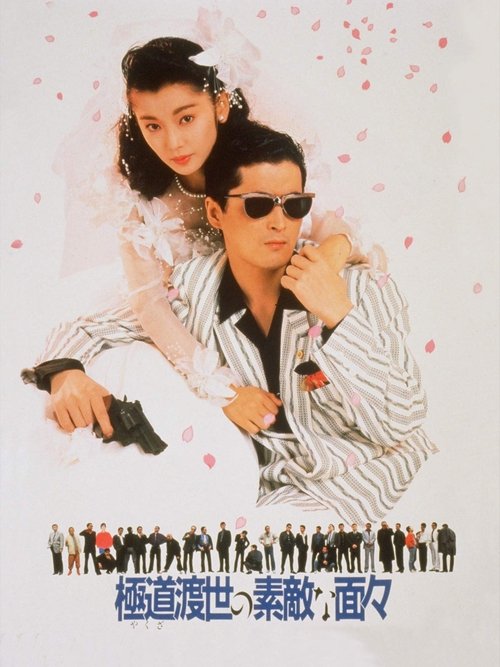
Released in 1988, ‘Those Swell Yakuza’ directed by Seiji Izumi presents a compelling narrative of transformation and redemption within Japan’s criminal underworld. The film follows Ryo, a young man whose banking career collapses under the weight of gambling debts. When a brutal beating leaves him desperate and broken, a powerful yakuza boss intervenes, offering salvation in exchange for loyalty. Ryo accepts this dark bargain and begins his initiation into the yakuza lifestyle, setting the stage for a gripping exploration of honor, obligation, and identity within organized crime.
Upon its theatrical release, ‘Those Swell Yakuza’ garnered considerable attention within Japanese cinema circles and established itself as a notable entry in the yakuza film genre that had flourished throughout the 1970s and 1980s. The film resonated particularly with audiences who appreciated its nuanced character development and refusal to present the yakuza world through purely sensationalized or glorified lenses. European distributors recognized the film’s quality, introducing it to art house cinemas across the continent where it found appreciative audiences among film enthusiasts interested in authentic Japanese cinema. The picture contributed meaningfully to the broader international appreciation of yakuza films during this era, demonstrating that the genre possessed thematic depth beyond conventional action narratives.
The true revelation of ‘Those Swell Yakuza,’ however, lies in Joe Hisaishi’s extraordinary musical composition. Hisaishi, already establishing himself as one of Japan’s most innovative film composers, crafted a score that elevates the narrative to remarkable emotional heights. His compositional approach balances traditional Japanese instrumental textures with contemporary orchestral elements, creating a soundscape that feels both culturally specific and universally resonant. The score demonstrates Hisaishi’s characteristic sophistication—avoiding melodrama while maximizing emotional impact through carefully chosen harmonic progressions and instrumental combinations.
The music accompanying Ryo’s initial descent into yakuza life carries a haunting quality, with minor key themes suggesting both danger and melancholic inevitability. As the narrative progresses and Ryo becomes increasingly immersed in his new world, Hisaishi’s orchestration grows more complex, layering traditional shamisen-influenced passages with strings and brass that suggest the psychological tension consuming his protagonist. Particularly effective are the quieter moments—scenes of introspection or moral reckoning—where Hisaishi employs sparse, contemplative arrangements that force viewers to confront the human cost of Ryo’s choices.
Hisaishi’s thematic development reveals his mastery of leitmotif, with distinct musical phrases representing key characters and emotional states. The yakuza boss’s theme, for instance, combines authoritative bass lines with surprisingly sympathetic melodic elements, reflecting the complexity of this mentor figure who offers both protection and peril. The composer never allows his music to judge the characters; instead, he creates sonic environments that illuminate their internal struggles and moral ambiguities.
The score’s orchestration deserves particular praise for its restraint and precision. Rather than overwhelming scenes with lush sentimentality, Hisaishi employs selective instrumentation that creates intimate connections between viewers and characters. His use of silence and dynamic contrast provides breathing room, allowing emotional moments to resonate powerfully without manipulation.
‘Those Swell Yakuza’ stands as a testament to how exceptional film music can transform a compelling narrative into something genuinely transcendent. Hisaishi’s score remains a masterclass in dramatic composition, demonstrating why he would go on to become one of cinema’s most celebrated composers.