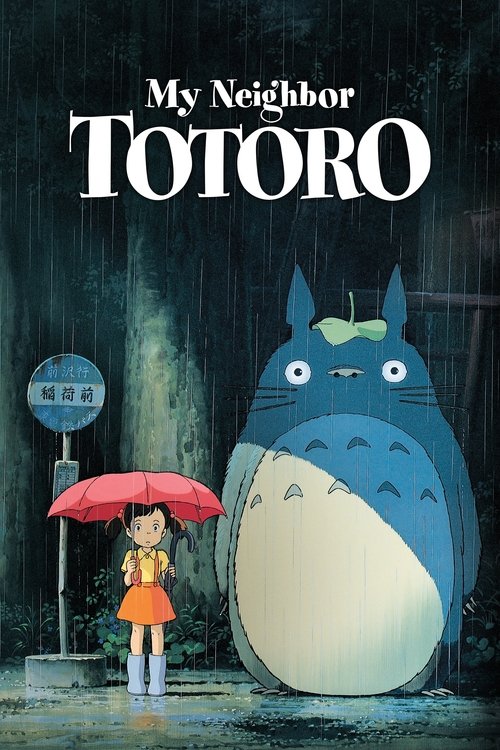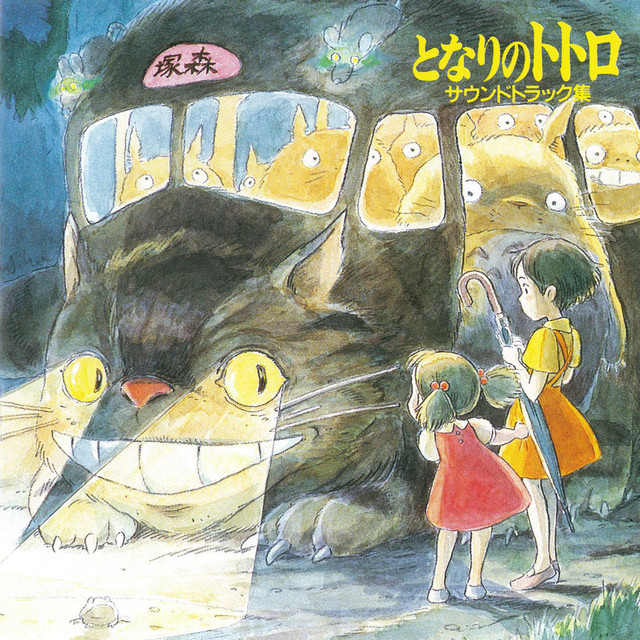
Album: となりのトトロ サウンドトラック集
When Joe Hisaishi sat down to compose the ending theme for Studio Ghibli’s beloved “My Neighbor Totoro,” he faced a fascinating creative challenge. How do you write music for a film that deliberately avoids dramatic peaks and explosive moments? How do you create memorable themes when the story itself is built on quiet, everyday magic rather than epic adventure?
The answer lay in Hisaishi’s groundbreaking approach to blending ethnic instrumentation with traditional orchestral arrangements—a technique he had been refining since his work on “Nausicaä of the Valley of the Wind.” For the Totoro soundtrack, this fusion became more than just a stylistic choice; it became the key to avoiding what Hisaishi called “an ordinary children’s movie.”
“If I wrote purely orchestral music,” Hisaishi reflected, “it would become just another typical children’s film.” This insight drove him to infuse the Totoro theme with minimalist music elements and ethnic atmospheres that would distinguish it from conventional animated soundtracks. The ending theme exemplifies this philosophy perfectly, weaving together Western orchestral traditions with subtle world music influences that give the piece its distinctive character.
The composer’s hands-on approach extended beyond composition into performance. Remarkably, Hisaishi played the tabla percussion himself, recording these ethnic drum sounds to sample throughout the soundtrack. This personal investment in every sonic detail reflects his deep commitment to achieving the exact atmospheric balance he envisioned. The tabla’s warm, resonant tones provide an earthly foundation that grounds the more ethereal orchestral elements, creating a sonic landscape that feels both familiar and wonderfully foreign.
The structural philosophy behind the Totoro soundtrack reveals Hisaishi’s sophisticated understanding of narrative music. He organized the album around two main themes—”Sanpo” (the opening walking song) and “My Neighbor Totoro” itself—while introducing what he called a “hidden theme” in “The Path of the Wind.” This latter piece, used during the film’s tree-growing sequences, demonstrates how Hisaishi could create musical storytelling without overwhelming the gentle visual narrative.
Perhaps most intriguingly, Hisaishi initially conceived the soundtrack as a collection of songs rather than instrumental pieces. He believed that the film’s abundance of everyday sequences would benefit more from vocal music, which could provide clearer emotional direction than purely instrumental compositions. This decision speaks to his acute awareness of how different musical approaches serve different storytelling needs.
The ending theme itself showcases this delicate balance beautifully. Written in a comfortable major key with a moderate tempo that mirrors a child’s natural walking pace, the melody floats over gentle percussion patterns that include those personally recorded tabla samples. The orchestration carefully layers strings and woodwinds without ever becoming bombastic or overwhelming, maintaining what Hisaishi described as his commitment to avoiding “strong music” that might separate from the screen action.
This restraint required extraordinary compositional skill. As Hisaishi acknowledged, working with such a non-dramatic story meant walking a tightrope—too little musical character and the songs would become forgettable nursery rhymes; too much and they would overpower the film’s subtle emotional landscape. The ending theme navigates this challenge by embedding its memorable melody within carefully crafted harmonic progressions that feel both sophisticated and accessible.
The ethnic elements in the Totoro soundtrack weren’t merely decorative additions but served a deeper aesthetic purpose. By incorporating these sounds, Hisaishi created a musical world that felt simultaneously local and universal—rooted in specific cultural traditions yet speaking a musical language that transcended cultural boundaries. This approach proved prophetic, as the Totoro soundtrack has found devoted audiences worldwide, introducing countless listeners to this unique fusion of musical styles.
Looking at the ending theme within this broader context, we can hear how Hisaishi’s philosophy manifests in specific musical choices. The gentle rhythmic pulse, the careful dynamics that never push too forcefully, the way ethnic percussion elements support rather than dominate the melodic line—all these decisions reflect a composer who understood that sometimes the most powerful music is also the most restrained.
This compositional approach has influenced generations of film composers and continues to demonstrate how thoughtful musical restraint can create lasting emotional impact. In an industry often obsessed with bigger, louder, and more dramatic musical statements, Hisaishi’s work on Totoro remains a beautiful reminder that sometimes the most profound musical moments come from knowing exactly when not to overwhelm the silence.
- さんぽ-オープニング主題歌-Read Review
- 五月の村Read Review
- オバケやしき!Read Review
- メイとすすわたりRead Review
- 夕暮れの風Read Review
- こわくないRead Review
- おみまいにいこうRead Review
- おかあさんRead Review
- 小さなオバケRead Review
- トトロRead Review
- 塚森の大樹Read Review
- まいごRead Review
- 風のとおり道(インストゥルメンタンル)Read Review
- ずぶぬれオバケRead Review
- 月夜の飛行Read Review
- メイがいないRead Review
- ねこバスRead Review
- よかったねRead Review
- となりのトトロ-エンディング主題歌-Now Playing
- さんぽ(合唱つき)Read Review