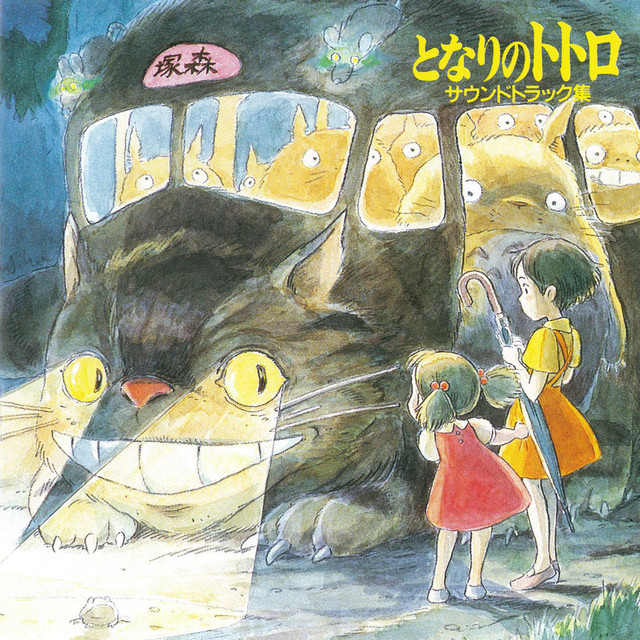
Album: となりのトトロ サウンドトラック集
In the gentle world of Studio Ghibli’s My Neighbor Totoro, there exists a moment where childhood terror transforms into magical discovery. The song “Kowaku nai” (It’s Not Scary) from the film’s soundtrack captures this delicate emotional shift with remarkable subtlety, embodying Joe Hisaishi’s philosophy that sometimes the most profound musical statements are the quietest ones.
Hisaishi faced an unusual challenge when scoring Totoro. Unlike the epic narratives of previous Ghibli films, this story centered on everyday moments – children moving to a new home, playing in gardens, waiting for their father at a bus stop. The composer realized that conventional orchestral approaches would reduce the film to “an ordinary children’s movie,” as he later reflected. Instead, he needed to find a musical language that could elevate the mundane into something extraordinary without overwhelming the gentle narrative.
The solution lay in what Hisaishi calls his “ethnic and orchestral” approach, a technique he’d been developing since Nausicaä. Rather than relying solely on traditional Western orchestration, he wove minimalist musical elements with ethnic instrumentation to create an atmosphere that felt both familiar and otherworldly. This approach becomes particularly evident in “Kowaku nai,” where the reassuring melody floats over a foundation that includes tabla rhythms – percussion that Hisaishi recorded himself, adding an intimate, handcrafted quality to the ethereal soundscape.
The song’s title itself reveals Hisaishi’s understanding of childhood psychology. Fear and wonder often occupy the same emotional space for children – the dark forest that might contain monsters could just as easily hide friendly spirits. “Kowaku nai” doesn’t dismiss childhood fears but gently transforms them. The melody, written in a warm major key with a moderate tempo that mirrors a calm heartbeat, provides musical comfort while maintaining enough mystery to preserve the magic.
Hisaishi’s decision to create what he called “weak music” for Totoro wasn’t born from artistic timidity but from deep understanding of the story’s needs. He recognized that dramatic, soaring themes would disconnect from the film’s intimate scale. Instead, he crafted music that breathed with the characters, supporting rather than driving their emotional journey. “Kowaku nai” exemplifies this approach – it’s music that wraps around the listener like a warm blanket rather than demanding attention through volume or complexity.
The composer’s choice to incorporate his own tabla performance adds another layer to the creative process. In an era when film composers increasingly relied on synthesized sounds, Hisaishi’s hands-on approach connected him physically to the music. The subtle ethnic percussion in “Kowaku nai” carries the literal imprint of his touch, creating an authenticity that programmed sounds couldn’t match. This personal investment reflects his belief that film music should emerge from genuine emotional understanding rather than technical proficiency alone.
When developing the soundtrack structure, Hisaishi identified what he called “back themes” – melodies that would support the more prominent songs like “Sanpo” and the main Totoro theme. “Kowaku nai” functions as one of these supporting elements, but its role proves crucial in moments where the film transitions between reality and fantasy. The song’s gentle ethnic influences help establish the magical realism that defines Totoro’s world, where supernatural encounters feel natural rather than jarring.
The challenge of scoring predominantly daily-life sequences led Hisaishi to initially consider a song-based approach for the image album, believing that vocals would better define scene imagery than instrumental music. However, the final film score demonstrates how his instrumental compositions could carry equal emotional weight. “Kowaku nai” proves that wordless music can speak directly to childhood experiences – the song communicates safety and wonder without needing lyrics to explain its meaning.
Hisaishi’s concern about creating music that might “detach from the screen” shaped every compositional choice in Totoro. “Kowaku nai” succeeds precisely because it never competes with the visual narrative. Instead, it becomes part of the film’s emotional architecture, building bridges between scenes and providing continuity for the viewer’s journey through this gentle fantasy world.
The lasting impact of “Kowaku nai” lies in its demonstration that film music can comfort without condescending. Hisaishi created a sound that speaks to children without talking down to them, acknowledging their capacity for both fear and courage. In doing so, he crafted not just a soundtrack cue but a musical embodiment of childhood’s most essential lesson – that the unknown, approached with curiosity rather than terror, often reveals wonders beyond our imagination.
- さんぽ-オープニング主題歌-Read Review
- 五月の村Read Review
- オバケやしき!Read Review
- メイとすすわたりRead Review
- 夕暮れの風Read Review
- こわくないNow Playing
- おみまいにいこうRead Review
- おかあさんRead Review
- 小さなオバケRead Review
- トトロRead Review
- 塚森の大樹Read Review
- まいごRead Review
- 風のとおり道(インストゥルメンタンル)Read Review
- ずぶぬれオバケRead Review
- 月夜の飛行Read Review
- メイがいないRead Review
- ねこバスRead Review
- よかったねRead Review
- となりのトトロ-エンディング主題歌-Read Review
- さんぽ(合唱つき)Read Review