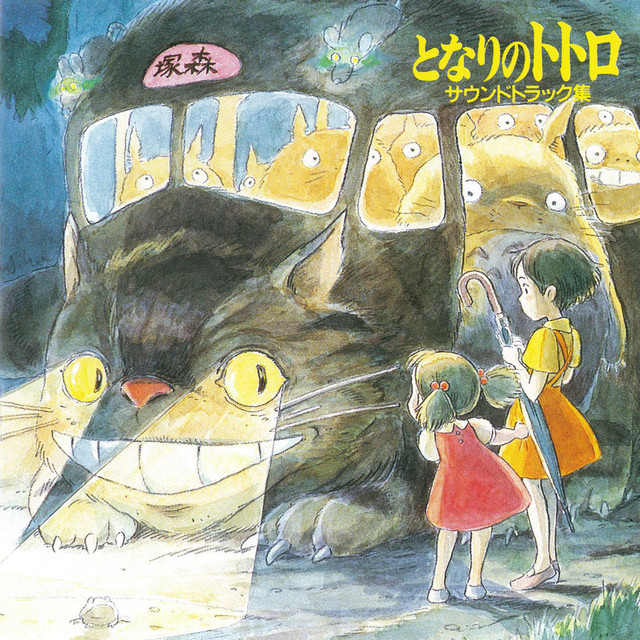
Album: となりのトトロ サウンドトラック集
When Joe Hisaishi sat down to compose the soundtrack for My Neighbor Totoro, he faced an unusual challenge. Unlike the grand adventures of Nausicaä or the sweeping narratives of future Studio Ghibli films, Hayao Miyazaki had presented him with something far more subtle: a collection of quiet, everyday moments centered around two young girls discovering magic in the mundane. Among the gentle pieces that emerged from this creative process, “Yugure no Kaze” (Evening Breeze) stands as a perfect example of Hisaishi’s innovative approach to scoring what he called the most difficult type of film – one without strong dramatic peaks.
The challenge wasn’t just musical; it was philosophical. How do you create compelling music for a story that deliberately avoids conventional drama? Hisaishi’s solution involved rethinking the very nature of film music itself. Rather than relying solely on traditional orchestral arrangements, which he felt would result in “an ordinary children’s movie,” he developed a hybrid approach that would become one of his signature innovations.
“Yugure no Kaze” exemplifies this philosophy beautifully. The piece opens with a delicate interplay between Western orchestral strings and subtle ethnic percussion elements, creating an atmosphere that feels both familiar and otherworldly. Hisaishi personally performed the tabla parts heard throughout the soundtrack, sampling his own performances to achieve exactly the right texture. This hands-on approach reflects his belief that the composer must be intimately involved in every aspect of the sound creation process.
The track unfolds in a gentle 4/4 time signature, beginning in a contemplative minor key before shifting to brighter major tonalities as the melody develops. Woodwinds carry the main melodic line, supported by pizzicato strings that mirror the hesitant footsteps of children exploring an enchanted forest. What makes the piece remarkable is how it achieves emotional depth without ever becoming overpowering – a crucial balance for a film where the magic lies in suggestion rather than spectacle.
Hisaishi’s approach to “Yugure no Kaze” and the entire Totoro soundtrack represented a continuation of ideas he’d been developing since his work on Nausicaä. The integration of ethnic and orchestral elements wasn’t just stylistic – it was structural. He understood that purely Western orchestral music might work against the film’s Japanese sensibility and its celebration of nature’s spirits. By incorporating minimalist techniques and ethnic instrumentation, he created what he calls a “back theme” – music that supports the narrative without overwhelming it.
The creation process itself was unconventional. Recognizing that Totoro’s strength lay in daily-life sequences rather than dramatic action, Hisaishi initially created an image album consisting primarily of songs rather than instrumental pieces. He believed that vocal melodies would help define the emotional landscape of scenes that might otherwise feel too abstract. “Yugure no Kaze,” while instrumental in the final soundtrack, carries this vocal sensibility in its memorable, singable melody line.
This approach required extraordinary restraint from a composer known for his emotional range. Hisaishi deliberately avoided “strong music,” fearing it would disconnect from the gentle visuals. The result, particularly audible in “Yugure no Kaze,” is music that breathes with the film rather than driving it forward. The piece ebbs and flows like actual evening wind, never announcing itself but always present, always supportive.
The track also demonstrates Hisaishi’s understanding of childhood psychology. The melody contains enough complexity to engage adult listeners while remaining simple enough for children to internalize. This dual accessibility required careful attention to harmonic progression – sophisticated enough to avoid condescension, accessible enough to feel immediate and natural.
Perhaps most importantly, “Yugure no Kaze” represents Hisaishi’s solution to the fundamental problem of scoring subtle narratives. By creating music that exists in the space between traditional film scoring and pure atmospheric composition, he found a way to enhance storytelling without overwhelming it. The piece never fights for attention, never demands emotional response, yet it quietly shapes our understanding of the characters’ emotional journey.
Listening to “Yugure no Kaze” today, over three decades after its creation, reveals the prescience of Hisaishi’s approach. In an era increasingly dominated by bombastic film scores, his gentle integration of diverse musical elements feels both revolutionary and timeless. The track serves as a reminder that the most powerful film music often works through subtlety rather than force, through suggestion rather than statement. In solving the puzzle of how to score the unscoreable, Hisaishi created not just a successful soundtrack, but a new model for how music can serve story in the most delicate and effective ways possible.
- さんぽ-オープニング主題歌-Read Review
- 五月の村Read Review
- オバケやしき!Read Review
- メイとすすわたりRead Review
- 夕暮れの風Now Playing
- こわくないRead Review
- おみまいにいこうRead Review
- おかあさんRead Review
- 小さなオバケRead Review
- トトロRead Review
- 塚森の大樹Read Review
- まいごRead Review
- 風のとおり道(インストゥルメンタンル)Read Review
- ずぶぬれオバケRead Review
- 月夜の飛行Read Review
- メイがいないRead Review
- ねこバスRead Review
- よかったねRead Review
- となりのトトロ-エンディング主題歌-Read Review
- さんぽ(合唱つき)Read Review