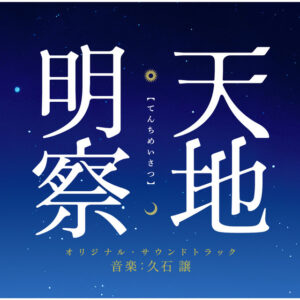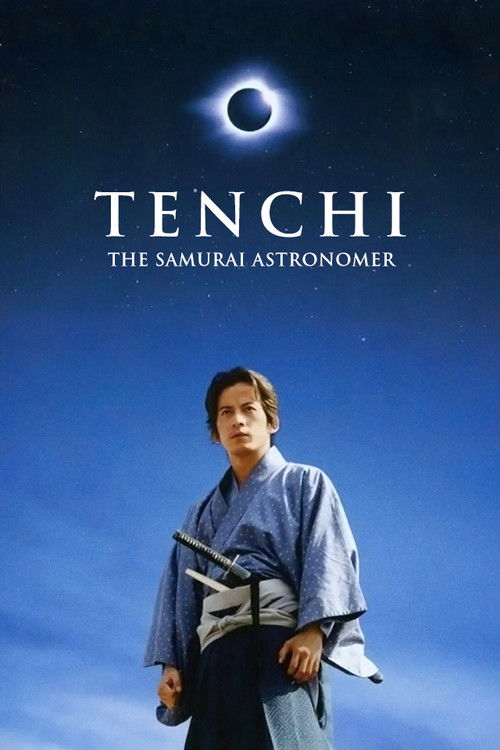
Yojiro Takita’s 2012 film ‘Tenchi: The Samurai Astronomer’ presents a fascinating biographical portrait of Yasui Santetsu, the 17th-century polymath who revolutionised Japanese astronomy and calendrical science. The film chronicles Santetsu’s extraordinary journey from his early mastery of the strategic board game go to his appointment as Japan’s first official astronomer during the Edo Period, culminating in his creation of the groundbreaking Jokyo calendar. Spanning from 1639 to 1715, this period drama captures both the intellectual rigour and spiritual depth of a man whose contributions would reshape Japan’s relationship with the heavens and time itself.
Upon its release, ‘Tenchi: The Samurai Astronomer’ garnered considerable critical acclaim in Japan, resonating particularly with audiences fascinated by historical figures who transcended conventional boundaries of knowledge. The film was celebrated not merely as a period piece, but as a meditation on intellectual curiosity, the pursuit of truth, and the intersection of traditional wisdom with scientific innovation. While perhaps less widely distributed across European cinemas than some contemporary Japanese films, it has gradually built a devoted following among enthusiasts of intelligent historical drama and lovers of Japanese cultural heritage.
The true revelation of ‘Tenchi,’ however, lies in Joe Hisaishi’s magnificent orchestral score, which elevates the entire narrative into something approaching the transcendent. Hisaishi, whose previous collaborations with Takita on ‘Okuribito’ (Departures) had already demonstrated his mastery of emotionally nuanced filmmaking, crafted a score that embodies the film’s central tension between earthbound human limitation and cosmic vastness. The composer employs a rich orchestral palette featuring strings, traditional Japanese instruments, and subtle electronic elements to create a soundscape that feels simultaneously timeless and otherworldly.
The primary theme that weaves throughout the score is characterised by ascending melodic lines that mirror humanity’s attempt to reach towards the stars. Hisaishi employs this motif with remarkable restraint and subtlety; rather than overwhelming viewers with grand romanticism, he allows the melody to emerge gradually, much like Santetsu’s own incremental journey toward astronomical enlightenment. The orchestration shifts seamlessly between intimate moments of personal struggle and expansive sequences depicting cosmic observation, with the composer’s sensitive use of space and silence proving as eloquent as the notes themselves.
What distinguishes Hisaishi’s approach is his compositional strategy of using mathematics and geometry as metaphorical musical language. Just as Santetsu sought mathematical harmony in the celestial sphere, Hisaishi structures his score around carefully balanced harmonic progressions and rhythmic patterns that reflect the precision and elegance of astronomical calculation. Key moments—Santetsu’s breakthroughs, his doubts, his moments of clarity beneath the night sky—are accompanied by subtle modulations and instrumental combinations that feel both intellectually rigorous and deeply human.
The integration of traditional Japanese instruments, particularly the koto and shakuhachi, grounds the score in cultural specificity while the sweeping string arrangements lend a universality that appeals to international audiences. Hisaishi’s genius lies in maintaining this balance, creating a soundtrack that honours both Santetsu’s historical moment and his timeless relevance as a seeker of truth. For European fans of Joe Hisaishi, this score represents perhaps his most refined achievement in matching music to intellectual and spiritual aspiration.