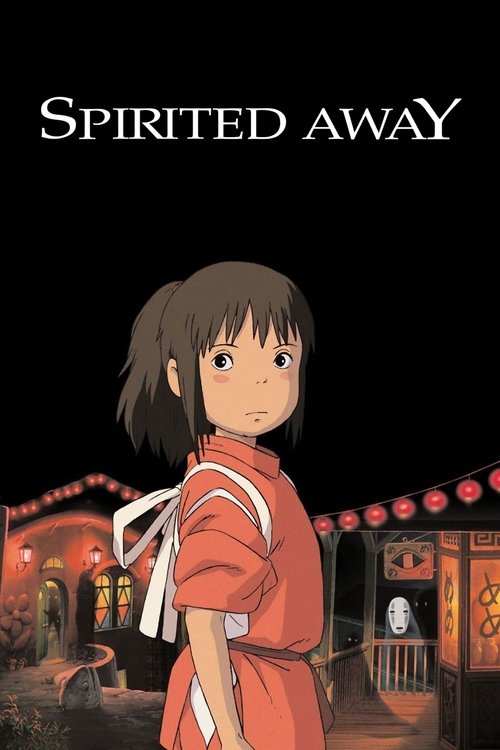
Hayao Miyazaki’s 2001 masterpiece Spirited Away tells the remarkable story of Chihiro, a seemingly ordinary girl who finds herself trapped in a mystical world inhabited by spirits and gods. When her parents mysteriously transform after consuming enchanted food, Chihiro must discover an inner strength she never knew existed to navigate this bewildering realm and save her family. What begins as a tale of helplessness transforms into a powerful journey of self-discovery and resilience, all set against the stunning visual backdrop of Miyazaki’s imaginative landscape.
The film’s cultural impact cannot be overstated. Spirited Away became a global phenomenon, earning widespread critical acclaim and becoming the highest-grossing anime film of its time. European audiences in particular embraced the film’s universal themes of identity, family, and personal growth, while remaining captivated by its distinctly Japanese aesthetic. The film’s success opened doors for anime across the continent, introducing millions to the medium’s artistic potential. Its influence continues to resonate, with the film regularly appearing on lists of greatest animated works ever created.
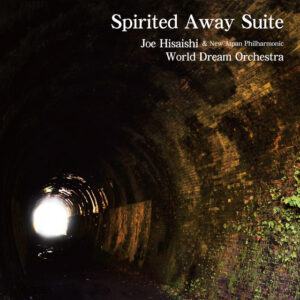
Yet beneath every frame of Spirited Away lies the genius of Joe Hisaishi’s extraordinary musical composition. Hisaishi’s score represents one of cinema’s finest achievements in film music, demonstrating how orchestral composition can elevate animation to profound artistic heights. His approach to scoring Spirited Away reveals a composer operating at the peak of his creative powers, crafting a sonic landscape as intricate and magical as Miyazaki’s visuals.
The score’s central theme, “One Summer’s Day,” has become iconic among film music enthusiasts. This hauntingly beautiful piano melody captures the film’s essence—blending innocence with melancholy, wonder with uncertainty. Hisaishi employs traditional Japanese instruments alongside Western orchestration, creating a unique sonic identity that reflects the film’s fusion of traditional and fantastical elements. The composition grows organically throughout the film, becoming progressively layered and complex as Chihiro herself matures.
Hisaishi’s compositional approach reveals remarkable sophistication. Rather than overwhelming scenes with elaborate orchestration, he allows silence and space to breathe, understanding that restraint often carries greater emotional weight than grandeur. When Chihiro encounters Yubaba, the witch who controls the spirit world, Hisaishi introduces dissonant, unsettling strings that immediately communicate danger without explicit instruction. Conversely, moments featuring No-Face and Chihiro’s quiet interactions employ minimal instrumentation, allowing viewers to focus entirely on character development.
The score’s leitmotif system demonstrates compositional brilliance. Different melodic and harmonic signatures accompany various characters and locations, yet remain fluid enough to transform alongside the narrative. The spirited world itself receives musical characterization through pentatonic scales and unconventional harmonic progressions that suggest otherworldliness without sacrificing accessibility.
Perhaps most impressively, Hisaishi’s music perfectly mirrors Chihiro’s emotional journey. Early scenes feature delicate, uncertain orchestration reflecting her confusion and vulnerability. As she gains courage and determination, the music becomes increasingly confident and assertive. By the film’s conclusion, familiar melodies return transformed, now radiating maturity and hard-won wisdom.
For European audiences particularly, Hisaishi’s score demonstrates that animation need not rely on contemporaneous pop music or simplistic themes. His classical training and innovative compositional voice proved that animated films could achieve orchestral sophistication equal to live-action cinema. Spirited Away’s enduring legacy owes as much to Hisaishi’s luminous score as to Miyazaki’s visionary direction—a perfect marriage of image and sound that continues enchanting audiences worldwide.