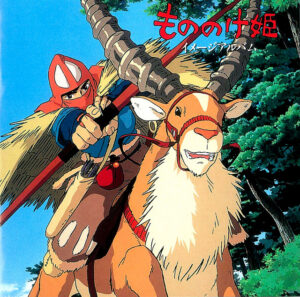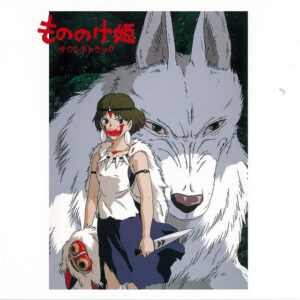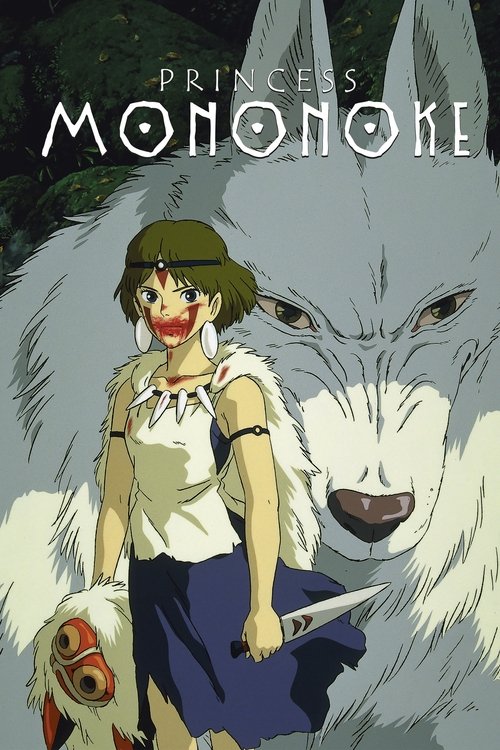
When Hayao Miyazaki’s Princess Mononoke arrived in 1997, it was immediately hailed as a landmark achievement in animation cinema. The film follows Ashitaka, a young prince of the vanishing Emishi people, who becomes cursed by a demonized boar god and must journey westward seeking a cure. His odyssey brings him into the heart of an ancient forest where he discovers San, a spirited warrior princess defending the woodland realm, and Lady Eboshi, a formidable entrepreneur determined to exploit and destroy it. Caught between these opposing forces, Ashitaka becomes the unlikely mediator in an increasingly desperate conflict between human progress and natural preservation. The narrative unfolds as an epic struggle for balance in a world where industrialization threatens to obliterate the sacred bonds between humanity and nature.
The film’s cultural resonance extended far beyond Japan’s borders, becoming a phenomenon that helped introduce international audiences to the sophistication and artistic depth of anime as a medium. Princess Mononoke’s ecological themes and moral ambiguity struck a chord with viewers worldwide, particularly in Europe where environmental consciousness was already deeply embedded in the cultural conversation. The film transcended the boundaries typically associated with animation, earning critical acclaim and substantial commercial success that demonstrated anime’s potential to achieve mainstream legitimacy on the global stage. Its influence persists today, with the film regularly appearing in discussions of cinema’s most important works of the 1990s.
Yet beneath Miyazaki’s stunning visuals lies the extraordinary musical architecture crafted by Joe Hisaishi, whose score stands as one of cinema’s most remarkable achievements. Hisaishi’s compositional approach for Princess Mononoke represents a breathtaking fusion of Western orchestral traditions with Japanese musical sensibilities, creating a soundscape that feels simultaneously ancient and universal. Rather than relying on traditional Japanese instruments exclusively, Hisaishi employs a full symphony orchestra augmented with carefully selected traditional elements, allowing the score to breathe with an epic grandeur befitting Miyazaki’s sprawling narrative.
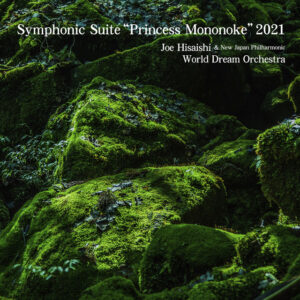
The film’s central theme, “Princess Mononoke,” encapsulates Hisaishi’s genius through its haunting main melody—a soaring, ethereal line that evokes both San’s connection to the forest spirits and the tragic inevitability of the approaching conflict. This theme recurs throughout the score in various guises, transforming subtly to reflect the emotional landscape of each scene. In moments of action, Hisaishi layers the theme against driving percussion and urgent string accompaniment, while in quieter, introspective sequences, he allows it to float above minimal harmonic support, suspended almost weightlessly. The composer demonstrates remarkable sensitivity to the visual storytelling, ensuring that every musical gesture amplifies rather than overwhelms the on-screen action.
What distinguishes Hisaishi’s work here is his commitment to emotional authenticity. Whether accompanying Ashitaka’s desperate journey, San’s fierce determination, or the forest’s ancient mystery, the music never feels manipulative or overwrought. Instead, each cue serves the story’s deeper themes about coexistence and sacrifice. Hisaishi employs leitmotifs not merely as identifying themes but as emotional anchors that evolve and transform as the narrative progresses. The score builds toward a devastating climax where all musical elements converge, creating a powerful statement about loss and the bittersweet nature of compromise. In Princess Mononoke, Joe Hisaishi crafted not merely a film score but a complete musical narrative—one that ranks among the finest achievements in cinema history and continues inspiring composers and audiences throughout Europe and beyond.