
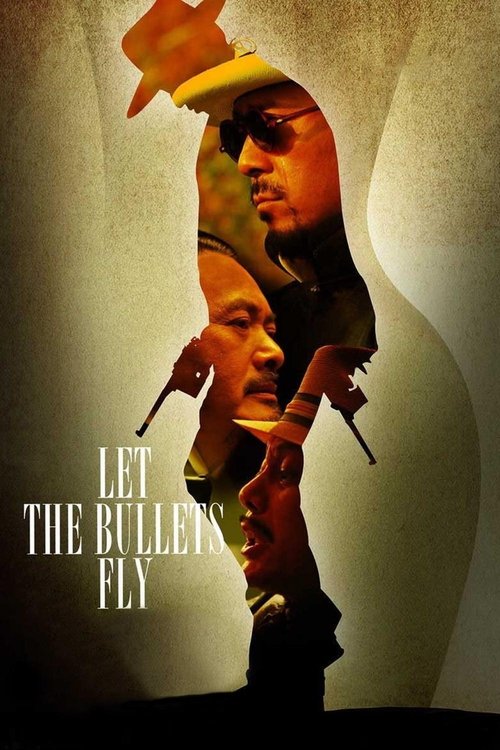
Jiang Wen’s 2010 directorial masterpiece “Let the Bullets Fly” stands as one of Chinese cinema’s most audacious and entertaining films. The narrative follows an outlaw forced by circumstance to assume the identity of a county governor, only to find himself navigating the treacherous politics of a corruption-riddled town while confronting its all-powerful crime boss. This clever premise becomes the stage for a thrilling cat-and-mouse game, blending action, comedy, and political intrigue in ways that kept audiences captivated throughout the film’s theatrical run.
The film achieved remarkable success upon its release, becoming a cultural phenomenon in China and garnering international acclaim. Its box office performance broke records, and critics praised its witty screenplay, energetic direction, and the charismatic performances of its ensemble cast. The film’s blend of dark humour and stylish action resonated strongly with audiences, establishing itself as a modern classic of Asian cinema. Beyond commercial success, “Let the Bullets Fly” sparked conversations about corruption, justice, and morality, cementing its status as more than mere entertainment.
Yet beneath the surface of this visually stunning and narratively complex film flows an equally sophisticated musical undercurrent—Joe Hisaishi’s brilliantly composed score. Hisaishi, renowned for his collaborations with Studio Ghibli and his distinctive orchestral voice, brings his masterful sensibilities to this Chinese production, creating a soundtrack that enhances every frame while maintaining a unique identity distinct from his most celebrated works.
Hisaishi’s approach to “Let the Bullets Fly” demonstrates remarkable restraint and precision. Rather than overwhelming the proceedings with sweeping romantic themes or bombastic crescendos, he crafts a score that mirrors the film’s tonal complexity. The composer employs lean, purposeful orchestrations that complement the narrative’s propulsive energy. The main theme perfectly encapsulates the protagonist’s duality—part folk outlaw, part reluctant official—weaving traditional Chinese instrumentation with Western orchestral elements. This fusion reflects the cultural collision at the film’s heart and the protagonist’s displacement within the social hierarchy.
The action sequences are accompanied by taut, percussive writing that emphasizes rhythm and drive rather than melodic showiness. Hisaishi’s use of strings and brass creates tension without sacrificing clarity, allowing the audience to remain engaged with the tactical maneuvering both on-screen and in the narrative itself. The composer’s sensitivity to dynamics proves particularly effective; quiet, suspicious passages give way to explosive outbursts, mirroring the unpredictable nature of political gamesmanship and violence.
What distinguishes Hisaishi’s work here is his understanding that the score must serve the story’s comic timing. The humorous moments—and “Let the Bullets Fly” contains many—receive musical support that enhances rather than undermines them. Quick, quirky instrumental flourishes punctuate visual gags without feeling forced, demonstrating Hisaishi’s acute awareness of comedic rhythm.
The score’s emotional centre emerges in quieter moments examining the protagonist’s moral journey. Here, Hisaishi allows melancholic reflection through sparse piano and gentle orchestration, reminding viewers that beneath the gunfire and scheming lies a character wrestling with conscience. This emotional accessibility prevents the film from becoming cynical despite its examination of corruption.
Joe Hisaishi’s contribution to “Let the Bullets Fly” represents the composer at his most versatile and culturally aware. The score validates the film’s ambitions while proving that his genius extends far beyond animated fantasy, encompassing the full spectrum of cinema’s emotional and dramatic possibilities.