
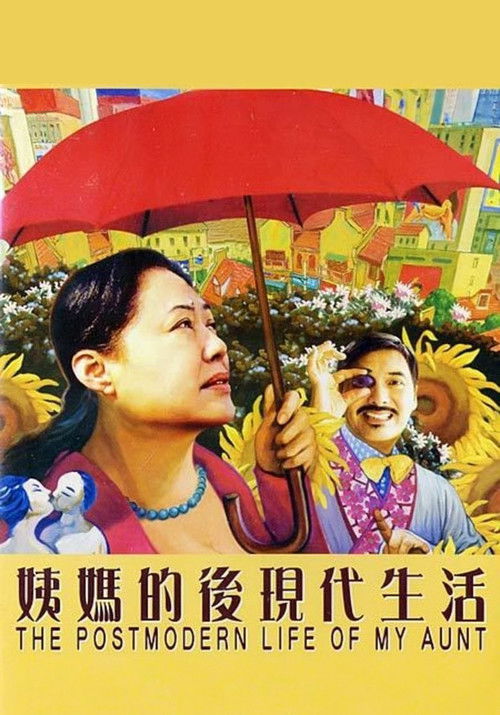
Ann Hui’s 2007 film ‘The Postmodern Life of My Aunt’ presents a quietly profound portrait of urban isolation and personal resilience. The narrative follows Ye Rutang, a woman in her late fifties navigating the complexities of single life in contemporary Shanghai. Rather than celebrating independence with triumphalism, Hui’s camera observes Rutang’s daily struggles with unflinching tenderness—her battles to maintain dignity amid the pressures and dangers of modern metropolitan existence. The film eschews melodrama, instead finding profound humanity in mundane moments: a woman grocery shopping, waiting in line, or simply sitting alone in her modest apartment. This restrained storytelling creates space for something equally subtle yet powerful: the musical score by Joe Hisaishi.
Upon its release, ‘The Postmodern Life of My Aunt’ garnered significant acclaim from international film critics who recognized Hui’s sensitive direction and the film’s nuanced exploration of female agency and aging. The work resonated particularly strongly within festival circuits across Asia and Europe, where audiences appreciated its refusal to sentimentalize or patronize its protagonist. Rather than presenting Rutang as either a tragic figure or an inspirational archetype, the film treats her as a fully realized human being—complex, sometimes contradictory, and deeply dignified. This measured approach to character development became emblematic of contemporary Chinese cinema’s artistic maturation during the 2000s.
What truly elevates the film, however, is Hisaishi’s remarkable musical contribution. The composer, renowned for his collaborations with Hayao Miyazaki and his distinctive approach to film scoring, brings extraordinary sensitivity to Hui’s intimate narrative. Rather than imposing grand emotional statements, Hisaishi’s score operates with remarkable restraint and nuance. His music functions less as commentary and more as quiet companionship to Rutang’s inner life. The compositions employ minimalist elements—sparse piano passages, delicate string arrangements, and carefully placed moments of silence—that mirror the film’s visual language of understatement.
The score’s thematic architecture reflects Rutang’s psychological journey with sophistication. Hisaishi employs motifs that recur and gradually transform, suggesting how experience accumulates and reshapes identity without dramatic fanfare. Where a lesser composer might have emphasized pathos through lush orchestration, Hisaishi instead creates emotional resonance through what remains unplayed—the breathing room around his notes becomes as significant as the notes themselves. This compositional philosophy perfectly complements Hui’s directorial approach, which privileges observation over interpretation.
Partularly striking is how Hisaishi uses instrumental textures to externalize Rutang’s consciousness. Traditional Chinese instruments occasionally surface, creating subtle cultural layers without exoticizing the setting. The music neither wallows in melancholy nor falsely uplifts; instead, it honors the quiet strength characterizing Rutang’s daily existence. Piano sequences capture moments of private reflection, while fuller arrangements accompany scenes of social interaction, creating sonic architecture that reflects her internal and external worlds.
For European audiences discovering this film and Hisaishi’s work, ‘The Postmodern Life of My Aunt’ represents a masterclass in restraint and artistic collaboration. The partnership between Hui’s visual poetry and Hisaishi’s musical discretion creates something transcendent—a work that insists on the profound dignity residing in ordinary lives, scored with a composer’s faith that viewers need not be told what to feel, but rather trusted to discover meaning themselves.