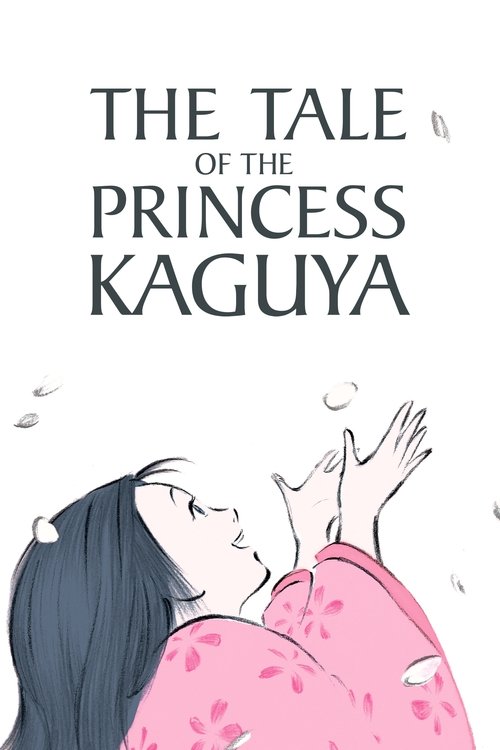
Isao Takahata’s final masterpiece, The Tale of The Princess Kaguya, tells the timeless Japanese legend of a mysterious girl discovered inside a glowing bamboo stalk by an elderly woodcutter and his wife. As she grows with impossible rapidity into a breathtakingly beautiful young woman, the princess captivates everyone around her with an ethereal grace that seems almost otherworldly. Yet beneath this enchanting exterior lies a profound tragedy, as she must ultimately face the inexorable destiny that awaits her. This poignant narrative, rooted in Japan’s oldest literary tradition, serves as a meditation on fate, sacrifice, and the bittersweet nature of existence itself.
Since its release in 2013, The Tale of The Princess Kaguya has rightfully earned recognition as one of Studio Ghibli’s most critically acclaimed and artistically significant works. The film garnered numerous international awards and accolades, including nominations at major film festivals across Europe and beyond. Critics praised Takahata’s artistic vision and the film’s stunning hand-drawn animation, which eschews photorealism in favor of an exquisite watercolor aesthetic that mirrors traditional Japanese painting techniques. The narrative’s exploration of feminine agency, societal expectations, and the clash between duty and desire has resonated deeply with audiences, establishing the film as a cultural touchstone that transcends geographical and generational boundaries.
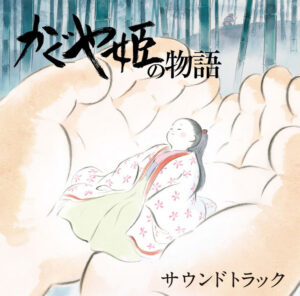
At the heart of this cinematic triumph lies Joe Hisaishi’s extraordinary musical score, a work of sublime artistry that elevates every frame it accompanies. Rather than imposing grand orchestral statements, Hisaishi demonstrates remarkable restraint and sensitivity, recognizing that the film’s gentle pacing and contemplative atmosphere demand a delicate compositional approach. His score operates as a counterpoint to Takahata’s visuals, using silence and sparse instrumentation as effectively as lush orchestration. The composer employs traditional Japanese instruments—the koto, shakuhachi, and shamisen—alongside Western orchestral elements, creating an intercultural musical dialogue that reflects the film’s own tensions between tradition and modernity.
The score’s thematic material centers on two contrasting motifs: one representing Kaguya’s innocent, joyful childhood in the bamboo grove, characterized by playful, ascending melodies that dance with unbridled freedom, and another embodying the weight of her inevitable fate, rendered through melancholic, descending phrases that grow increasingly insistent. As the narrative progresses and Kaguya matures into a lady of the capital, Hisaishi’s orchestrations become more elaborate and complex, yet never lose their emotional authenticity. The music mirrors the princess’s own internal journey—from unrestrained natural wonder to constrained societal obligation.
What distinguishes Hisaishi’s achievement here is his intuitive understanding that The Tale of The Princess Kaguya is fundamentally about loss and acceptance. His score never wallows in sentimentality; instead, it achieves something far more profound—a musical expression of mono no aware, that distinctly Japanese aesthetic concept acknowledging the transient, melancholic beauty inherent in all things. Whether accompanying Kaguya’s moonlit reveries or the devastating final scenes, Hisaishi’s music honors both the film’s visual poetry and its philosophical depth. This score stands as one of his finest works, a testament to his continued mastery of film music and his deep understanding of Japanese cultural traditions.