
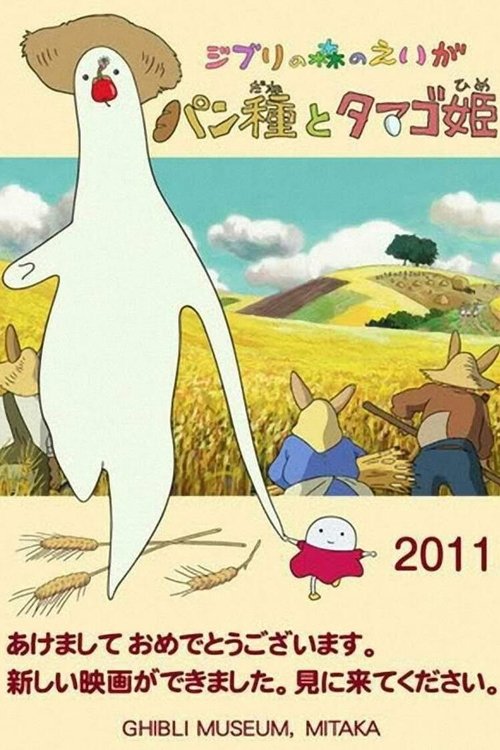
Hayao Miyazaki’s 2010 short film ‘Mr. Dough and the Egg Princess’ presents a whimsical tale of unlikely friendship and liberation that has charmed audiences worldwide. The narrative follows a diminutive Egg-girl held captive by the malevolent Baba Yaga, a witch with distinctly boar-like features who rules over a mysterious water mill perched precariously on a clifftop. When a sentient blob of dough unexpectedly comes to life, the two form an immediate bond and embark on a daring escape, venturing into the wider world together. This simple yet profoundly moving story of friendship transcending servitude became a vehicle for one of cinema’s most extraordinary musical achievements.
The film enjoyed considerable success upon its release, resonating particularly well with European audiences who appreciated both Miyazaki’s distinctive visual storytelling and the innovative approach to its musical accompaniment. The short became a beloved entry in the Studio Ghibli catalog, celebrated for its charming characters and imaginative world-building. Its reception underscored the global appetite for Miyazaki’s creative vision and demonstrated how effectively animation could convey emotional depth through minimal dialogue. The film’s accessibility and emotional sincerity contributed to its enduring popularity among diverse audiences across the continent.
What truly distinguishes ‘Mr. Dough and the Egg Princess,’ however, is Joe Hisaishi’s remarkable musical contribution. Rather than composing an original score, Hisaishi made the audacious decision to arrange Antonio Vivaldi’s ‘La Folia’—a baroque theme that has captivated composers for centuries. This choice proved masterful, as Hisaishi’s orchestration transforms the classical composition into something simultaneously timeless and contemporary. The arrangement respects Vivaldi’s fundamental structure while infusing it with Hisaishi’s distinctive sensibility, creating a bridge between centuries of musical tradition.
Hisaishi’s approach to ‘La Folia’ demonstrates his sophisticated understanding of how classical material can be reimagined for modern cinematic purposes. The composer employs rich orchestration, blending traditional instruments with subtle contemporary elements, creating layers of emotional texture that perfectly complement Miyazaki’s animation. The music swells at moments of wonder and adventure, providing emotional scaffolding for the visual narrative without overwhelming it. The arrangement’s flowing qualities mirror the characters’ journey, with melodic lines that feel both inevitable and surprising.
The compositional genius lies in how seamlessly the music adapts to the film’s emotional landscape. As the Egg-girl and Mr. Dough navigate their escape and subsequent adventures, Hisaishi’s arrangement of Vivaldi provides musical commentary on their experiences—celebrating their newfound freedom while acknowledging the bittersweet nature of departure. The baroque foundation grounds the score in classical elegance, while Hisaishi’s contemporary sensibilities ensure it resonates with modern viewers.
For Joe Hisaishi enthusiasts, this work represents a fascinating exploration of arrangement and adaptation. It showcases his ability to honor existing compositions while making them entirely his own. The ‘La Folia’ arrangement stands as testament to Hisaishi’s versatility and his deep respect for musical tradition, proving that masterful composition extends beyond pure creation into the realm of transformation and reinterpretation. In ‘Mr. Dough and the Egg Princess,’ Hisaishi created something genuinely special—a musical narrative that enhances, illuminates, and ultimately transcends its visual counterpart.