
The Theme That Almost Never Existed
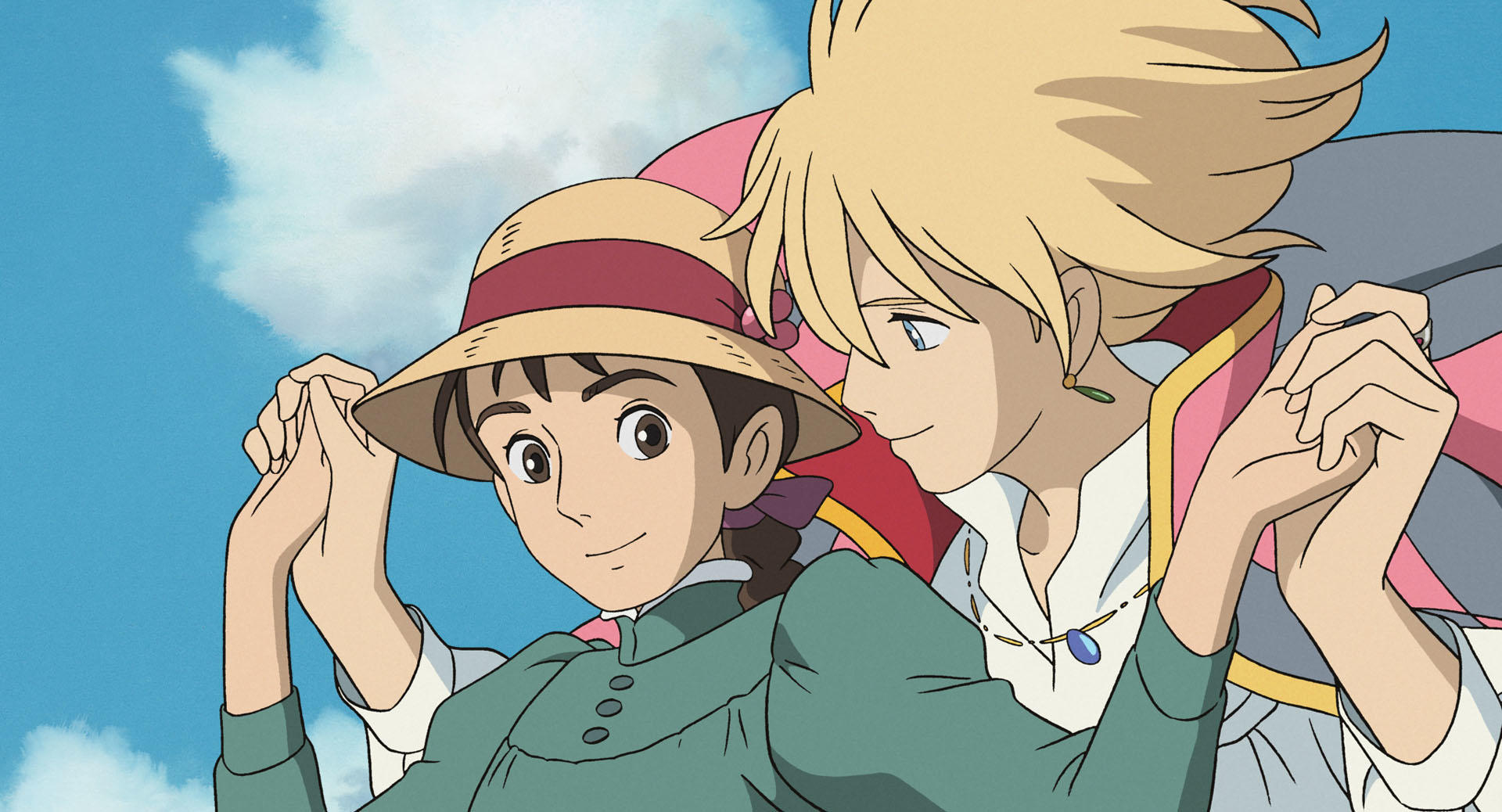
The most beloved piece of music Joe Hisaishi ever wrote for a Studio Ghibli film was not part of the original plan. “The Merry-Go-Round of Life” — the waltz that opens Howl’s Moving Castle, returns throughout it, and has since become one of the most recognisable themes in animation history — came into existence only after everything else had failed.
The Image Album and Its Rejection
To understand how the main theme was born, it helps to understand how Hisaishi and Miyazaki work together. Before filming begins, Hisaishi composes what is known as an image album — a suite of original pieces written not to accompany finished footage, but to help shape the film itself. Based on early storyboards and extended conversations with Miyazaki, the image album functions as a kind of musical blueprint: it influences the pacing, the emotional register, and sometimes the visual choices of the film that follows.
For Howl’s Moving Castle, Hisaishi composed the image album and delivered it to Miyazaki. Miyazaki was not satisfied. As Hisaishi recounts in his diary 35mm Nikki (Takarajimasha, 2007), the director felt that the music had not yet found the heart of the film. The image album, for all its craft, had missed something essential.
Hisaishi went back to work. He composed three new pieces — and then did something unusual. Rather than simply delivering a recording, he brought the pieces directly to Miyazaki and performed them himself on piano, live, in the director’s presence. One of those three pieces was “The Merry-Go-Round of Life.” Miyazaki heard it and knew immediately. That was the theme.
A Waltz for Europe — and a Philosophy of Restraint
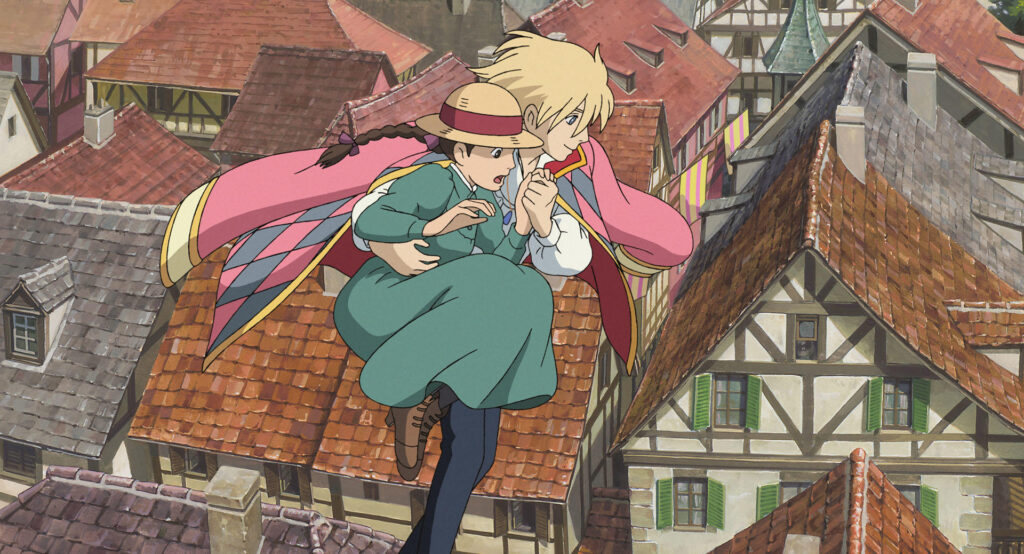
Miyazaki’s film is set in a fictional European landscape — a world of cobblestone cities, Alpine meadows, and hat shops with bow-fronted windows — and the waltz is perhaps the most distinctly European of all dance forms. Originating in the ballrooms of Vienna and spreading across the continent through the nineteenth century, it carries associations of romance, social grace, and a certain melancholy elegance. But Hisaishi’s choice of triple time was not simply a matter of atmosphere.
In 35mm Nikki, Hisaishi addresses the question directly. A waltz, he explains, doesn’t let feeling settle too deep — it keeps moving. This was deliberate. When the images on screen are already extravagantly romantic — and Miyazaki’s visuals for Howl certainly are — the music does not need to match them. It can, and should, take a step back. To amplify what is already visible is to leave the audience no room to feel it for themselves.
This is a principle at the heart of Hisaishi’s approach to film music. Music and image are not partners in the same emotion — they are in counterpoint with each other. The music’s role is to add what the image cannot carry on its own, not to redouble what it already shows. In the case of Howl’s Moving Castle, that meant writing a theme that held its romanticism lightly — present, unmistakable, but never insisting on itself.
The waltz achieves this beautifully. Its forward momentum — the physical pulse of dance — keeps it from lingering too long on any single feeling. For European audiences in particular, the form communicates something almost instinctively, in a musical language that is deeply familiar. And then, within that familiarity, Hisaishi says something unexpected.
The Image Album and the Czech Philharmonic
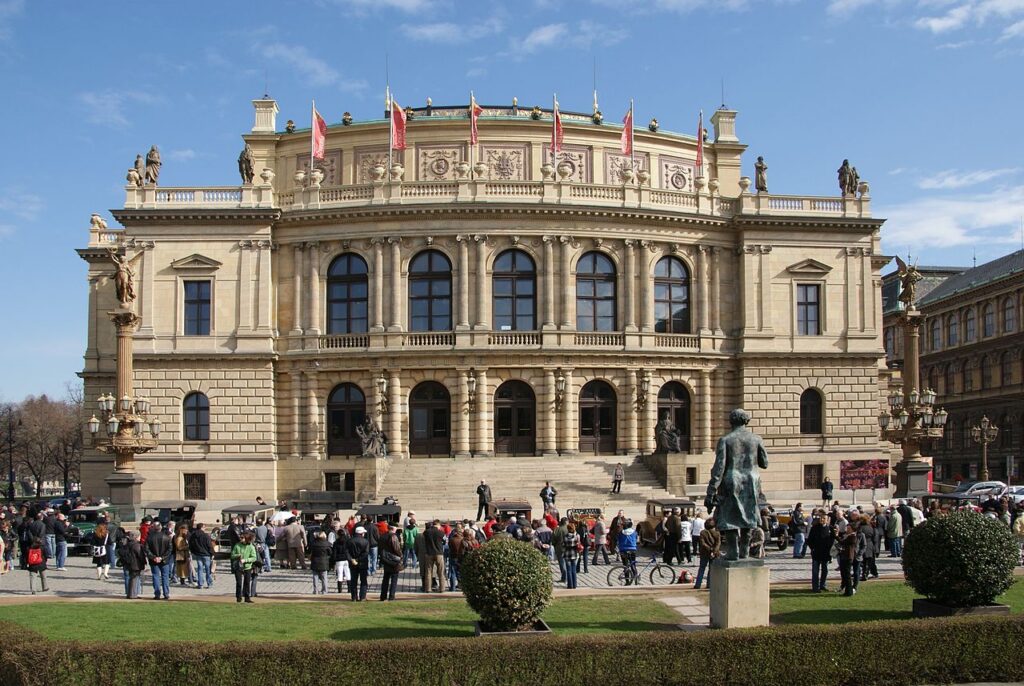
The image album that Miyazaki initially rejected did not disappear. It was recorded in Prague with the Czech Philharmonic Orchestra and released before the finished soundtrack — making it, in a sense, the public’s first encounter with the musical world of Howl’s Moving Castle. It stands as a remarkable work in its own right, one that rewards comparison with the final score. Where the soundtrack is shaped by the demands of specific scenes, the image album moves with a different kind of freedom, following its own internal logic.
The choice of the Czech Philharmonic was significant. Founded in Prague in 1896, the ensemble has premiered works by Dvořák, Mahler, and Janáček, and carries a distinctive warmth of string tone rooted in the Central European orchestral tradition. For a score so deeply inflected with European feeling — waltzes, romantic harmonies, a landscape that recalls the Alps and the Bohemian countryside — the Czech Philharmonic was an unusually fitting choice. The result is a recording of real depth and colour, in which the music seems genuinely at home.
The finished soundtrack, by contrast, was recorded in Japan with the New Japan Philharmonic — an orchestra Hisaishi has worked with throughout his career. The two recordings carry subtly different characters: the Czech Philharmonic brings a European warmth and weight to the image album, while the New Japan Philharmonic’s precision and clarity serve the dramatic demands of the final film. Heard side by side, they offer two distinct windows into the same musical world.
A Theme Without Borders
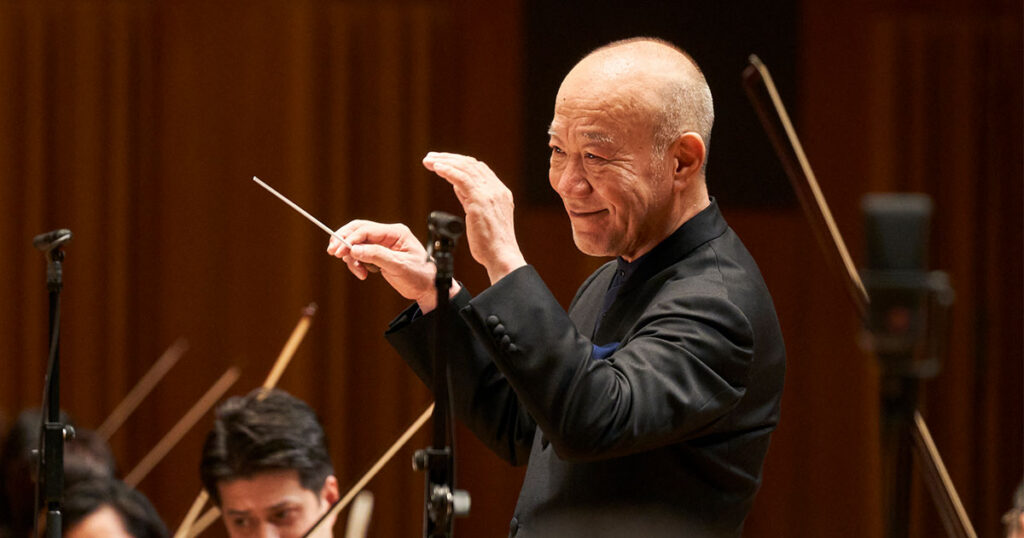
Two decades after its composition, “The Merry-Go-Round of Life” has achieved a reach that extends well beyond the film it was written for. It appears regularly on concert programmes across Europe and Asia, in piano recitals and orchestral programmes alike. It has been transcribed, arranged, covered, and reimagined countless times. On streaming platforms, it continues to find new listeners — many of whom encounter the music before they have ever seen the film.
This speaks to something important about how Hisaishi composes — and about the structural ambition of the Howl score in particular. As he recounts in 35mm Nikki, more than twenty of the soundtrack’s forty tracks are variations on “The Merry-Go-Round of Life.” This was a conscious choice rooted in the film’s central theme. Sophie, the protagonist, moves between the body of an eighteen-year-old and that of a ninety-year-old woman — but her inner self remains unchanged throughout. By keeping her melodic theme constant while varying its orchestration, tempo, and emotional colouring according to each scene, Hisaishi found a musical equivalent for that continuity of identity. The melody is always Sophie; what changes is only the body she inhabits.
His themes are not cues — musical signposts that only make sense attached to images. They are complete emotional statements, capable of standing alone. “The Merry-Go-Round of Life” tells its story — of joy shaded by loss, of beauty that is inseparable from its own passing — whether or not you have ever seen a moving castle, or a young woman growing suddenly old, or a wizard who turns into something he cannot escape.
It is music about transformation, written because the first attempt was not good enough, performed on a piano in a room where everything depended on getting it right. It has been getting it right ever since.
Source: Joe Hisaishi, 35mm Nikki (Takarajimasha, 2007)
Listen to the soundtrack below.