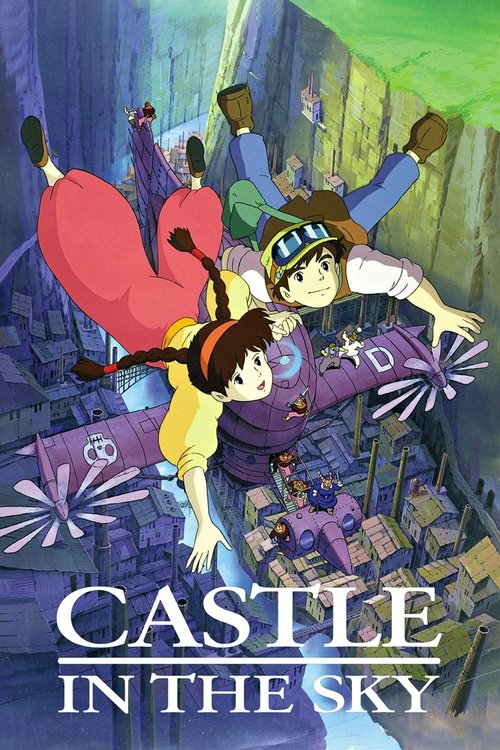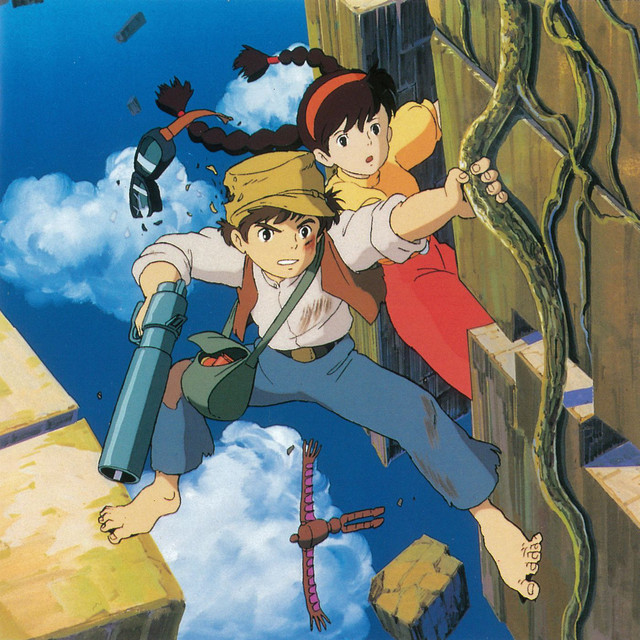
Album: 天空の城ラピュタ サウンドトラック ~飛行石の謎~
Picture this: a composer hunched over a Fairlight III synthesizer, stopwatch in hand, counting seconds as animated characters move across a screen. This wasn’t just any soundtrack production—this was Joe Hisaishi crafting the musical foundation for Hayao Miyazaki’s Castle in the Sky, where every note had to align perfectly with every frame.
The choral piece “Kimi wo Nosete” (Carrying You) stands as perhaps the most striking example of this meticulous approach. When audiences hear those soaring voices rise during the film’s climactic moments, they’re experiencing the result of an unprecedented level of precision in anime music production. Hisaishi didn’t just compose; he engineered emotional synchronicity.
This obsessive attention to detail began in June 1986, when the near-complete rush film finally allowed Hisaishi to see exactly what he was scoring. On June 23rd, in a humble coffee shop near Studio Ghibli, three creative minds—Miyazaki, producer Isao Takahata, and Hisaishi—gathered around an image album to hammer out the sonic DNA of their floating castle. The composer’s challenge was clear: create music that didn’t merely accompany the visuals but became indivisible from them.
“Kimi wo Nosete” emerged from this philosophy of perfect unity. The piece, performed in the key of F major with its naturally uplifting character, features a full choir supported by orchestral strings and brass. But what makes it extraordinary isn’t just its melodic beauty—it’s how every crescendo, every pause, every vocal entry was calculated to match specific moments in the animation. Hisaishi would input precise timing data into his Fairlight III, creating rhythmic frameworks that served as the skeleton for what would become a 50-piece orchestra recording.
The composer’s approach to “Kimi wo Nosete” reveals something deeper about his musical philosophy. Hisaishi has always acknowledged that his melodic sensibilities draw heavily from Scottish and Irish folk traditions—something that makes perfect sense when you hear the hymn-like quality of the choral writing. There’s a communal, almost ancient feeling to how the voices interweave, echoing the kind of music that might have been sung in village squares or around hearths.
This Celtic influence wasn’t accidental. For Hisaishi, Castle in the Sky represented a homecoming of sorts—a chance to work within musical territories that felt natural to him. The way “Kimi wo Nosete” builds from intimate solo voice to full choral majesty mirrors the traditional balladry he’d absorbed years earlier. Yet there’s also something distinctly Baroque in the piece’s architecture, reflecting his university days conducting Baroque ensembles.
Miyazaki’s creative brief for the project painted vivid emotional landscapes that Hisaishi had to translate into sound. When the director described his vision of “vast expanses, the tree of life, distant time, sunlight,” he was essentially asking for music that could contain both intimacy and infinity. “Kimi wo Nosete” achieves this through its careful layering—beginning with vulnerable individual voices before expanding into something that feels capable of lifting castles into the sky.
The recording process itself was a marvel of coordination. After building the electronic foundation at Wonder Station in late June, the team moved to Nikkatsu Studio in July for the orchestral sessions. Nearly fifty musicians gathered to bring “Kimi wo Nosete” and the rest of the score to life, with Hisaishi conducting arrangements that had been precision-timed to match animated sequences he’d studied frame by frame.
What’s remarkable about “Kimi wo Nosete” is how it manages to sound both carefully constructed and effortlessly natural. The choral writing flows with the kind of inevitability that suggests folk tradition, yet every dynamic shift serves the dramatic arc of Miyazaki’s storytelling. When Sheeta and Pazu speak the spell that awakens Laputa’s power, the music doesn’t just accompany their moment—it becomes the sound of magic itself, of stones awakening and cities rising.
This fusion of meticulous craft and emotional authenticity became a template for anime music production that continues to influence composers today. “Kimi wo Nosete” proves that technical precision doesn’t have to sacrifice heart—in fact, when done right, it can amplify emotion to extraordinary heights.
In our age of digital convenience, there’s something moving about imagining Hisaishi with his stopwatch and synthesizer, counting seconds and measuring frames. That dedication to perfect synchronization gave us a piece of music that doesn’t just play during Castle in the Sky’s most powerful moments—it helps create them. Every time those voices rise, they’re carrying more than melody; they’re carrying the dreams of creators who believed that animation and music could become one.
- 空から降ってきた少女Read Review
- スラッグ溪谷の朝Read Review
- 愉快なケンカ(~追跡)Read Review
- ゴンドアの思い出Read Review
- 失意のパズーRead Review
- ロボット兵(復活~救出)Read Review
- 合唱 君をのせてNow Playing
- シータの決意Read Review
- タイガーモス号にてRead Review
- 破滅への予兆Read Review
- 月光の雲海Read Review
- 天空の城ラピュタRead Review
- ラピュタの崩壊Read Review
- 君をのせてRead Review