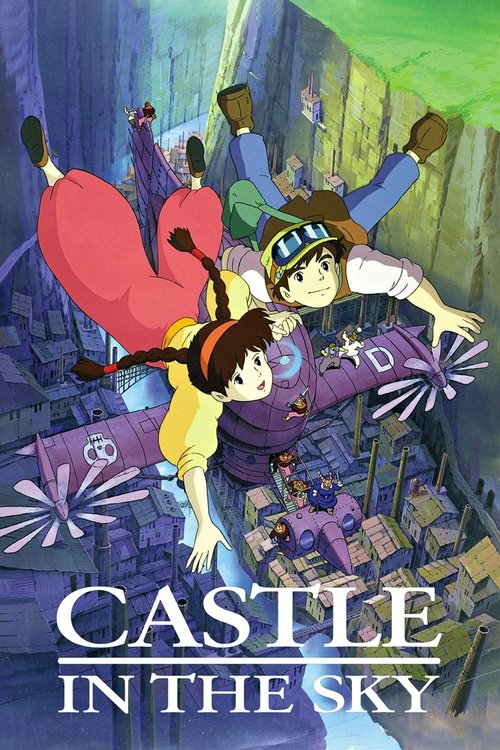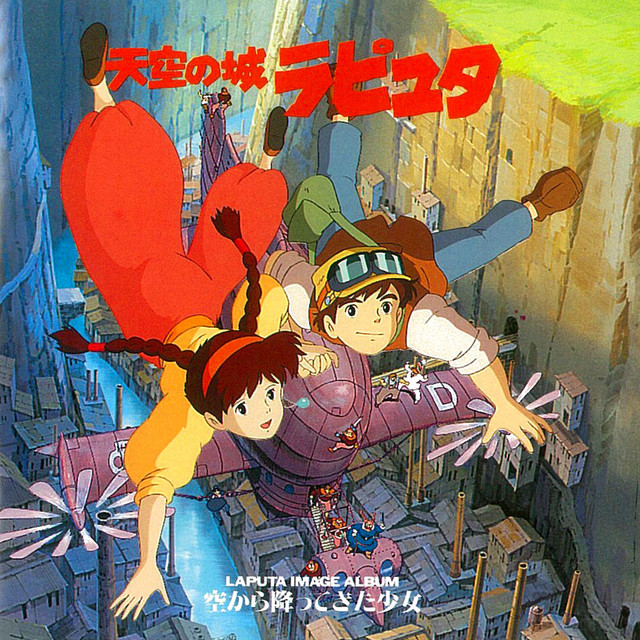
Album: 天空の城ラピュタ イメージアルバム ~空から降ってきた少女~
In the spring of 1986, composer Joe Hisaishi found himself thousands of miles from home in London’s prestigious Air Studios, putting the finishing touches on what would become one of his most beloved musical creations. The track “Flaptor” from the Castle in the Sky Image Album represents more than just another film score piece—it’s a window into the creative struggles and triumphs that defined Hisaishi’s approach to crafting music for Hayao Miyazaki’s animated worlds.
The journey to create “Flaptor” began with an intriguing creative challenge. Miyazaki and producer Isao Takahata had presented Hisaishi with a profound conceptual framework: “What must adults leave behind for children today?” This wasn’t merely about composing background music; it was about creating a musical legacy that would speak to future generations. The weight of this responsibility followed Hisaishi into the recording studios at Wonder Station and Nikkatsu Studio Center, where he would spend countless days wrestling with what he later described as relentless, unspoken pressure to create something extraordinary.
For “Flaptor,” Hisaishi drew inspiration from Miyazaki’s own creative notes, particularly a vivid image of a boy alone on rooftops overlooking a sleeping world, accompanied only by pigeons as morning light breaks through the mist. This scene of innocent solitude and quiet hope would inform the track’s gentle, fluttering character. The composer deliberately chose to center the piece around acoustic instruments, a stark contrast to his previous work on “Arion,” which had relied heavily on synthesized sounds and samples.
The musical architecture of “Flaptor” reflects Hisaishi’s core philosophy for the entire Laputa project: melodies that children could embrace and that would warm their hearts. Built around a playful, ascending melodic line that mirrors the pattering flight of the mechanical creatures it represents, the track captures what Hisaishi described as a “bright and lively” quality. The instrumentation remains deliberately simple—acoustic guitars, woodwinds, and gentle percussion create a sonic palette that feels both grounded and airborne.
Yet “Flaptor” also tells a story of creative compromise and adaptation. The version that emerged from those London mixing sessions, engineered by Steve Jackson and Masayoshi Ohkawa, painted the titular flying machines as cheerful, almost playful creatures. However, when Miyazaki’s film reached its final form, the flaptors appeared primarily in scenes of danger and pursuit. The bright, optimistic musical theme that Hisaishi had crafted suddenly felt mismatched with the dramatic tension on screen.
This disconnect between the image album and final film reveals something fascinating about Hisaishi’s creative process. He wasn’t simply scoring to picture; he was building a complete musical world that existed parallel to, but not always in perfect alignment with, the visual narrative. The composer himself acknowledged this creative tension, noting that while some tracks differed significantly between the image album and film versions, the fundamental musical DNA of Laputa remained consistent.
The London finishing process proved crucial to achieving the track’s final character. Air Studios, with its rich history of hosting everyone from Paul McCartney to film composers like John Williams, provided the acoustic environment where “Flaptor” could truly take flight. The mixing process enhanced the track’s organic feel, allowing each instrument to breathe within the arrangement while maintaining the childlike wonder that Hisaishi sought to capture.
Listening to “Flaptor” today, one can hear the seeds of themes that would define Hisaishi’s later collaborations with Studio Ghibli. The emphasis on melodic clarity over complex harmonies, the integration of acoustic and electronic elements, and the ability to convey narrative through pure musical gesture all point toward the sophisticated approach he would bring to subsequent films.
The track also represents a pivotal moment in Hisaishi’s relationship with his collaborators. Working again with Miyazaki and Takahata after the success of “Nausicaä” brought both joy and tremendous pressure. The expectation to deliver something special created what Hisaishi described as daily waves of anxiety during recording. Yet this pressure also pushed him toward greater creative risks and more nuanced emotional expression.
Perhaps most significantly, “Flaptor” embodies Hisaishi’s belief in music as a bridge between generations. The track’s accessibility doesn’t diminish its sophistication; rather, it demonstrates how complex emotions and ideas can be distilled into musical language that speaks directly to listeners regardless of age. In its gentle flutter of notes and warm acoustic timbres, we hear not just the mechanical wings of imaginary creatures, but the beating heart of a composer determined to leave something beautiful for the children of the world.
In the end, “Flaptor” stands as both a successful piece of film music and a testament to the creative process itself—messy, pressured, collaborative, and ultimately transformative. It reminds us that behind every moment of musical magic lies a human story of artistic struggle and triumph.
- 天空の城ラピュタRead Review
- ハトと少年Read Review
- 鉱夫Read Review
- 飛行石Read Review
- ドーラRead Review
- シータとパズーRead Review
- 大樹Read Review
- フラップターNow Playing
- 竜の穴Read Review
- ティディスの要塞Read Review
- シータとパズーRead Review
- 失われた楽園Read Review