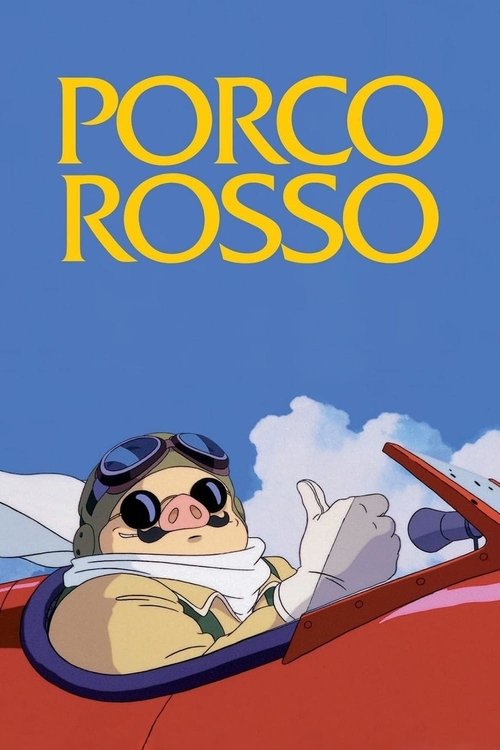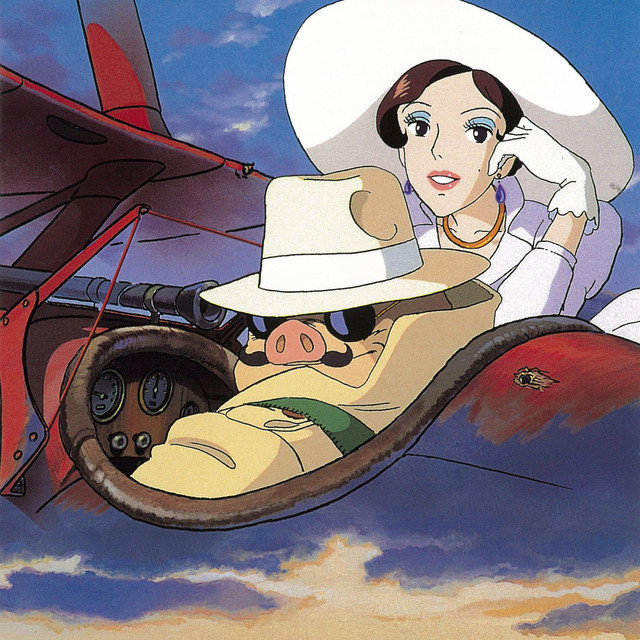
Album: 紅の豚 サウンドトラック
Sometimes the stars align in the most unexpected ways, bringing together creative forces that seem destined to meet. Such was the case when Joe Hisaishi sat down to compose the soundtrack for Hayao Miyazaki’s “Porco Rosso,” particularly the evocative piece “Partner ship” that would capture the essence of 1920s jazz-age romance.
The story begins with a remarkable coincidence that Hisaishi himself describes as “fate.” While Miyazaki was developing his aviation adventure set in the 1920s Adriatic, Hisaishi was simultaneously working on his solo album “My Lost City,” inspired by F. Scott Fitzgerald’s writings and centered entirely around the same Jazz Age era. When the two projects converged, Hisaishi felt an almost supernatural connection: “As artists living in the same time, I felt something very fateful about it.”
This serendipitous timing proved crucial for “Partner ship,” a composition that needed to embody the sophisticated melancholy of protagonist Marco and the enigmatic Gina. The 1920s setting wasn’t just historical backdrop—it was the Jazz Age, when piano-driven melodies ruled speakeasies and hotel lounges across Europe. Hisaishi’s choice of jazz piano as the primary voice for their relationship theme wasn’t merely atmospheric; it was historically authentic.
The piece itself unfolds like a conversation between old lovers, with its gentle swing rhythm in a minor key that suggests both intimacy and distance. The piano melody, tender yet restrained, carries the weight of unspoken feelings—much like the characters themselves. In the film, “Partner ship” first emerges from a bar piano, establishing the song as part of the world’s fabric rather than external commentary.
Miyazaki’s approach to guiding Hisaishi’s creative process was characteristically poetic. Rather than detailed musical instructions, he presented six evocative poems with titles like “Seaplane Pilot’s Tango,” “Ascent,” “Twilight Adriatic Sea,” “Night Flight,” “Secret Garden,” and “Merry-Go-Round.” These literary fragments served as emotional coordinates, helping Hisaishi navigate the film’s complex emotional landscape.
Yet perhaps the most intriguing direction came through producer Toshio Suzuki, who relayed Miyazaki’s unusual request: “Please make embarrassing music, please build it up.” This seemingly contradictory instruction—to create something simultaneously vulnerable and rousing—captures the essence of “Partner ship” perfectly. The piece manages to be both bashful and bold, much like the tentative romance it underscores.
Hisaishi’s response to this challenge reveals his deep understanding of musical storytelling. “Partner ship” doesn’t announce itself with dramatic flourishes or overwhelming orchestration. Instead, it whispers its way into the listener’s consciousness, using the intimate voice of solo piano to create space for emotional complexity. The jazz harmonies provide sophistication without showiness, allowing the melody to carry the narrative weight.
Reflecting on his work years later, Hisaishi expressed some regret about his approach to the entire “Porco Rosso” score. He felt he should have been more restrained, recognizing that Miyazaki’s deeply personal investment in the story called for musical subtlety rather than adventure-film bombast. “I should have held back much more,” he admitted, “but there were parts where I was tempted to make it too much like an action film.”
This self-reflection illuminates Hisaishi’s growth as a collaborator and his understanding of when music should lead and when it should follow. “Partner ship” succeeds precisely because it doesn’t overwhelm—it accompanies. The piece creates emotional space rather than filling it, allowing viewers to project their own feelings onto the relationship between Marco and Gina.
The composition’s genius lies in its restraint. Where lesser composers might have reached for sweeping orchestral arrangements or obvious romantic clichés, Hisaishi chose the honesty of jazz piano. The instrument’s percussive attack and natural decay mirror the tentative nature of rekindled romance—bold in its initial statement, then fading into uncertainty.
Listening to “Partner ship” today, one hears not just a beautiful melody but a perfect example of how creative synchronicity can produce something greater than the sum of its parts. Hisaishi’s jazz-age exploration meeting Miyazaki’s nostalgic aviation tale created the ideal conditions for a piece that feels both historically grounded and emotionally transcendent.
The song stands as a quiet monument to the power of musical understatement—proof that sometimes the most “embarrassing” artistic choices, the ones that make us vulnerable, are exactly what a story needs. In “Partner ship,” Hisaishi found the courage to be tender in an age of spectacle, creating a piece that whispers where others might shout, and in doing so, speaks directly to the heart.
- 時代の風-人が人でいられた時-Read Review
- MAMMAIUTORead Review
- Addio!Read Review
- 帰らざる日々Read Review
- セピア色の写真Read Review
- セリビア行進曲Read Review
- Flying boatmenRead Review
- Doom-雲の罠-Read Review
- Porco e BellaRead Review
- Fio-SeventeenRead Review
- ピッコロの女たちRead Review
- FriendRead Review
- Partner shipNow Playing
- アドリアの海へRead Review
- 遠き時代を求めてRead Review
- 荒野の一目惚れRead Review
- 夏の終わりにRead Review
- 失われた魂-LOST SPIRIT-Read Review
- Dog fightRead Review
- Porco e Bella-Ending-Read Review