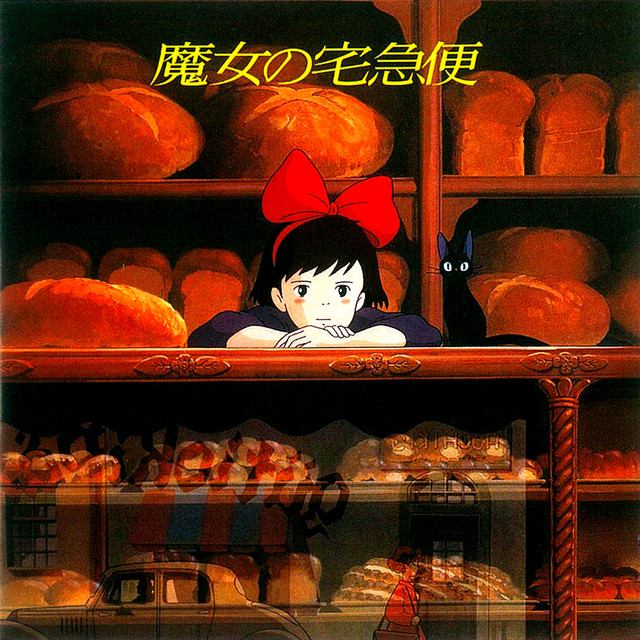
Album: 魔女の宅急便 イメージアルバム
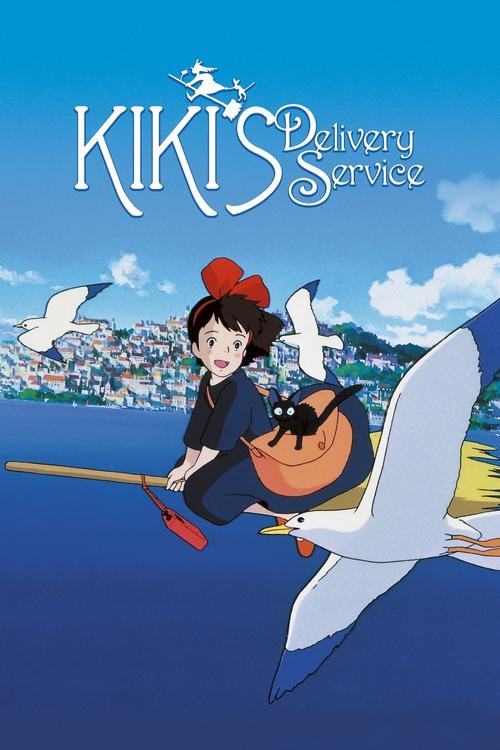
What happens when a composer creates music for a film that doesn’t yet exist? In 1989, Joe Hisaishi found himself in precisely this situation, crafting what would become the image album for Studio Ghibli’s “Kiki’s Delivery Service.” Among the collection’s standout pieces is “Kaze no Oka” (Hill of Wind), a composition that perfectly encapsulates Hisaishi’s ability to capture the essence of flight, freedom, and youthful determination through music alone.
The creation of this image album represents a fascinating chapter in film music history. Unlike traditional soundtrack recordings, where composers score to finished scenes, Hisaishi was working from storyboards and conceptual discussions with director Hayao Miyazaki. This collaborative approach resulted in something remarkable: nearly every track from the image album found its way into the final film, with only two pieces ultimately unused. Such precision suggests an extraordinary meeting of minds between director and composer, each understanding the other’s vision with remarkable clarity.
“Kaze no Oka” emerged from this unique creative process, born from conversations about “somewhere vaguely European, perhaps around the Mediterranean.” Hisaishi constructed the piece primarily using synthesizers, but his arrangement choices reveal deeper intentions. The track features violin passages that evoke European folk traditions, while guitar textures add warmth reminiscent of Mediterranean coastlines. Yet it’s the synthesizer work that truly defines the piece – not as a limitation, but as a deliberate choice that allows the melody to shine with crystalline clarity.
The composition sits comfortably in a major key, with a tempo that suggests both forward motion and contemplative moments. Hisaishi’s use of ascending melodic lines mirrors the physical act of flight, while rhythmic patterns create the sensation of wind currents beneath Kiki’s broomstick. These aren’t accidental choices; they reflect Hisaishi’s deep understanding of how music can embody character and narrative without relying on visual cues.
This image album period reveals much about Hisaishi’s working philosophy. He describes these early versions as “rough sketches” – musical equivalents to animation storyboards. Without full orchestration or elaborate production, the compositions rely entirely on melodic strength and emotional honesty. “Kaze no Oka” demonstrates this approach perfectly; its relatively simple arrangement never feels sparse because the underlying melody carries such expressive weight.
The timing of this project created additional pressures for Hisaishi. His solo album recording sessions in New York overlapped with the “Kiki’s Delivery Service” soundtrack schedule, forcing him into an intense period of creative output. Yet this constraint may have contributed to the music’s focused energy. Working within tight deadlines, he distilled each piece to its emotional core, eliminating unnecessary elements that might obscure the central musical ideas.
When “Kaze no Oka” eventually made its way into the final film, it underwent transformation through full orchestration. The synthesizer foundation expanded to include woodwinds, strings, and those crucial wind instruments that became a signature of the complete score. Hisaishi’s final arrangement incorporated ocarinas, accordions, and various woodwinds – instruments that require breath, that channel air into sound. This wasn’t merely aesthetic choice; these “breath instruments” symbolically connected to the film’s central themes of wind, flight, and life force.
The philosophy behind this instrumentation runs deeper than surface symbolism. For Hisaishi, breath represents the essential connection between performer and instrument, the moment where human intention becomes audible sound. In “Kaze no Oka,” whether in its original synthesized form or orchestrated version, this concept of breath flowing through music mirrors Kiki’s relationship with wind as she learns to fly.
What makes “Kaze no Oka” particularly compelling is how it functions both as standalone music and as film accompaniment. The image album version works as pure musical experience, while the orchestrated film version enhances specific narrative moments. This duality reflects Hisaishi’s broader approach to film scoring – creating music that serves the story while maintaining independent artistic merit.
Looking back at this creative process, “Kaze no Oka” represents more than just a beautiful melody. It embodies a collaborative approach to filmmaking where music isn’t added as afterthought, but developed as integral narrative element. Hisaishi’s willingness to work from concepts rather than completed visuals demonstrates trust in the collaborative process and confidence in music’s ability to convey meaning independently.
The legacy of this approach continues to influence how animated films integrate music and narrative. “Kaze no Oka” stands as evidence that sometimes the most powerful film music emerges not from reacting to images, but from deeply understanding the emotional landscape those images will eventually inhabit. In Hisaishi’s hands, melody becomes a form of storytelling that transcends the boundaries between concert hall and cinema screen.
- かあさんのホウキRead Review
- ナンパ通りRead Review
- 町の夜Read Review
- 元気になれそうRead Review
- 渚のデイトRead Review
- 風の丘Now Playing
- トンボさんRead Review
- リリーとジジRead Review
- 世界って広いわRead Review
- パン屋さんの窓Read Review
- 突風Read Review
- 木洩れ陽の路地Read Review