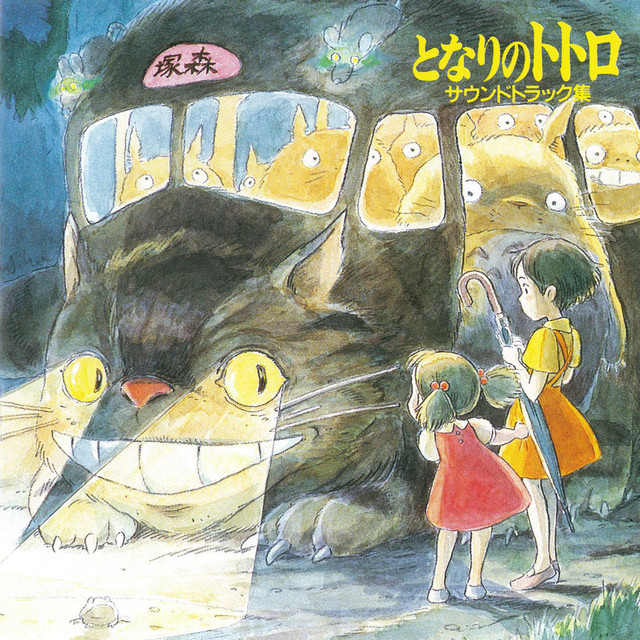
Album: となりのトトロ サウンドトラック集
In the quiet corridors of a recording studio, Joe Hisaishi held a single moment in his hands—the opening vowel of an African Pygmy tribe’s chant. That fleeting “A” sound would become the ghostly whisper of the soot sprites in one of Studio Ghibli’s most beloved films. “Mei to Susuwatari” (Mei and the Soot Sprites) stands as a fascinating example of how Hisaishi transforms cultural borrowing into something entirely new, creating a sonic bridge between worlds that shouldn’t logically connect.
The composer’s approach to this particular track reveals his broader philosophy about scoring animated films. When he sampled that brief vocal fragment from an African Pygmy recording—”originally quite long,” as he notes—he wasn’t simply adding exotic flavor. He manipulated the pitch, stretched the timbre, and embedded it within a carefully constructed soundscape that would make these mysterious creatures feel both ancient and playful. “Things like that stick in your ears strangely,” Hisaishi observed, recognizing the psychological power of sounds that hover just outside our cultural familiarity.
This technique speaks to a larger creative challenge that Hisaishi has grappled with since his work on Nausicaä: how to prevent animated films from falling into the trap of becoming “ordinary children’s movies.” His solution has been consistently radical—the marriage of ethnic musical elements with orchestral arrangements. For My Neighbor Totoro’s soundtrack, this meant creating what he calls a “back theme” in “The Path of the Wind,” using it strategically during the tree-growing sequences while maintaining the more familiar melodies of “Stroll” and the main Totoro theme.
What makes “Mei to Susuwatari” particularly intriguing is how it embodies Hisaishi’s hands-on approach to world music integration. Not content to simply layer samples over orchestral arrangements, the composer picked up the tabla himself, recording the rhythmic patterns that would anchor many of the film’s ethnic-influenced cues. This personal investment in the percussion—literally feeling the drum’s response under his palms—allowed him to understand how these sounds would interact with the more traditional Western instruments in his palette.
The track unfolds in the key of C minor, creating an appropriately mysterious atmosphere as young Mei encounters the soot sprites in the old house. The sparse instrumentation allows each element to breathe: the processed Pygmy vocal sample floats above a gentle tabla rhythm, while pizzicato strings provide melodic fragments that mirror the sprites’ quick, darting movements. It’s minimalist in the best sense, drawing from Steve Reich’s influence on Hisaishi’s compositional style while maintaining the warmth needed for a family film.
This careful balance reflects Hisaishi’s understanding of Miyazaki’s storytelling approach. Because Totoro is built around “daily sequences” rather than dramatic plot points, the composer initially considered creating an image album filled with songs rather than instrumental pieces. He believed that lyrics would help define scenes that might otherwise feel too gentle or unfocused. Ultimately, he chose instrumental music, but this consideration shaped his approach—each piece needed to carry enough character and specificity to support scenes where “not much happens” in conventional narrative terms.
“Mei to Susuwatari” succeeds because it doesn’t try to explain the soot sprites or make them less mysterious. Instead, Hisaishi creates a sonic environment that matches their essential nature: ancient yet innocent, foreign yet somehow familiar. The African vocal sample, processed and recontextualized, becomes something neither purely African nor purely Japanese—it inhabits the same liminal space as the sprites themselves.
This transformation process reveals something essential about Hisaishi’s artistic philosophy. Rather than appropriating world music traditions wholesale, he takes tiny fragments—a vocal onset, a rhythmic pattern—and rebuilds them into something that serves his narrative purpose. The result honors the source material while creating something genuinely new. In “Mei to Susuwatari,” that single sampled vowel becomes a bridge between cultures, generations, and the everyday world and the realm of forest spirits.
For European listeners familiar with minimalism and world music fusion, Hisaishi’s approach offers a model for how composers can work across cultural boundaries without falling into orientalist clichés. His success lies not in the authenticity of his borrowing, but in the honesty of his transformation—turning that fleeting African vocal into something that genuinely serves the story of a Japanese child discovering magic in her new home.
- さんぽ-オープニング主題歌-Read Review
- 五月の村Read Review
- オバケやしき!Read Review
- メイとすすわたりNow Playing
- 夕暮れの風Read Review
- こわくないRead Review
- おみまいにいこうRead Review
- おかあさんRead Review
- 小さなオバケRead Review
- トトロRead Review
- 塚森の大樹Read Review
- まいごRead Review
- 風のとおり道(インストゥルメンタンル)Read Review
- ずぶぬれオバケRead Review
- 月夜の飛行Read Review
- メイがいないRead Review
- ねこバスRead Review
- よかったねRead Review
- となりのトトロ-エンディング主題歌-Read Review
- さんぽ(合唱つき)Read Review