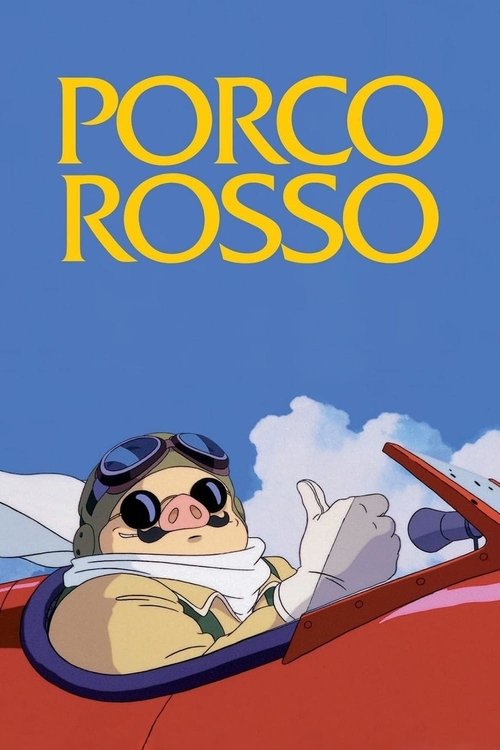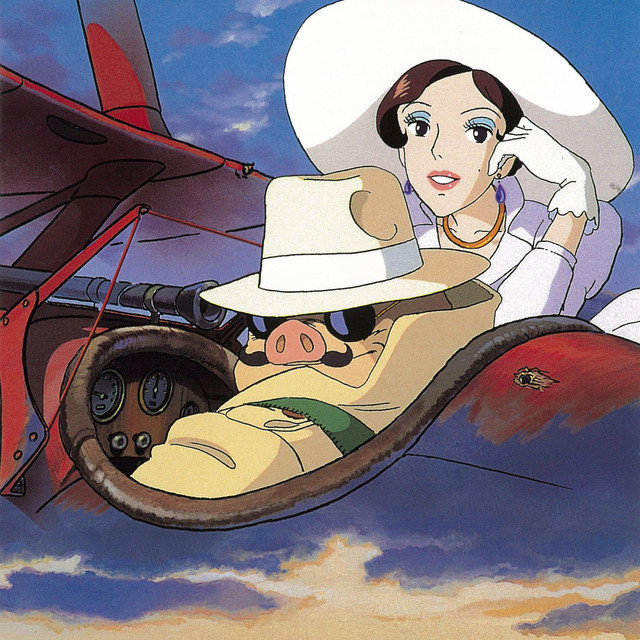
Album: 紅の豚 サウンドトラック
Picture this: Japan’s most celebrated film composer sits at his piano in 1992, crafting jazz melodies inspired by F. Scott Fitzgerald’s lost generation, completely unaware that across town, Hayao Miyazaki is plotting an animated film set in the exact same era. What sounds like Hollywood fiction was actually the serendipitous reality behind one of Studio Ghibli’s most emotionally complex soundtracks.
The song at the heart of this remarkable coincidence is “Kaerazaru Hibi” (Days That Will Never Return) from Porco Rosso, a composition that emerged from what Joe Hisaishi himself described as a “fateful” convergence of artistic vision. While working on his personal album “My Lost City,” Hisaishi found himself drawn to the romantic melancholy of 1920s America, the same period Fitzgerald immortalized in “The Great Gatsby.” Little did he know that Miyazaki was simultaneously developing a story about a disillusioned pilot navigating the skies above 1920s Italy.
When Hisaishi presented his completed album to Miyazaki, the director’s response was immediate and unequivocal: “I want all of it, everything for Porco Rosso.” This wasn’t mere enthusiasm—it was recognition of a shared artistic wavelength that transcended their individual creative processes. The album’s exploration of jazz-age nostalgia perfectly matched Miyazaki’s vision of Marco and Gina’s complicated romance, set against the backdrop of Adriatic glamour and post-war disillusionment.
“Kaerazaru Hibi” specifically emerged from Hisaishi’s desire to capture what he called “Casablanca-style nostalgia and masculine coolness.” Rather than simply borrowing from classics like “As Time Goes By,” he challenged himself to create something distinctly his own while evoking the same emotional territory. The result is a piece written in a contemplative B-flat major, featuring a solo jazz piano that speaks directly to the film’s central themes of lost love and irretrievable time.
The choice of jazz piano wasn’t merely aesthetic—it was historically grounded. The 1920s represented the height of the Jazz Age, when piano music dominated the soundscape of European cafés and American speakeasies alike. In Porco Rosso, when “Kaerazaru Hibi” first appears, it’s presented as diegetic music, played on a bar piano in Gina’s establishment. This clever narrative device allows the music to exist both within the story world and as emotional commentary, creating layers of meaning that operate on multiple levels.
Hisaishi’s creative process for the film was further guided by six poems Miyazaki provided as inspiration: “Seaplane Pilot’s Tango,” “Ascent,” “Twilight Adriatic Sea,” “Night Flight,” “Secret Garden,” and “Merry-Go-Round.” These literary sketches served as emotional roadmaps, helping Hisaishi understand not just the narrative beats but the psychological landscape the music needed to navigate.
The genius of “Kaerazaru Hibi” lies in its restraint. Where a lesser composer might have indulged in overly sentimental orchestration, Hisaishi keeps the arrangement spare and intimate. The melody unfolds with the unhurried confidence of someone telling a story they know by heart, each phrase weighted with the knowledge that some experiences can never be recaptured. The harmonic progression moves through familiar jazz changes, but with a distinctly Japanese sense of space and timing that gives the piece its unique character.
What makes this composition particularly remarkable is how it bridges cultural and temporal distances. Here’s music that evokes 1920s Europe, written by a Japanese composer in the 1990s, for an animated film about an Italian pilot. Yet somehow, it feels absolutely authentic to all these contexts simultaneously. This is the hallmark of Hisaishi’s mature style—his ability to absorb influences without being constrained by them.
The synchronicity between Hisaishi’s “My Lost City” project and Miyazaki’s film concept reveals something profound about artistic collaboration. Sometimes the most powerful creative partnerships emerge not from careful planning but from parallel journeys that converge at precisely the right moment. When Hisaishi speaks of feeling “something fateful” about this coincidence, he’s acknowledging that the best art often emerges from forces beyond conscious control.
“Kaerazaru Hibi” ultimately succeeds because it doesn’t just accompany the film’s emotional journey—it embodies it. Like Marco himself, the music carries the weight of experience while maintaining an essential elegance. It’s nostalgic without being maudlin, sophisticated without being cold, romantic without being naive. In just a few minutes of jazz piano, Hisaishi captures everything complex about looking backward while moving forward, about love that transforms even as it slips away.
This is how great film music works: not by telling us what to feel, but by creating space for feelings we already carry but struggle to name.
- 時代の風-人が人でいられた時-Read Review
- MAMMAIUTORead Review
- Addio!Read Review
- 帰らざる日々Now Playing
- セピア色の写真Read Review
- セリビア行進曲Read Review
- Flying boatmenRead Review
- Doom-雲の罠-Read Review
- Porco e BellaRead Review
- Fio-SeventeenRead Review
- ピッコロの女たちRead Review
- FriendRead Review
- Partner shipRead Review
- アドリアの海へRead Review
- 遠き時代を求めてRead Review
- 荒野の一目惚れRead Review
- 夏の終わりにRead Review
- 失われた魂-LOST SPIRIT-Read Review
- Dog fightRead Review
- Porco e Bella-Ending-Read Review