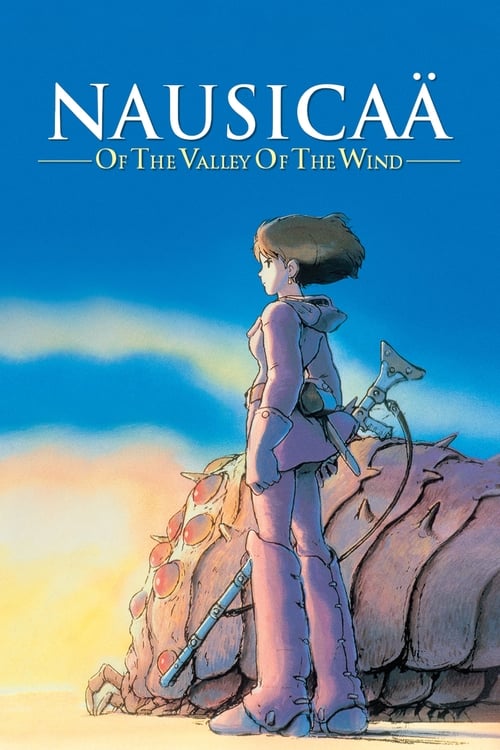
Album: 風の谷のナウシカ イメージアルバム 鳥の人…
What happens when a composer abandons the conventional wisdom of scoring to emotion and instead follows the protagonist’s gaze? Joe Hisaishi’s ‘Fukai’ (The Toxic Jungle) from the Nausicaä of the Valley of the Wind Image Album offers a fascinating glimpse into a revolutionary approach to film music that would reshape anime scoring forever.
The piece emerged from what Hisaishi describes as an unconventional philosophy: rather than underlining emotional peaks and valleys, he chose to score situations through Nausicaä’s perspective. This wasn’t about what the character felt, but about what she observed and experienced in her world. The toxic jungle, with its deadly spores and mysterious beauty, required music that captured not fear or wonder, but the complex reality of this post-apocalyptic ecosystem as seen through innocent yet determined eyes.
Hisaishi’s journey to this breakthrough began almost by accident. Initially hired only for the image album, he found himself thrust into the world of Studio Ghibli when Hayao Miyazaki became so captivated by the preliminary music that he insisted Hisaishi score the entire film. The director would listen to the image album tracks while drawing, letting the music guide his visual storytelling in an unprecedented collaboration.
The creative process itself was unlike anything Hisaishi had experienced. His meetings with Miyazaki and Isao Takahata stretched beyond ten hours each session, with both directors displaying what Hisaishi called ‘abnormally good ears.’ These weren’t casual discussions about mood or tempo. Takahata, for instance, identified Debussy-like qualities in the latter half of ‘The Toxic Jungle,’ demonstrating a level of musical sophistication that pushed Hisaishi to new heights of compositional precision.
This attention to detail reflected a deeper artistic philosophy. Takahata explained his insistence on working with Hisaishi by noting that ‘it’s difficult to give proper musical direction to someone without classical training.’ The composer’s background allowed for nuanced conversations about harmonic language, structural development, and the subtle ways music could serve narrative without overwhelming it.
For ‘The Toxic Jungle’ specifically, Hisaishi crafted a soundscape that begins with sparse, almost clinical textures in a minor mode, building gradually through layered strings and woodwinds. The piece avoids the typical horror movie tropes one might expect for a deadly forest. Instead, it maintains an almost documentary-like objectivity, punctuated by moments of strange beauty that mirror the jungle’s dual nature as both threat and marvel.
This approach connected to Hisaishi’s broader musical influences on the project. He deliberately drew inspiration from Irish and Scottish folk melodies for the main Nausicaä theme, seeking what he called ‘something simple yet nostalgic.’ He recognized that Japanese audiences carried these melodic patterns in their cultural memory through school songs and folk music, creating an immediate emotional connection without resorting to obvious musical signposts.
The composer’s first impression of Miyazaki as possessing ‘simple, handmade humanity’ proved prophetic. This collaborative spirit would define their working relationship across decades, beginning with these intensive sessions over Nausicaä. The director’s willingness to let music guide his visual creation, combined with Hisaishi’s openness to detailed critique, established a new model for anime production.
‘The Toxic Jungle’ stands as more than just an effective piece of film music. It represents a philosophical shift toward environmental storytelling through sound, where the composer becomes less a manipulator of audience emotion and more a translator of narrative perspective. By scoring situations rather than feelings, Hisaishi created space for viewers to form their own emotional responses while being guided by the protagonist’s unique viewpoint.
This methodology would influence countless anime composers who followed, establishing Studio Ghibli’s distinctive approach to musical storytelling. The piece demonstrates how revolutionary film music often emerges not from radical sonic experimentation, but from fundamental reconsiderations of music’s role in narrative. When composers stop asking ‘what should the audience feel?’ and start asking ‘what does the character see?’, entirely new possibilities for musical expression emerge.
Today, ‘The Toxic Jungle’ continues to fascinate listeners precisely because it refuses easy categorization. Neither purely atmospheric nor traditionally melodic, it occupies a unique space that mirrors the complex world it describes. In abandoning conventional emotional scoring, Hisaishi discovered something far more powerful: music that invites active engagement rather than passive consumption, creating a lasting impact that extends well beyond the original film.
- 風の伝説Read Review
- はるかな地へ…(~ナウシカのテーマ~)Read Review
- メーヴェRead Review
- 巨神兵~トルメキア軍~クシャナ殿下Read Review
- 腐海Now Playing
- 王蟲Read Review
- 土鬼軍の逆襲Read Review
- 戦闘Read Review
- 谷への道Read Review
- 遠い日々(~ナウシカのテーマ~)Read Review
- 鳥の人(~ナウシカのテーマ~)Read Review