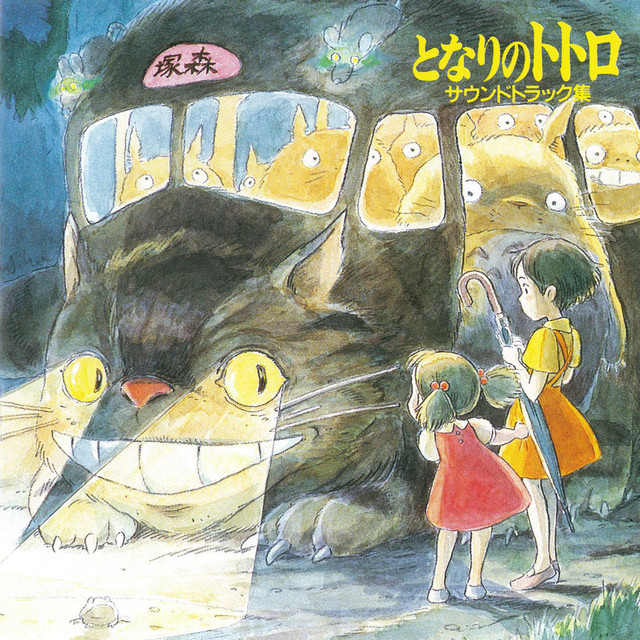
Album: となりのトトロ サウンドトラック集
Creating music for a film about childhood wonder presents a unique challenge: how do you avoid making something that sounds like mere children’s entertainment? This dilemma sat at the heart of Joe Hisaishi’s work on My Neighbor Totoro, particularly evident in the gentle track ‘Yokatta ne’ (How Wonderful) from the film’s soundtrack album.
Hisaishi faced what he described as a compositional tightrope walk. ‘If I wrote purely orchestral music, it would become just another ordinary children’s film,’ he explained. The solution lay in his innovative approach of blending ethnic elements with traditional orchestration, a technique he had been developing since his work on Nausicaä of the Valley of the Wind.
The challenge with Totoro was particularly acute because the film’s narrative structure relied heavily on everyday sequences rather than dramatic plot points. ‘Yokatta ne’ exemplifies how Hisaishi navigated this terrain. Rather than overwhelming these quiet moments with bombastic orchestration, he chose restraint and subtlety. The track features a delicate interplay between Western strings and ethnic percussion elements, creating what he called a ‘minimal music-like, slightly ethnic atmosphere.’
Interestingly, Hisaishi took a hands-on approach to achieving this ethnic sound. He personally performed the tabla percussion parts heard throughout the soundtrack, sampling his own performances to create the distinctive rhythmic foundation that gives tracks like ‘Yokatta ne’ their unique character. This personal touch reflects his commitment to authenticity in bridging musical worlds.
The composer’s philosophy for the entire project centered on what he termed ‘non-strong music.’ Given the film’s gentle dramatic arc, he worried that overly assertive compositions would ‘detach from the screen.’ This approach required walking a fine line – too subtle, and the music might drift into mere nursery rhyme territory.
Hisaishi’s structural approach to the Totoro soundtrack reveals sophisticated musical thinking. He built the score around main themes like ‘Sanpo’ (Walk) and the title song ‘Tonari no Totoro,’ while using what he called a ‘hidden theme’ – ‘Kaze no Toorimichi’ (Path of the Wind) – specifically for scenes involving the forest spirits. ‘Yokatta ne’ fits into this carefully planned architecture as part of the emotional scaffolding supporting the film’s quieter moments.
The decision to create an image album featuring songs rather than purely instrumental pieces reflects another layer of Hisaishi’s strategic thinking. He believed that vocal pieces would provide clearer imagery for the film’s numerous daily life sequences, compensating for what he saw as the story’s weaker narrative drive. This approach influenced how he crafted individual pieces, ensuring each served both standalone listening and narrative function.
In ‘Yokatta ne,’ these various influences converge into a composition that feels both grounded and magical. The piece opens with a simple melodic statement in A major, supported by gentle strings that gradually expand to include woodwinds. The underlying tabla rhythm, performed by Hisaishi himself, provides an almost hypnotic pulse that prevents the sweetness from becoming cloying.
What makes this track particularly effective is how it embodies Hisaishi’s broader philosophy about film music for family audiences. Rather than talking down to young listeners or overwhelming them with complexity, ‘Yokatta ne’ treats childhood emotions with the same musical sophistication as any adult drama. The ethnic percussion elements add an worldly quality that elevates the material beyond typical children’s film scoring.
The success of this approach is evident in how the Totoro soundtrack has endured. Tracks like ‘Yokatta ne’ continue to resonate with listeners decades after the film’s release, proving that Hisaishi’s careful balance between accessibility and artistry achieved its goal. The music manages to capture the wonder of childhood without condescending to its audience.
Hisaishi’s work on ‘Yokatta ne’ and the broader Totoro soundtrack represents a masterclass in solving compositional problems through creative constraint. By deliberately avoiding ‘strong’ musical statements and instead embracing subtlety and cross-cultural elements, he created music that serves the film while standing alone as compelling listening. The track demonstrates how thoughtful musical philosophy, combined with hands-on craftsmanship and cultural sensitivity, can transform potential limitations into artistic strengths.
- さんぽ-オープニング主題歌-Read Review
- 五月の村Read Review
- オバケやしき!Read Review
- メイとすすわたりRead Review
- 夕暮れの風Read Review
- こわくないRead Review
- おみまいにいこうRead Review
- おかあさんRead Review
- 小さなオバケRead Review
- トトロRead Review
- 塚森の大樹Read Review
- まいごRead Review
- 風のとおり道(インストゥルメンタンル)Read Review
- ずぶぬれオバケRead Review
- 月夜の飛行Read Review
- メイがいないRead Review
- ねこバスRead Review
- よかったねNow Playing
- となりのトトロ-エンディング主題歌-Read Review
- さんぽ(合唱つき)Read Review