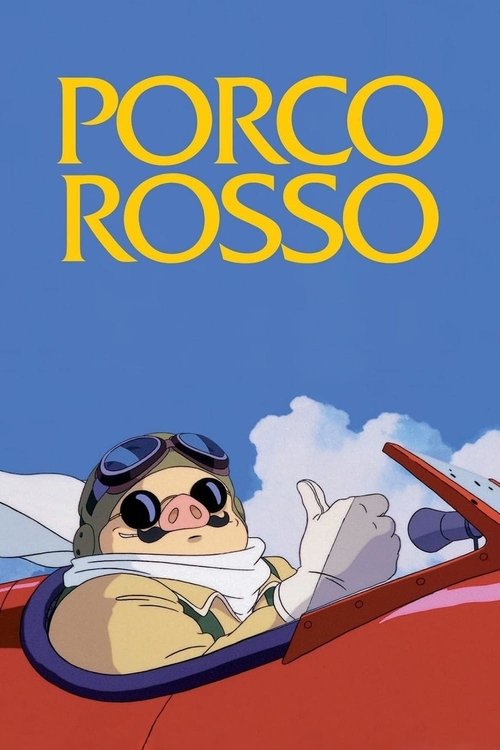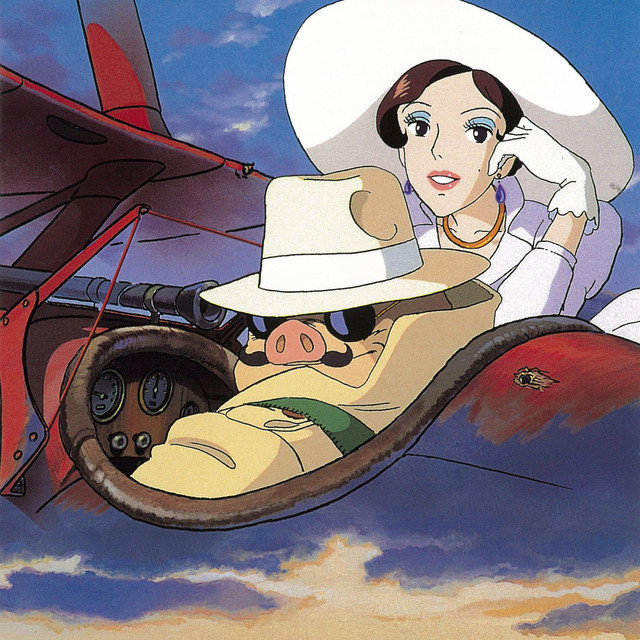
Album: 紅の豚 サウンドトラック
In the dimly lit corners of an Adriatic speakeasy, a piano tells stories of lost love and fading dreams. This isn’t just any piano piece—it’s “Sepia-Colored Photograph” (セピア色の写真), one of Joe Hisaishi’s most emotionally charged compositions from the Porco Rosso soundtrack, born from a remarkable convergence of artistic destiny and musical intuition.
The genesis of this haunting melody traces back to what Hisaishi himself described as a “fateful coincidence.” While working on Porco Rosso in the early 1990s, the composer was simultaneously crafting his solo album ‘My Lost City,’ inspired by F. Scott Fitzgerald’s literary world and the intoxicating spirit of 1920s America. When Hayao Miyazaki chose the same era for his aviation romance, Hisaishi felt the hand of destiny at work—two artists, decades apart from their subject matter, finding themselves drawn to the same cultural moment.
This serendipitous alignment would prove crucial to understanding “Sepia-Colored Photograph.” The piece emerges from the film’s narrative like a memory surfacing from deep water, first heard as diegetic music—the kind that exists within the story world itself, played by a bar pianist for patrons nursing their drinks and their regrets. This wasn’t merely a scoring decision but a historically informed choice that speaks to Hisaishi’s deep understanding of the Jazz Age.
The 1920s weren’t just called the Jazz Age for marketing purposes; they represented a genuine cultural revolution where jazz piano became the emotional vocabulary of a generation caught between pre-war innocence and post-war disillusionment. For Marco and Gina, the film’s star-crossed protagonists, jazz serves as their shared language of longing. Hisaishi’s decision to voice their theme through jazz piano wasn’t just aesthetically pleasing—it was culturally authentic.
But authenticity requires more than period accuracy; it demands genuine musical understanding. Hisaishi’s jazz credentials run deeper than many realize. While known primarily as an orchestral composer and minimalist, his formative years were soundtracked by Miles Davis, John Coltrane, and especially Mal Waldron, whose introspective piano style left an indelible mark on the young composer’s sensibilities. This influence permeates “Sepia-Colored Photograph,” where Waldron’s contemplative approach to melody and harmony echoes through every phrase.
The composition itself unfolds in a tender B-flat major, its moderate tempo allowing each note to breathe with the weight of memory. The melody moves with the kind of deliberate phrasing that suggests conversation—not the rapid-fire exchanges of bebop, but the slower, more thoughtful dialogue of two people who have known each other across decades of separation. The harmonic progressions borrow from jazz tradition while maintaining Hisaishi’s distinctive melodic sensibility, creating something that feels both period-appropriate and uniquely his own.
What makes “Sepia-Colored Photograph” particularly powerful is how it functions within the film’s emotional architecture. Unlike typical film scoring that supports action or dialogue, this piece carries the entire weight of Marco and Gina’s relationship—their shared past, their present complications, and their uncertain future. The sepia-toned imagery suggested by the title perfectly captures the nostalgic quality that suffuses both the music and the film itself.
The creative process behind this piece reveals much about Hisaishi’s artistic philosophy. When Miyazaki heard the completed ‘My Lost City’ album, his response was immediate and emphatic: he wanted “all of it” for Porco Rosso. This wasn’t just admiration; it was recognition that Hisaishi had somehow channeled the exact emotional landscape that Miyazaki was trying to create visually. The composer’s intuitive understanding of the 1920s spirit—gleaned from years of listening to the era’s jazz masters—had produced music that served the film’s needs perfectly.
This convergence of jazz sensibility and solo album material created what music scholars have identified as unique characteristics in the Porco Rosso score. These two elements—jazz as a musical language and the personal artistic exploration represented by ‘My Lost City’—elevated the soundtrack beyond typical adventure film scoring. Instead of merely accompanying aerial dogfights and romantic tensions, the music became a third character in the story, carrying emotional information that dialogue and visuals alone couldn’t convey.
“Sepia-Colored Photograph” stands as perhaps the purest expression of this synthesis. In its gentle swing rhythm and melancholic melodic arc, we hear not just a composer writing for a film, but an artist drawing from deep wells of musical knowledge and personal creativity to create something that transcends its original context. The piece works equally well as standalone music and as film score—a rare achievement that speaks to both Hisaishi’s craft and his understanding of how music can carry the full weight of human emotion.
Listening to “Sepia-Colored Photograph” today, one can hear the echoes of Mal Waldron’s introspective touch, feel the atmospheric weight of 1920s jazz clubs, and sense the deep artistic connection between two creators who found themselves, through some beautiful accident of timing, exploring the same emotional territory from different artistic vantage points. In those sepia-toned notes lies the essence of what makes great film music: the ability to transform a moment on screen into something universal and enduring.
- 時代の風-人が人でいられた時-Read Review
- MAMMAIUTORead Review
- Addio!Read Review
- 帰らざる日々Read Review
- セピア色の写真Now Playing
- セリビア行進曲Read Review
- Flying boatmenRead Review
- Doom-雲の罠-Read Review
- Porco e BellaRead Review
- Fio-SeventeenRead Review
- ピッコロの女たちRead Review
- FriendRead Review
- Partner shipRead Review
- アドリアの海へRead Review
- 遠き時代を求めてRead Review
- 荒野の一目惚れRead Review
- 夏の終わりにRead Review
- 失われた魂-LOST SPIRIT-Read Review
- Dog fightRead Review
- Porco e Bella-Ending-Read Review