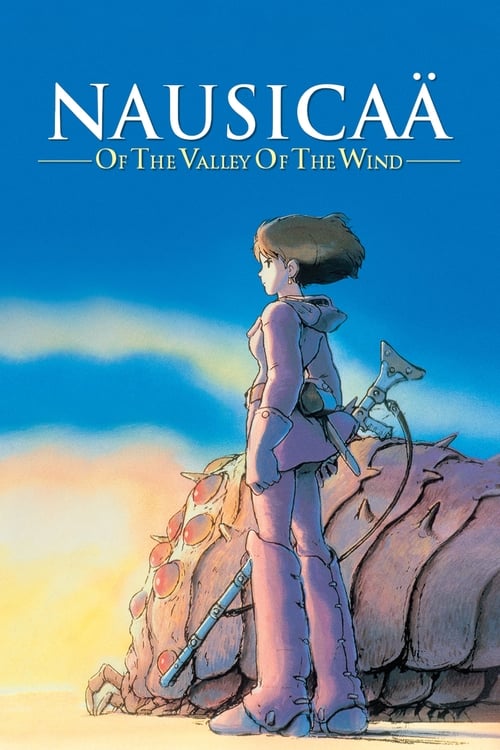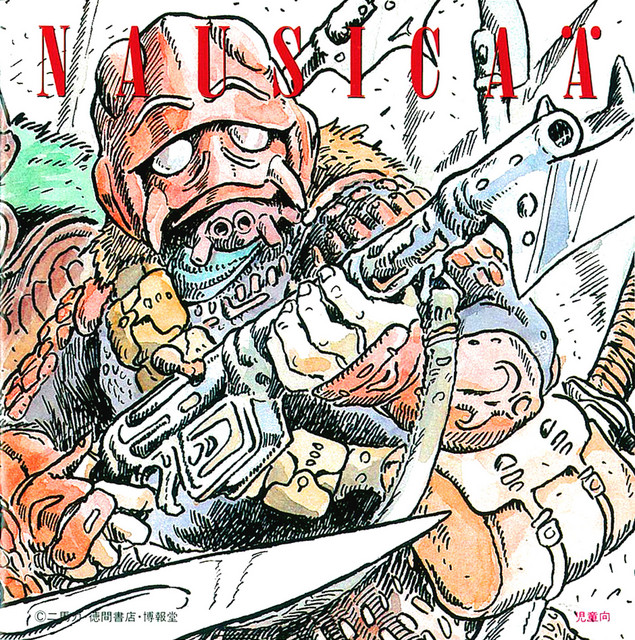
Album: 風の谷のナウシカ イメージアルバム 鳥の人…
What happens when a composer abandons the traditional rules of film scoring? Joe Hisaishi discovered the answer while crafting ‘Sentou’ (Battle) for Nausicaä of the Valley of the Wind’s image album, Bird Person. This piece exemplifies a radical departure from conventional film music philosophy that would reshape how we think about cinematic soundscapes.
The story behind ‘Sentou’ begins with an unusual proposition. Hisaishi was initially hired only for the image album – a collection of musical impressions created before the film’s completion. Director Hayao Miyazaki would listen to these compositions while drawing, allowing the music to influence his visual storytelling. This reverse process, where music informed animation rather than following it, set the stage for something extraordinary.
Hisaishi’s approach to ‘Sentou’ reflected his groundbreaking musical philosophy: attach music not to emotions, but to situations. As he explained, the music enters through Nausicaä’s perspective – not reflecting her feelings, but capturing what she observes and experiences. This subtle but profound shift creates a unique auditory experience where listeners become witnesses rather than emotional participants.
In ‘Sentou’, this philosophy manifests through stark, percussive elements that mirror the mechanical nature of warfare while incorporating organic textures that represent the natural world’s resistance. The piece operates in a minor key with driving rhythms that suggest urgency without manipulating the listener’s emotional state. Instead of swelling strings that might traditionally accompany battle scenes, Hisaishi employs unexpected instrumental combinations that maintain observational distance.
The creation of this approach emerged from extraordinarily detailed collaborative sessions. Both Miyazaki and Isao Takahata possessed what Hisaishi described as ‘abnormally good ears.’ Their music meetings stretched beyond ten hours, with discussions so precise that Takahata could identify Debussy-like qualities in melodic passages. For Hisaishi, these sessions represented an unprecedented level of musical scrutiny that pushed his compositional boundaries.
This meticulous attention shaped every aspect of ‘Sentou’. The piece required multiple revisions as the directors demanded specific atmospheric qualities that aligned with their vision of mechanized conflict within a living ecosystem. Hisaishi learned to think beyond conventional orchestral arrangements, incorporating unconventional percussion and electronic elements that would become signatures of his later film work.
The collaboration’s intensity stemmed from Takahata’s belief that only someone with classical training could handle complex film music directions. Hisaishi’s conservatory background enabled him to understand and execute their sophisticated musical concepts. His first impression of Miyazaki – a man with ‘simple, handmade humanity’ – belied the director’s complex musical sensibilities.
Interestingly, while developing the Nausicaä theme, Hisaishi drew inspiration from Irish and Scottish folk melodies, seeking something ‘simple yet somehow nostalgic.’ He recognized that Japanese audiences carried these musical DNA through educational songs that borrowed from Celtic traditions. This folk influence subtly appears in ‘Sentou’ through melodic fragments that humanize the mechanical chaos of battle.
The success of the image album, including ‘Sentou’, convinced Miyazaki to champion Hisaishi for the film’s complete score. What began as a limited assignment evolved into one of cinema’s most influential composer-director partnerships. The track demonstrated Hisaishi’s ability to serve the story rather than dominate it – a quality that would define his approach to film music.
‘Sentou’ ultimately represents more than battle music; it embodies a philosophical shift in cinematic composition. By focusing on situational rather than emotional cues, Hisaishi created space for audiences to form their own emotional relationships with the visual narrative. The piece doesn’t tell listeners how to feel about conflict; instead, it presents the reality of mechanized warfare within a natural world, allowing individual interpretation.
This revolutionary approach influenced countless film composers who followed. The idea that music could observe rather than manipulate opened new possibilities for cinematic storytelling. ‘Sentou’ stands as evidence that the most powerful film music often comes from restraint rather than overwhelming emotional manipulation.
Today, listening to ‘Sentou’ reveals layers of complexity that reward careful attention. The piece functions simultaneously as autonomous musical composition and integral story component. It demonstrates how innovative collaboration between composer and director can produce works that transcend their original medium, creating lasting artistic statements that continue inspiring new generations of creators.
- 風の伝説Read Review
- はるかな地へ…(~ナウシカのテーマ~)Read Review
- メーヴェRead Review
- 巨神兵~トルメキア軍~クシャナ殿下Read Review
- 腐海Read Review
- 王蟲Read Review
- 土鬼軍の逆襲Read Review
- 戦闘Now Playing
- 谷への道Read Review
- 遠い日々(~ナウシカのテーマ~)Read Review
- 鳥の人(~ナウシカのテーマ~)Read Review