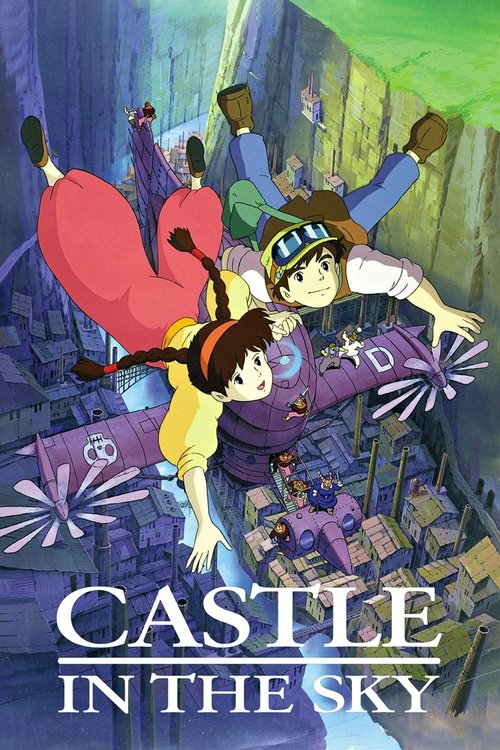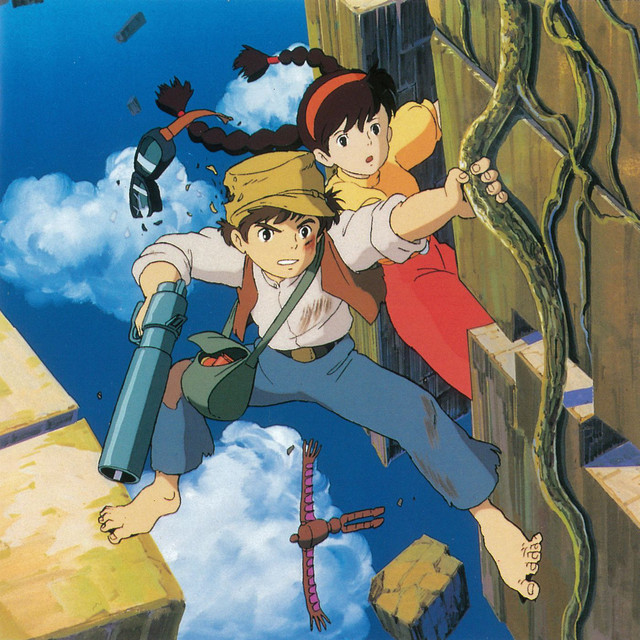
Album: 天空の城ラピュタ サウンドトラック ~飛行石の謎~
In a small café near Studio Ghibli in late June 1986, three men sat hunched over sketches and musical scores, their voices rising and falling in animated discussion. Director Hayao Miyazaki, producer Isao Takahata, and composer Joe Hisaishi were locked in the kind of creative collaboration that would produce one of anime’s most beloved soundtracks. They were crafting the musical soul of ‘Castle in the Sky,’ and at the heart of their work lay a radical approach that would forever change how animated films and music could unite.
Hisaishi had made a bold declaration before recording began: ‘This time, I want to thoroughly pursue matching the movement of the pictures with the flow of the music.’ It sounds simple enough, but what followed was a meticulous process that bordered on the obsessive. Armed with rush film footage, Hisaishi and his team would check the exact timing of every visual movement down to the second, feeding this data into a Fairlight III synthesizer to construct the rhythmic foundation of each piece.
The title track ‘Castle in the Sky’ exemplifies this philosophy perfectly. Built around a flowing 6/8 meter that mirrors the gentle swaying of the floating island itself, the composition moves from intimate woodwind passages to soaring orchestral peaks with mathematical precision. Every crescendo aligns with Pazu and Sheeta’s wonder, every pause mirrors their breath-catching moments of discovery. When the full 50-piece orchestra recorded at Nikkatsu Studio on July 8th, they weren’t just playing music—they were embodying the very essence of flight.
Yet behind this technical precision lay a deeply human creative process. Miyazaki had provided Hisaishi with a poetic memo describing his vision for the ‘Castle of Time’—a lost paradise ‘beyond the shining peaks of clouds,’ filled with ‘longing, mystery, and darkness that contains both evil and beautiful things.’ These words became the emotional DNA of Hisaishi’s composition. The main theme carries that sense of yearning in its ascending melodic lines, while underlying harmonies hint at the castle’s dual nature as both sanctuary and tomb.
Hisaishi’s musical philosophy for the project was refreshingly straightforward: create melodies that children could connect with emotionally, music that would warm their hearts. This represented a deliberate shift from his previous work on ‘Arion,’ which had layered complex sound samples and experimental textures. For ‘Castle in the Sky,’ he committed to acoustic simplicity from the outset, believing that clear, honest melodies would serve the story better than technical showmanship.
This approach wasn’t without its challenges. The collaborative process revealed fascinating tensions between imagination and reality. Initially, Hisaishi had composed a light, cheerful theme for the flaptors—those mechanical flying machines—imagining them fluttering playfully through the sky. But when Miyazaki’s finished scenes arrived, nearly every flaptor appearance occurred during moments of mortal peril. The whimsical theme suddenly felt jarringly inappropriate, forcing Hisaishi to rethink his musical characterization entirely.
Such discoveries were part of what made the June 23rd café meeting so crucial. Using the previously recorded image album as their starting point, the three creators could identify where their separate visions aligned and where they diverged. Hisaishi later reflected that while some tracks needed complete reimagining, the fundamental musical identity of the castle itself remained unchanged—suggesting that Miyazaki’s initial poetic vision had struck something essential.
The recording process itself unfolded with remarkable efficiency. After the June 24th start date at Wonder Station, where Hisaishi constructed his rhythmic frameworks, the orchestral sessions captured something magical. The strings in ‘Castle in the Sky’ seem to float weightlessly, while brass sections provide just enough grounding to keep the music tethered to earth. The interplay between solo instruments and full ensemble mirrors the film’s themes of individual courage within vast, mysterious forces.
What emerges from this creative history is a portrait of artistic collaboration at its finest. Hisaishi’s willingness to subordinate his musical instincts to the needs of the visual narrative—checking timings to the second, rebuilding tracks when scenes demanded it—demonstrates a composer secure enough in his abilities to serve something larger than himself. Yet the music never feels subservient; instead, it achieves that rare synthesis where sound and image become inseparable.
Listening to ‘Castle in the Sky’ today, more than three decades after those café discussions, one hears not just a beautiful melody but the sound of creative minds finding perfect harmony. In Hisaishi’s hands, Miyazaki’s lost paradise became audible—a place where technical precision and emotional truth could coexist, where children’s hearts could indeed be warmed by music that dared to dream alongside them. The track stands as proof that when animation truly breathes through music, both art forms transcend their individual limitations to create something approaching magic.
- 空から降ってきた少女Read Review
- スラッグ溪谷の朝Read Review
- 愉快なケンカ(~追跡)Read Review
- ゴンドアの思い出Read Review
- 失意のパズーRead Review
- ロボット兵(復活~救出)Read Review
- 合唱 君をのせてRead Review
- シータの決意Read Review
- タイガーモス号にてRead Review
- 破滅への予兆Read Review
- 月光の雲海Read Review
- 天空の城ラピュタNow Playing
- ラピュタの崩壊Read Review
- 君をのせてRead Review