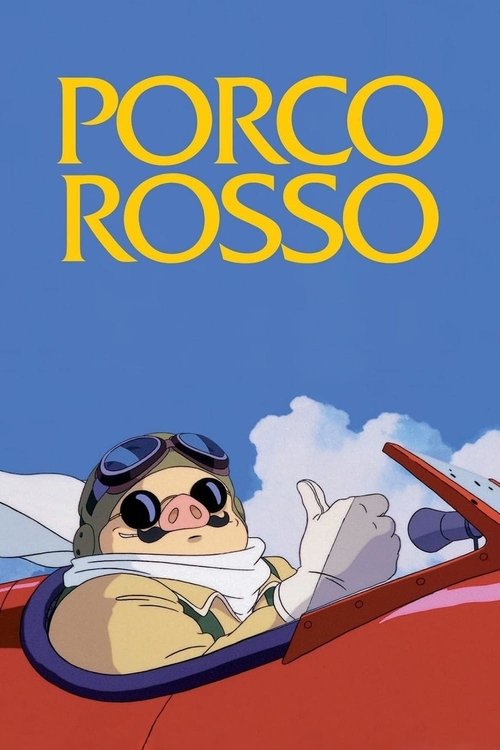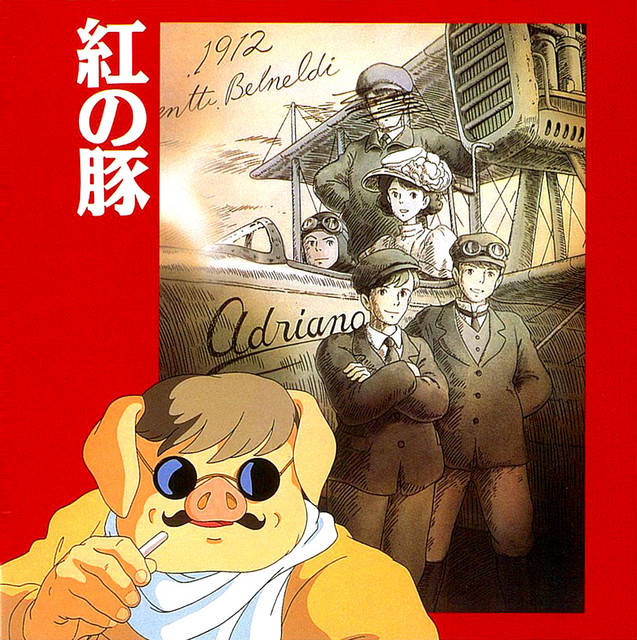
Album: 紅の豚 イメージアルバム
In the world of film scoring, serendipity rarely strikes twice. Yet for Joe Hisaishi, the composer behind Studio Ghibli’s most beloved soundtracks, 1992 brought an extraordinary convergence of artistic vision that would reshape his approach to cinematic music forever.
While Hayao Miyazaki was developing his romantic adventure ‘Porco Rosso’ (The Crimson Pig), Hisaishi found himself consumed by an entirely separate project. Inspired by F. Scott Fitzgerald’s literary world, he was crafting a solo album called ‘My Lost City,’ an ambitious exploration of 1920s America through sound. The composer, known primarily for his orchestral minimalism, was diving deep into jazz territories—drawing from his longtime admiration for Miles Davis, John Coltrane, and particularly pianist Mal Waldron, whose improvisational style had profoundly influenced Hisaishi since his student days.
Then came the moment that would define both projects. When Miyazaki revealed that ‘Porco Rosso’ would be set in the same Jazz Age period that Hisaishi was musically inhabiting, the composer felt what he later described as “something deeply fateful.” Here were two artists, working independently, who had unconsciously chosen to explore the same romantic era of aviators, speakeasies, and lost innocence.
‘Crimson Wings’ (Shinku no Tsubasa), one of the standout pieces from the film’s image album, exemplifies this remarkable artistic synchronicity. Composed in a flowing 4/4 tempo with rich jazz harmonies, the piece weaves together Hisaishi’s orchestral sensibilities with the smoky, nostalgic atmosphere of 1920s European café culture. The melody, carried by a haunting trumpet line over gentle piano accompaniment, captures both the freedom of flight and the melancholy of dreams deferred—themes that would become central to Porco’s character.
When Hisaishi presented the completed ‘My Lost City’ album to Miyazaki, the director’s reaction was immediate and decisive: “I want all of those songs, all of them for ‘Porco Rosso.’” This unprecedented request marked a turning point in their collaboration. Unlike their previous four films together, this project would incorporate not just original compositions, but entire pieces from Hisaishi’s personal artistic journey.
The integration wasn’t merely practical—it was transformative. The opening sequence of ‘Porco Rosso’ was specifically written with ‘My Lost City’s’ track “1920~Age of Illusion” in mind, while the canal takeoff scene directly featured “Madness” from the album. These weren’t adaptations; they were perfect marriages of image and sound that had somehow been destined for each other.
From the image album, three major themes would eventually find their way into the final film score: “Marco and Gina’s Theme” (which became “Days Gone By”), “Dabo Haze” (transformed into “Flying Boatmen”), and “Piccolo Company” (evolved into “The Women of Piccolo”). Each underwent subtle but significant development, gaining dramatic weight and emotional complexity as they moved from concept to screen.
‘Crimson Wings’ itself represents this evolution beautifully. In its image album form, the piece functions as pure musical storytelling—a three-minute journey through clouds and memory that needs no visual accompaniment. The composition’s structure, with its ascending melodic lines and subtle key modulations, suggests both literal flight and metaphorical soaring above life’s disappointments.
What makes this convergence particularly fascinating is how it revealed new dimensions of Hisaishi’s musical identity. While audiences knew him as the orchestral architect behind ‘Totoro’ and ‘Castle in the Sky,’ ‘Porco Rosso’ showcased his deep understanding of jazz idioms. His years of listening to Waldron’s introspective piano work and Davis’s modal explorations had quietly informed his compositional voice, waiting for the right moment to emerge.
The jazz elements didn’t simply add period flavor to ‘Porco Rosso’—they fundamentally altered the film’s emotional landscape. Where Miyazaki’s earlier adventures had soared on wings of pure fantasy, this story grounded itself in adult themes of loss, regret, and the bittersweet nature of love. Hisaishi’s music, with its sophisticated harmonic language and melancholic undertones, provided the perfect sonic foundation for these mature themes.
‘Crimson Wings’ stands as more than just another beautiful Hisaishi melody. It represents a moment when artistic destiny intervened, when two creators discovered they were dreaming the same dream. In its jazz-influenced harmonies and soaring melodic lines, we hear the sound of creative collaboration at its most profound—not just between composer and director, but between past and present, between the romantic ideals of the 1920s and the complex realities of the 1990s.
That a piece written for a personal jazz exploration could so perfectly capture the essence of an animated pig pilot’s emotional journey speaks to the universal language of music itself. Sometimes, the most meaningful artistic statements emerge not from careful planning, but from the mysterious moments when separate creative visions suddenly reveal themselves to be part of the same larger story.
- アドリア海の青い空Read Review
- 冒険飛行家の時代Read Review
- 真紅の翼Now Playing
- 雲海のサボイアRead Review
- ピッコロ社Read Review
- 戦争ゴッコRead Review
- ダボハゼRead Review
- アドリアーノの窓Read Review
- 世界恐慌Read Review
- マルコとジーナのテーマRead Review