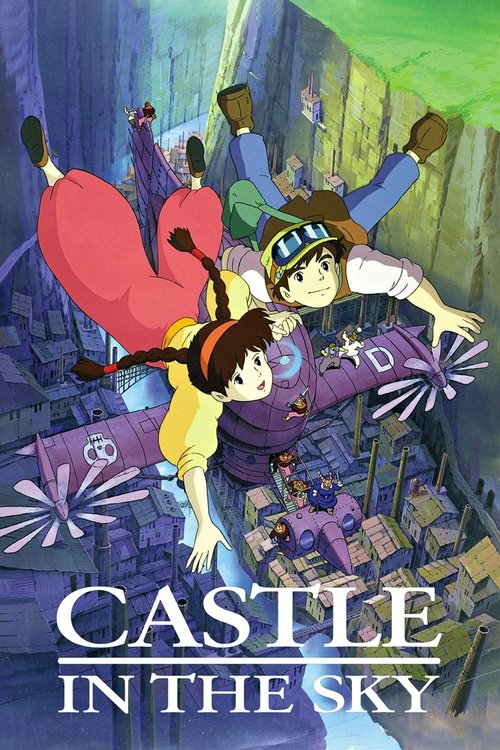
Album: 天空の城ラピュタ サウンドトラック ~飛行石の謎~
In the summer of 1986, something revolutionary was happening in a Japanese recording studio. Joe Hisaishi wasn’t just composing music for Hayao Miyazaki’s Castle in the Sky—he was creating a new paradigm for how film scores could be crafted. The track “Hametsu e no Yokou” (Premonition of Destruction) serves as a perfect example of this groundbreaking approach, where every musical phrase was meticulously timed to match the exact movement of animation frames.
The genesis of this precision began with an unconventional two-stage composition process. Unlike traditional film scoring, where composers write music after seeing completed footage, Hisaishi first created an entire image album titled “The Girl Who Fell From the Sky.” This preliminary work established the musical DNA for the entire project, giving both Hisaishi and producer Isao Takahata a shared musical vocabulary before they even entered the studio.
“Probably no one else is doing anything like this,” Hisaishi reflected on this unique methodology. By June 23, 1986, when the three creative minds—Miyazaki, Takahata, and Hisaishi—met at a coffee shop near Studio Ghibli for their crucial BGM discussions, they could speak in specific terms: “This scene needs that theme.” The image album had created a musical shorthand that made their collaboration remarkably efficient.
But the real innovation came in Hisaishi’s recording philosophy. He declared his intention to “thoroughly match the flow of music with the movement of pictures,” a statement that would fundamentally change how he approached every cue, including the ominous “Premonition of Destruction.” Using rush film videos, Hisaishi’s team checked the precise timing of every visual movement down to the second, then input this data into their Fairlight III synthesizer to construct the rhythmic foundation.
This technical precision served a deeply emotional purpose. For “Premonition of Destruction,” the track needed to capture the mounting dread as the ancient civilization’s technology awakens with devastating potential. The piece builds through carefully orchestrated layers, each timed to specific visual cues that wouldn’t be finalized until the animation was complete. The result is a composition that feels inevitable, as if the music and visuals were born from the same creative impulse.
Hisaishi’s musical philosophy for Castle in the Sky emphasized acoustic simplicity over the sample-heavy approach he’d used in previous works like “Arion.” This decision wasn’t merely aesthetic—it was emotional. He wanted to create music that would “warm children’s hearts” while delivering melodies that conveyed “love, dreams, and adventure.” Even a dark piece like “Premonition of Destruction” maintains this clarity of intent, using traditional orchestral instruments to create an atmosphere that’s genuinely unsettling rather than merely noisy.
The production schedule reveals the intensity of this approach. By June 20, the rush films were nearly complete, giving the team just three days before recording began at Wonder Station on June 24. The Fairlight III sessions established the rhythmic backbone, but the real magic happened on July 8 at Nikkatsu Studio, where nearly fifty orchestra members brought pieces like “Premonition of Destruction” to life. The track’s final form—with its building string tensions and brass punctuations—emerged from this marriage of technological precision and human performance.
What makes “Premonition of Destruction” particularly fascinating is how it embodies Miyazaki’s thematic concerns about technology and progress. The composer had access to Miyazaki’s detailed character notes, including evocative descriptions of figures like Dola: “Passion and pride, appetite and greed, overflowing love and hatred.” While this specific note refers to Dola’s theme, it illustrates the level of emotional detail Hisaishi was working with throughout the score.
The track demonstrates Hisaishi’s ability to balance complexity with accessibility. Set in a minor key that gradually builds through orchestral layers, “Premonition of Destruction” uses a moderate tempo that allows each instrumental voice to be clearly heard, even as the harmonic tension increases. The piece achieves its ominous effect not through overwhelming volume or dissonance, but through carefully controlled dynamics and the gradual introduction of unsettling harmonic progressions.
By July 12, when the final mixdown was completed, Hisaishi had created more than just a film score—he had pioneered a new relationship between composer and animator. “Premonition of Destruction” and the entire Castle in the Sky soundtrack proved that film music could be both emotionally direct and technically sophisticated, accessible to children while maintaining artistic integrity.
This approach would influence not only Hisaishi’s future collaborations with Studio Ghibli but also inspire a generation of film composers to think more carefully about the relationship between musical timing and visual storytelling. In “Premonition of Destruction,” we hear not just the sound of approaching danger, but the sound of cinema itself evolving into something more precise, more emotionally honest, and ultimately more powerful.
- 空から降ってきた少女Read Review
- スラッグ溪谷の朝Read Review
- 愉快なケンカ(~追跡)Read Review
- ゴンドアの思い出Read Review
- 失意のパズーRead Review
- ロボット兵(復活~救出)Read Review
- 合唱 君をのせてRead Review
- シータの決意Read Review
- タイガーモス号にてRead Review
- 破滅への予兆Now Playing
- 月光の雲海Read Review
- 天空の城ラピュタRead Review
- ラピュタの崩壊Read Review
- 君をのせてRead Review