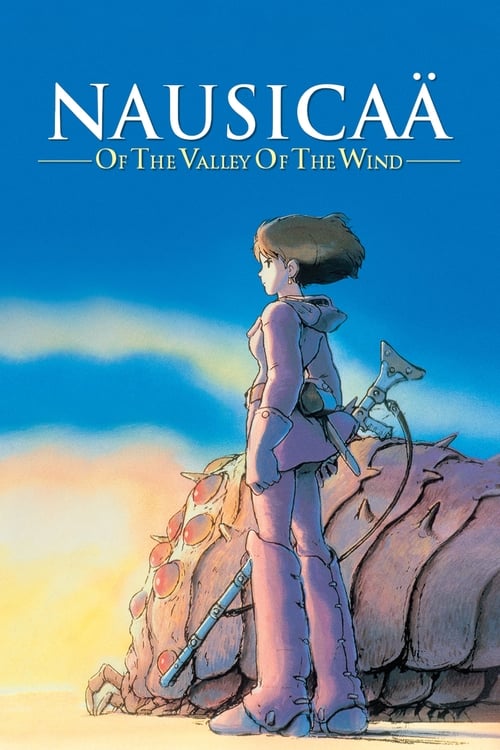
Album: 風の谷のナウシカ イメージアルバム 鳥の人…
When Joe Hisaishi composed “Haruka na Chi e… (Nausicaä no Theme)” for the Nausicaä of the Valley of the Wind Image Album, he unknowingly laid the foundation for what would become one of cinema’s most distinctive musical philosophies. This haunting melody, with its Celtic-inspired contours and deceptively simple structure, would not only capture the essence of Miyazaki’s environmental epic but also introduce a revolutionary approach to film scoring that prioritized situation over sentiment.
The song emerged from what Hisaishi initially thought would be a limited engagement. He was hired solely to create an image album—a collection of musical sketches meant to inspire the film’s creation rather than accompany its final scenes. Yet as Miyazaki worked with these musical pieces playing in the background, something extraordinary happened. The director found himself so moved by Hisaishi’s compositions that he insisted the composer take on the film’s complete musical score, despite having no prior experience in animation.
What makes “Haruka na Chi e…” particularly fascinating is its deliberate embrace of musical nostalgia. Hisaishi consciously drew inspiration from Irish and Scottish folk melodies, seeking what he called a “simple, somehow nostalgic feeling.” This wasn’t mere stylistic choice but a calculated appeal to collective memory. He recognized that Japanese audiences, through their exposure to Ministry of Education songs and Western-influenced folk tunes, carried these melodic patterns in their cultural DNA. The theme moves through gentle modal progressions in D major, its pentatonic inflections echoing both Eastern sensibilities and Celtic tradition.
The collaboration between Hisaishi and Miyazaki proved to be a meeting of obsessive minds. When the two finally worked together directly, Hisaishi discovered a creative partnership unlike any he had experienced. Both Miyazaki and producer Isao Takahata possessed what Hisaishi described as “abnormally good ears.” Their musical consultations stretched beyond ten hours per session, with discussions so detailed that Takahata would point out Debussy-like qualities in specific melodic passages of pieces like “The Toxic Jungle.”
For Hisaishi, these marathon sessions represented “an almost first-time experience in terms of detail.” Yet this microscopic attention to musical nuance would prove transformative, leading to his most significant innovation in film scoring philosophy. Rather than following conventional wisdom—where music amplifies emotional peaks and valleys—Hisaishi developed what he called “situational music.” This approach placed melodies not at moments of heightened feeling but at points where the narrative environment itself demanded musical presence.
“The music enters through Nausicaä’s eyes,” Hisaishi explained, “not her emotions, but what she sees and experiences.” This distinction might seem subtle, but it fundamentally altered how audiences experienced the story. Instead of being told how to feel, viewers were invited to perceive the world alongside the protagonist. “Haruka na Chi e…” embodies this philosophy perfectly—its gentle, flowing melody doesn’t manipulate emotion but rather creates space for contemplation, like wind moving through the valley itself.
The classical education that initially secured Hisaishi the job proved crucial to this innovative approach. Takahata had insisted that only someone with serious classical training could handle the complex musical demands they envisioned. This foundation allowed Hisaishi to blend sophisticated harmonic understanding with folk simplicity, creating music that was both intellectually rigorous and emotionally accessible.
Hisaishi’s first impression of Miyazaki—”a simple, handmade human being”—proved prophetic. Their collaboration would strip away the bombast often associated with fantasy cinema, replacing it with music that breathed with natural rhythm. “Haruka na Chi e…” moves at a contemplative 76 beats per minute, its unhurried pace mirroring the ecological patience that defines Nausicaä’s world.
The song’s structure reflects this philosophical approach. Rather than building to dramatic climaxes, it unfolds organically, each phrase emerging naturally from the last. The instrumentation—primarily strings and woodwinds with subtle synthesizer textures—creates an ethereal quality that suggests both ancient traditions and futuristic possibilities.
This revolutionary scoring philosophy would influence an entire generation of composers and redefine audience expectations for animated films. By treating music as environmental rather than emotional, Hisaishi created space for viewers to form their own connections with the narrative. “Haruka na Chi e…” doesn’t tell us what to feel about Nausicaä’s journey toward distant lands; instead, it invites us to join her in looking toward horizons both geographical and spiritual.
The legacy of this approach extends far beyond a single song or film. It demonstrated that music could serve story not by overwhelming it with sentiment but by creating authentic atmospheric conditions where genuine emotion might naturally arise. In doing so, Hisaishi and his collaborators proved that the most powerful film music often whispers rather than shouts, suggesting rather than declaring the profound truths that great stories hold.
- 風の伝説Read Review
- はるかな地へ…(~ナウシカのテーマ~)Now Playing
- メーヴェRead Review
- 巨神兵~トルメキア軍~クシャナ殿下Read Review
- 腐海Read Review
- 王蟲Read Review
- 土鬼軍の逆襲Read Review
- 戦闘Read Review
- 谷への道Read Review
- 遠い日々(~ナウシカのテーマ~)Read Review
- 鳥の人(~ナウシカのテーマ~)Read Review