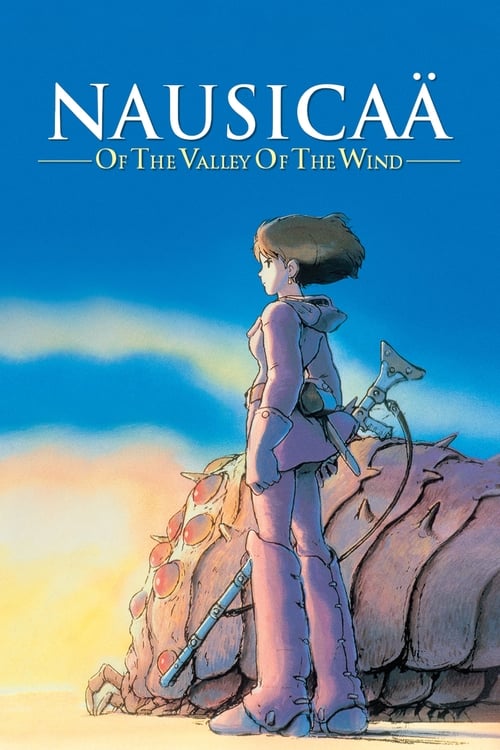
Album: 風の谷のナウシカ イメージアルバム 鳥の人…
What happens when a composer abandons the traditional rules of film music? Joe Hisaishi discovered the answer while crafting one of animation’s most beloved themes, ‘Far-Off Days (Nausicaä’s Theme)’ from the image album ‘Nausicaä of the Valley of the Wind: Image Album – Bird People.’ This haunting piece would not only define a character but revolutionize how music could tell stories in cinema.
The story begins in an unexpected way. Hisaishi wasn’t originally meant to score Hayao Miyazaki’s breakthrough film. He was hired solely to create an image album – a collection of atmospheric pieces meant to inspire the director during production. Yet as Miyazaki listened to these early compositions, particularly the ethereal ‘Far-Off Days,’ he became convinced that only Hisaishi could capture the soul of his wind-swept world.
This wasn’t a decision made lightly. Miyazaki and his colleague Isao Takahata were notorious for their exacting standards. Hisaishi recalls their ‘abnormally good ears’ and the grueling ten-hour meetings that became the norm. Every musical phrase was dissected with surgical precision. Takahata once noted that the latter half of ‘The Toxic Jungle’ theme carried echoes of Debussy – a level of detail that left Hisaishi amazed by their musical sophistication.
But it was Hisaishi’s fundamental approach to film scoring that truly caught their attention. While most composers attach music to emotional peaks – the kiss, the death, the victory – Hisaishi had developed a radically different philosophy. ‘I don’t put music to emotions,’ he explained, ‘but to situations. The music enters through Nausicaä’s eyes, responding not to what she feels, but to what she sees and experiences.’
‘Far-Off Days’ perfectly embodies this philosophy. The piece doesn’t surge with Nausicaä’s courage or weep with her sorrows. Instead, it captures the vast, melancholic beauty of her dying world. Written in a contemplative D minor with a flowing 4/4 time signature, the melody unfolds like wind across the toxic wasteland, carried by gentle strings and woodwinds that seem to breathe with the polluted air itself.
Hisaishi’s inspiration came from an unlikely source: the folk melodies of Ireland and Scotland. ‘I wanted something simple, with a sense of nostalgia,’ he reflected. This choice wasn’t arbitrary. Japanese audiences had internalized these musical patterns through school songs based on Celtic melodies, creating an unconscious emotional connection. The result is a theme that feels both foreign and familiar, ancient yet timeless.
The composer’s relationship with Miyazaki proved equally crucial. Where many directors speak in abstract terms about ‘making it more emotional,’ Miyazaki’s requests were startlingly specific and practical. His background as an artist who understood the craft of creation allowed for a collaboration based on mutual respect rather than artistic compromise.
Hisaishi’s first impression of the director was telling: ‘a simple, handmade human being.’ This authenticity would become central to their working relationship. There was no pretense, no ego-driven demands – just two craftsmen working toward a common vision. Takahata’s decision to hire Hisaishi permanently was equally pragmatic: ‘We need someone with classical training to understand our detailed musical requirements.’
The image album format gave Hisaishi unprecedented creative freedom. Unlike film scores, which must sync to predetermined visuals, these pieces could explore emotional landscapes without constraints. ‘Far-Off Days’ stretches across nearly four minutes, allowing its central melody to develop organically. The piece builds through subtle variations rather than dramatic crescendos, mirroring the patient way Nausicaä observes her world.
This patient observation became Hisaishi’s signature. Where traditional film music announces itself boldly, his compositions often work subliminally. They seep into consciousness like morning mist, supporting rather than overwhelming the visual narrative. ‘Far-Off Days’ demonstrates this perfectly – its beauty lies not in technical showmanship but in emotional honesty.
The success of this approach would influence an entire generation of film composers. By treating music as environmental rather than purely emotional, Hisaishi opened new possibilities for cinematic storytelling. The score doesn’t just accompany the action; it becomes part of the world itself.
Listening to ‘Far-Off Days’ today, one can hear the birth of a new cinematic language. Every phrase carries the weight of those exhaustive creative sessions, every harmonic choice reflects Hisaishi’s deep understanding of both classical tradition and popular accessibility. The piece stands as proof that innovation in film music comes not from abandoning the past, but from seeing it through fresh eyes.
In the end, ‘Far-Off Days’ succeeded because it captured something essential about human experience – the bittersweet beauty of observing a world in transition. Through Nausicaä’s eyes, we see not just destruction but possibility, not just endings but new beginnings. And through Hisaishi’s revolutionary scoring philosophy, we learned that sometimes the most powerful music is that which simply allows us to see.
- 風の伝説Read Review
- はるかな地へ…(~ナウシカのテーマ~)Read Review
- メーヴェRead Review
- 巨神兵~トルメキア軍~クシャナ殿下Read Review
- 腐海Read Review
- 王蟲Read Review
- 土鬼軍の逆襲Read Review
- 戦闘Read Review
- 谷への道Read Review
- 遠い日々(~ナウシカのテーマ~)Now Playing
- 鳥の人(~ナウシカのテーマ~)Read Review