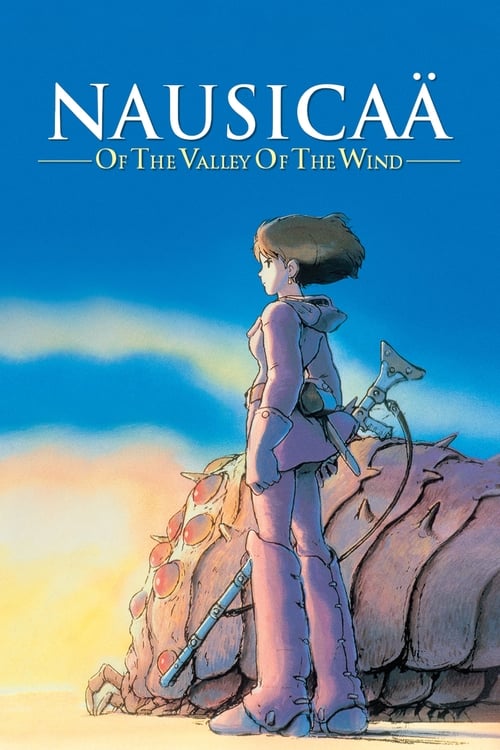
Album: 風の谷のナウシカ イメージアルバム 鳥の人…
What happens when a composer abandons everything audiences expect from film music? Joe Hisaishi discovered the answer while crafting ‘Ohmu’ for Nausicaä of the Valley of the Wind, creating not just a song but a new philosophy of how music can serve storytelling.
The track ‘Ohmu’ from the image album ‘Nausicaä of the Valley of the Wind Image Album: Birdman’ represents one of the most fascinating examples of Hisaishi’s radical departure from conventional film scoring. Unlike typical movie music that swells with character emotions, ‘Ohmu’ embodies Hisaishi’s revolutionary approach: music attached not to feelings, but to situations and perspectives.
‘I don’t attach music to emotional peaks like other films,’ Hisaishi explained in a Roman Album interview. ‘I attach it to situational elements. The music enters through Nausicaä’s eyes – not her emotions, but what she sees and feels.’ This philosophy transforms ‘Ohmu’ from background accompaniment into a sonic representation of the protagonist’s unique worldview.
The composition itself reflects this approach through its structure and instrumentation. Built around a haunting melody in a minor mode, ‘Ohmu’ uses layered synthesizers and traditional orchestral elements to create an otherworldly atmosphere. The piece moves at a deliberately measured tempo, allowing each harmonic shift to register as Nausicaä might perceive the giant insects – not as monsters, but as complex beings with their own dignity and purpose.
Hisaishi’s journey to this innovative approach began almost by accident. Originally hired only for the image album, he had no expectation of scoring the actual film. Director Hayao Miyazaki, however, found himself returning repeatedly to Hisaishi’s preliminary compositions while working on the animation. The music had captured something essential about his vision that he couldn’t ignore.
The collaboration that emerged between Hisaishi, Miyazaki, and producer Isao Takahata became legendary for its intensity and attention to detail. Both Miyazaki and Takahata possessed what Hisaishi called ‘abnormally good ears.’ Their music meetings stretched beyond ten hours regularly, with discussions drilling down to microscopic details. Takahata once noted that the latter half of the ‘Toxic Jungle’ theme carried Debussy-like qualities – the kind of specific observation that left Hisaishi amazed by their musical sophistication.
‘It was the first time I’d experienced such detailed discussions,’ Hisaishi recalled. This microscopic attention to musical detail shaped every aspect of ‘Ohmu,’ from its harmonic progressions to its instrumental choices. The result wasn’t just music that fit the scenes, but compositions that seemed to emerge organically from the story world itself.
For the overarching musical language of Nausicaä, Hisaishi drew inspiration from an unexpected source: Irish and Scottish folk melodies. He deliberately crafted themes with what he called a ‘simple, somehow nostalgic feeling.’ This wasn’t mere stylistic choice but strategic cultural psychology. Hisaishi recognized that Japanese audiences carried these melodic patterns in their cultural memory through educational songs and folk traditions, creating an immediate sense of familiarity and emotional connection.
‘Ohmu’ exemplifies this approach through its melodic construction. The main theme, while entirely original, carries echoes of pentatonic scales and modal harmonies common in Celtic traditions. This creates what Hisaishi sought: music that feels both foreign and familiar, perfectly matching Nausicaä’s story of a world both alien and deeply human.
The technical execution of ‘Ohmu’ also reveals Hisaishi’s classical training, something Takahata specifically valued when choosing him for the project. ‘You need someone with classical education to handle complex musical directions,’ Takahata reasoned. This background allowed Hisaishi to layer sophisticated harmonic relationships beneath accessible melodies, creating music that rewards both casual listening and deep analysis.
Hisaishi’s first impression of Miyazaki – a ‘simple, handcrafted humanity’ – proved crucial to understanding how ‘Ohmu’ and the entire score should function. Rather than overwhelming audiences with musical complexity, the compositions needed to serve the story with humble effectiveness. ‘Ohmu’ achieves this through its restraint, allowing silence and space to carry equal weight with sound.
The lasting influence of this approach extends far beyond a single film. Hisaishi’s philosophy of situational rather than emotional scoring has influenced countless composers, while ‘Ohmu’ itself stands as a perfect example of how innovative thinking can transform familiar musical elements into something entirely new.
Listening to ‘Ohmu’ today, decades after its creation, reveals layers of meaning that continue to unfold. It’s music that doesn’t just accompany a story but inhabits it, seeing the world through different eyes and teaching audiences to do the same. In a few minutes of carefully crafted sound, Hisaishi created not just a memorable composition, but a new way of understanding how music can serve narrative art.
- 風の伝説Read Review
- はるかな地へ…(~ナウシカのテーマ~)Read Review
- メーヴェRead Review
- 巨神兵~トルメキア軍~クシャナ殿下Read Review
- 腐海Read Review
- 王蟲Now Playing
- 土鬼軍の逆襲Read Review
- 戦闘Read Review
- 谷への道Read Review
- 遠い日々(~ナウシカのテーマ~)Read Review
- 鳥の人(~ナウシカのテーマ~)Read Review