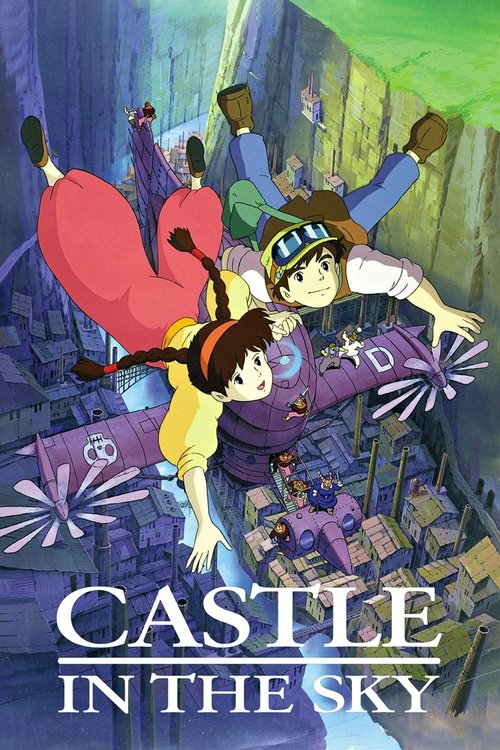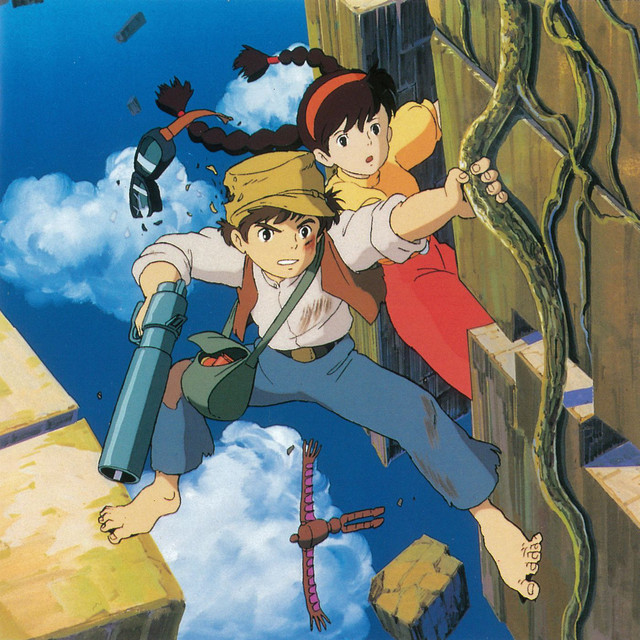
Album: 天空の城ラピュタ サウンドトラック ~飛行石の謎~
In the summer of 1986, a quiet revolution was taking place in a modest recording studio. Joe Hisaishi sat before his Fairlight III synthesizer, meticulously matching musical phrases to animated sequences frame by frame. This wasn’t just composing—it was surgical precision applied to the art of emotion. Among the pieces emerging from this painstaking process was ‘Gondoa no Omoide’ (Memories of Gondoa), a track that would exemplify everything Hisaishi believed about the marriage of sound and vision.
The approach was radical for its time. While many film composers relied on broad emotional sweeps, Hisaishi demanded absolute synchronization. He spent hours analyzing rush footage, calculating precise timecodes where visual beats needed musical punctuation. Each second was mapped, each gesture choreographed to its sonic counterpart. This methodical preparation transformed the Fairlight III from a mere instrument into an architectural tool, building rhythmic foundations that would support a 50-piece orchestra.
But technical precision meant nothing without emotional truth. When Hisaishi met with director Hayao Miyazaki and producer Isao Takahata at a coffee shop near Studio Ghibli on June 23rd, their conversation centered on something deeper than synchronization. They spoke of love, dreams, and adventure—concepts that needed to translate into melodies children could carry in their hearts. This philosophy would reshape how ‘Gondoa no Omoide’ evolved from concept to completion.
The track itself reflects this dual commitment to craft and feeling. Built around a gentle 4/4 tempo in a warm major key, it features acoustic guitar fingerpicking that creates an intimate, almost nostalgic foundation. The melody, carried primarily by strings and woodwinds, unfolds with the kind of patient development that allows listeners to discover new details with each hearing. There’s no rush, no artificial drama—just the organic growth of an idea that mirrors memory itself.
This approach marked a deliberate departure from Hisaishi’s previous work. His score for ‘Arion’ had been dense with electronic samples and complex layering. For Laputa, he stripped everything back to acoustic essentials. The decision wasn’t purely aesthetic—it was philosophical. He wanted sounds that felt real, tangible, like objects children could touch. Even when electronic elements appeared, they served acoustic instruments rather than replacing them.
The creative process revealed fascinating tensions between imagination and reality. When Miyazaki had originally envisioned the film’s opening, he described a scene of profound solitude: a boy on rooftops overlooking a sleeping world, accompanied only by pigeons, playing trumpet as morning mist cleared. This image—translated into ‘Pazu to the Dawn of the Town’—captured the film’s essential loneliness and wonder. Yet when it came time to score the actual flaptors in action, Hisaishi discovered that cinematic reality demanded different music than cinematic dreams.
The flaptor theme from the image album had been playful, matching the machines’ cheerful appearance. But in the completed film, these flying contraptions appeared almost exclusively during chase sequences and near-disasters. The bright, optimistic melody suddenly felt inappropriate. This taught Hisaishi an important lesson about the difference between scoring concepts and scoring moments. Music had to serve the story as it existed, not as it was initially imagined.
‘Gondoa no Omoide’ benefits from this hard-learned wisdom. Rather than imposing predetermined emotions, it responds to the specific narrative moment it accompanies. The track’s gentle melancholy suggests remembrance without forcing tears, creates space for reflection without demanding specific thoughts. It’s music that trusts the audience to bring their own experiences to the emotional table.
The recording schedule itself tells a story of dedication bordering on obsession. After the initial June meetings, Hisaishi immediately began constructing rhythmic frameworks at Wonder Station studio. Two weeks later, he was conducting nearly 50 musicians at Nikkatsu Studio, translating his electronic sketches into living, breathing orchestration. By July 12th, the final mix was complete—barely three weeks from conception to finished product.
This compressed timeline forced crucial decisions about musical priorities. Every note had to justify its existence. In ‘Gondoa no Omoide,’ this pressure created unexpected benefits. The track’s restraint feels intentional rather than rushed, its simplicity purposeful rather than incomplete. Sometimes limitations breed the most authentic expressions.
The legacy of this working method extends far beyond a single track or even a single film. Hisaishi’s insistence on perfect audio-visual synchronization became a template for modern film scoring, while his commitment to melodic clarity influenced composers worldwide. But perhaps most importantly, ‘Gondoa no Omoide’ demonstrates how technical excellence can serve emotional honesty rather than replacing it.
Listening to the track today, what strikes you isn’t its sophistication but its directness. Like all great film music, it seems to emerge naturally from the story itself, as if the characters’ feelings had spontaneously become audible. That illusion represents countless hours of meticulous craft, transformed into something that sounds effortless. In the end, that transformation might be Joe Hisaishi’s greatest achievement—making the impossible seem inevitable, one perfectly timed note at a time.
- 空から降ってきた少女Read Review
- スラッグ溪谷の朝Read Review
- 愉快なケンカ(~追跡)Read Review
- ゴンドアの思い出Now Playing
- 失意のパズーRead Review
- ロボット兵(復活~救出)Read Review
- 合唱 君をのせてRead Review
- シータの決意Read Review
- タイガーモス号にてRead Review
- 破滅への予兆Read Review
- 月光の雲海Read Review
- 天空の城ラピュタRead Review
- ラピュタの崩壊Read Review
- 君をのせてRead Review