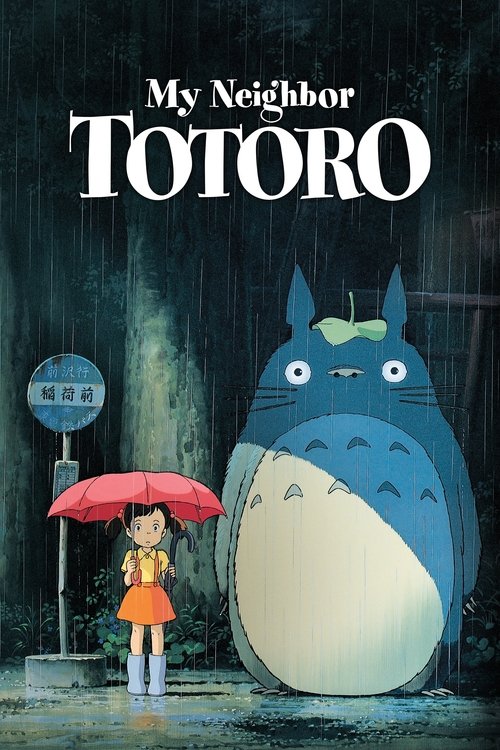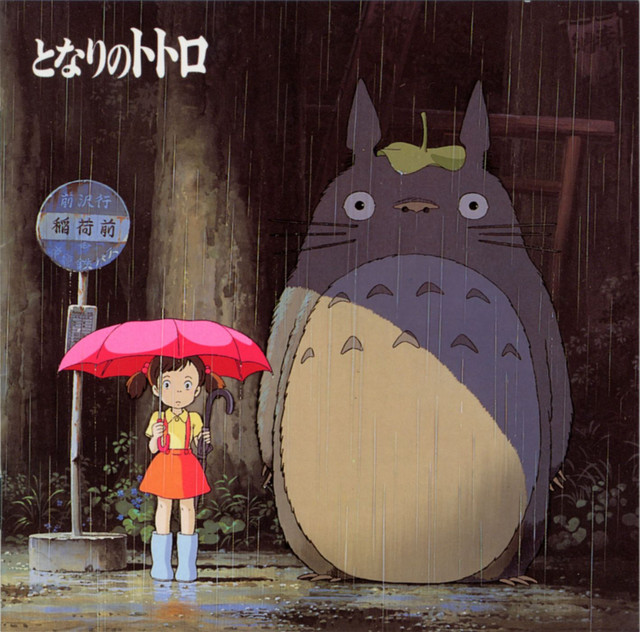
Album: となりのトトロ イメージ・ソング集
In the gentle key of F major, with its unhurried 4/4 tempo and delicate string arrangements, “Kaze no Toori Michi” (Path of the Wind) represents something extraordinary in Japanese music history. This instrumental piece from the “My Neighbor Totoro Image Song Collection” doesn’t just accompany a beloved animated film – it marks the moment when composer Joe Hisaishi achieved what legendary director Isao Takahata called “a new melodic expression that modern people can feel as Japanese.”
The story behind this achievement begins with an unusual creative gamble. When Hayao Miyazaki expressed his desire to emphasize songs in the upcoming Totoro project, Hisaishi responded with an unprecedented proposal: “Let’s create an image album of all vocal songs.” This meant composing ten songs before the film’s soundtrack even existed – a reverse approach that would fundamentally shape how we experience Totoro’s world today.
Takahata’s praise wasn’t given lightly. As he observed, the range of what can be called “Japanese” in musical expression is remarkably narrow. Traditional Japanese music relies heavily on pentatonic scales and specific tonal qualities that can feel distant to contemporary ears. Yet in “Path of the Wind,” Hisaishi managed to create something that feels unmistakably Japanese while speaking directly to modern sensibilities. The piece achieves this through subtle melodic curves that echo traditional Japanese phrasing without resorting to obvious cultural markers like koto or shamisen sounds.
The collaborative process that birthed this music reveals Hisaishi’s deep respect for interdisciplinary artistry. Miyazaki, having been profoundly moved by reading Rieko Nakagawa’s “Iyaiya En” (The Unwilling Kindergartener), insisted she write the lyrics for the image album. Nakagawa crafted ten poems, which through careful discussion were refined into six songs. This collaborative refinement process – where initial creative abundance is thoughtfully distilled – reflects Hisaishi’s belief that the best art emerges from generous creation followed by disciplined selection.
Perhaps most telling about Hisaishi’s creative philosophy is how he handled the album’s vocal requirements. When Miyazaki heard the composer’s voice on a demo tape for “Chiisana Shashin” (Small Photograph) and suggested he sing it himself, Hisaishi agreed without hesitation. This willingness to step outside his comfort zone as a composer reveals an artist more interested in serving the music than protecting his specialized role. It’s this same openness that allowed him to infuse Western orchestral techniques with Japanese melodic sensibilities so seamlessly.
The creative context surrounding “Path of the Wind” makes Hisaishi’s achievement even more remarkable. While crafting these gentle, innocent melodies for Totoro, he was simultaneously composing music for “Rakugeki ANZUCHI,” a dark theatrical production featuring demon worlds and supernatural horror. “I was working on this pure, innocent world and that eerie, demonic world simultaneously – it nearly drove me crazy,” Hisaishi later reflected. This creative schizophrenia forced him to compartmentalize and intensify his emotional approach to each project.
In “Path of the Wind,” we hear the fruits of this intense creative period. The piece opens with solo piano, establishing a melody that feels both nostalgic and forward-looking. As strings join in delicate counterpoint, the arrangement builds not through volume but through textural richness. The melodic line itself demonstrates what Takahata identified as revolutionary – it incorporates the gentle rises and falls characteristic of Japanese vocal music while maintaining the harmonic sophistication of Western composition.
What makes this piece particularly significant is how it functions within the broader Totoro universe. While the vocal versions of these songs would later be adapted for the film, the instrumental “Path of the Wind” maintains a life of its own. It represents pure musical emotion, unencumbered by narrative requirements. The piece captures the essence of rural Japanese tranquility while remaining accessible to global audiences – exactly the kind of cultural bridge Hisaishi has spent his career building.
The legacy of this approach extends far beyond a single animated film. Hisaishi’s success in creating “new Japanese” melodies opened possibilities for other composers to explore cultural identity through contemporary musical language. Rather than abandoning tradition or slavishly copying it, he found a third way – transformation through genuine understanding.
Today, listening to “Path of the Wind” offers more than nostalgic pleasure. It provides insight into how artistic traditions can evolve without losing their essential character. In Hisaishi’s hands, the ancient Japanese appreciation for subtle seasonal changes and natural beauty finds expression through modern orchestral colors and harmonic structures. The result is music that honors the past while speaking directly to contemporary hearts – a rare achievement in any cultural context.
- となりのトトロRead Review
- 風のとおり道Read Review
- さんぽRead Review
- まいごRead Review
- すすわたりRead Review
- ねこバスRead Review
- ふしぎしりとりうたRead Review
- おかあさんRead Review
- 小さな写真Read Review
- ドンドコまつりRead Review
- 風のとおり道(インストゥルメンタル)Now Playing