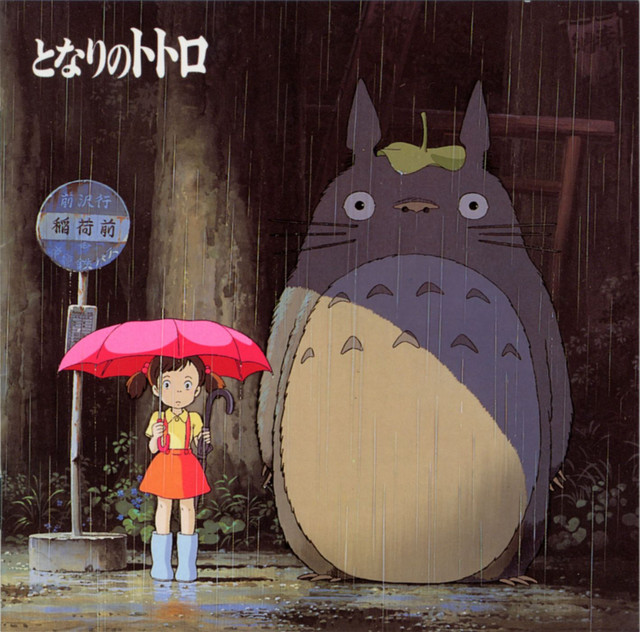
Album: となりのトトロ イメージ・ソング集
In the world of film music, few collaborations have proven as fruitful as that between director Hayao Miyazaki and composer Joe Hisaishi. Yet their work on ‘My Neighbor Totoro’ began not with sweeping orchestral themes, but with something far more intimate: a collection of songs that would capture the essence of childhood wonder before a single frame was animated. Among these musical sketches was ‘Susuwatari’ (translated as ‘Soot Sprites’), a piece that exemplifies the extraordinary creative process behind one of cinema’s most beloved soundtracks.
The genesis of ‘Susuwatari’ lies in an unprecedented experiment. When Miyazaki expressed his desire to emphasize songs in the upcoming Totoro project, Hisaishi responded with a proposal that would challenge conventional film scoring practices: ‘Let’s create an image album of all vocal songs.’ This wasn’t merely a soundtrack—it was a song collection designed to establish the emotional landscape of a film that existed only in Miyazaki’s imagination.
What made this approach revolutionary was its timing. Rather than composing music to match completed scenes, Hisaishi was crafting melodies to capture feelings, moods, and characters that were still taking shape. ‘Susuwatari’ emerged from this process as a musical interpretation of the mysterious soot creatures that would later become iconic elements of the film. The song’s playful melody, built around a simple pentatonic scale that evokes traditional Japanese children’s songs, perfectly captures the mischievous yet benevolent nature of these shadowy beings.
The lyrical component of this experiment proved equally innovative. Miyazaki, deeply moved by Rieko Nakagawa’s children’s book ‘Iya Iya En,’ personally requested that she contribute lyrics to the project. Nakagawa responded by crafting ten poems, which through extensive discussion were refined into six complete songs, including ‘Susuwatari.’ Her words brought a literary quality to the music, transforming abstract melodies into vivid snapshots of childhood experience.
For Hisaishi, this period represented both creative liberation and considerable challenge. While developing these tender, innocent songs, he was simultaneously composing music for ‘ANZUCHI,’ a dark theatrical production featuring demons and supernatural horror. ‘On one hand, there was this frightening demonic world, and on the other, this pure, innocent realm—working on both simultaneously nearly drove me mad,’ he later reflected. This creative tension, rather than hindering his work, seemed to sharpen his focus on the essential qualities that made each project unique.
‘Susuwatari’ showcases Hisaishi’s ability to find complexity within simplicity. The song’s arrangement features delicate interplay between acoustic guitar arpeggios and subtle synthesizer textures, creating a sound that feels both grounded and magical. The melody moves in gentle waves, much like the floating movement of the soot sprites themselves, while maintaining a child-like directness that makes it immediately memorable.
The recording process for the Totoro music also marked a significant shift in Hisaishi’s working relationship with Miyazaki. For the first time, the director took an active role in music meetings, leading discussions with characteristic enthusiasm. This hands-on approach reflected Miyazaki’s deep investment in the project’s musical identity, ensuring that songs like ‘Susuwatari’ would seamlessly integrate with his developing vision.
Interestingly, illness during the recording sessions forced Hisaishi to reduce the planned synthesizer elements, shifting the orchestral balance from an intended 40% orchestra, 60% synthesizer ratio to roughly the opposite proportion. This unplanned change proved fortuitous for ‘Susuwatari’ and the entire album, as the increased orchestral presence lent warmth and accessibility to the music that purely electronic arrangements might have lacked.
The success of ‘Susuwatari’ and its companion pieces validated Hisaishi’s belief in music’s power to establish emotional truth before visual elements exist. By creating these songs first, he and Miyazaki essentially composed the heart of their film, establishing a tonal foundation that would guide every subsequent creative decision.
This approach challenged traditional film music hierarchies, elevating songs from promotional afterthoughts to essential creative blueprints. ‘Susuwatari’ wasn’t written to accompany scenes of soot sprites; rather, it helped define what those creatures would represent in the broader narrative—playful guardians of domestic spaces, mysterious yet comforting presences that bridge the gap between the mundane and magical.
Today, ‘Susuwatari’ endures as more than just a charming children’s song. It represents a moment when two artists pushed beyond conventional creative boundaries, trusting in music’s ability to capture emotions that transcended language, culture, and medium. In its gentle melody and whimsical lyrics, we hear not just the sound of imaginary creatures, but the sound of creative courage—the willingness to begin with feeling rather than form, and to let wonder guide the way.
- となりのトトロRead Review
- 風のとおり道Read Review
- さんぽRead Review
- まいごRead Review
- すすわたりNow Playing
- ねこバスRead Review
- ふしぎしりとりうたRead Review
- おかあさんRead Review
- 小さな写真Read Review
- ドンドコまつりRead Review
- 風のとおり道(インストゥルメンタル)Read Review