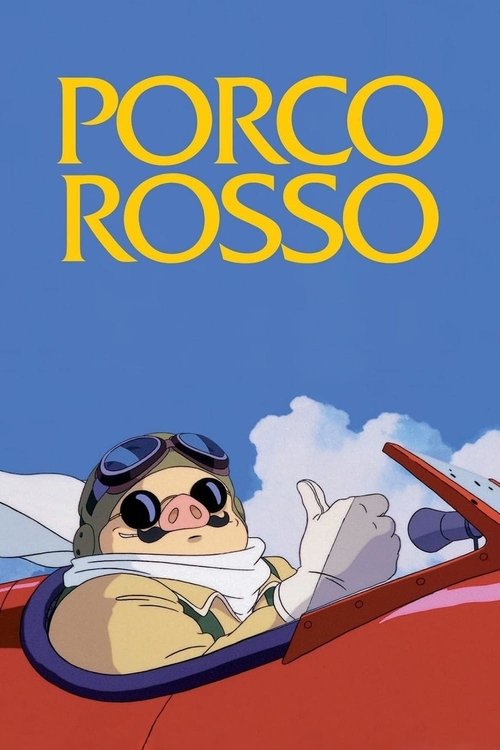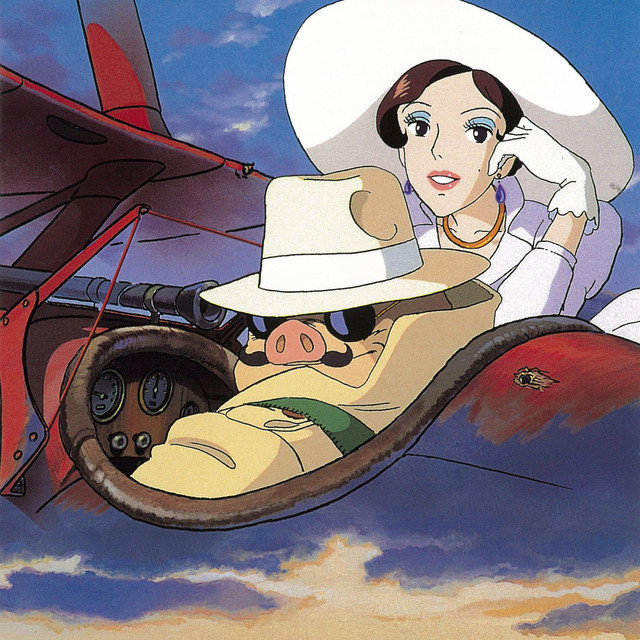
Album: 紅の豚 サウンドトラック
Picture this: a composer known for sweeping orchestral arrangements and minimalist piano suddenly finds himself tasked with scoring aerial combat sequences set in the Jazz Age. This was Joe Hisaishi’s challenge when creating the soundtrack for ‘Porco Rosso’ (The Crimson Pig), and nowhere is his solution more brilliantly executed than in the track ‘Dog Fight’.
The song emerges from a fascinating creative partnership between Hisaishi and director Hayao Miyazaki that began with poetry rather than musical notes. Miyazaki handed Hisaishi six poems as creative inspiration: ‘Flying Boat Pilot’s Tango’, ‘Ascension’, ‘Twilight Adriatic Sea’, ‘Night Flight’, ‘Secret Garden’, and ‘Merry-Go-Round’. These verses weren’t mere suggestions but served as primary sources for establishing the film’s emotional landscape, helping Hisaishi understand not just what the music should sound like, but what it should feel like.
What makes ‘Dog Fight’ particularly compelling is how it represents the convergence of two seemingly disparate musical worlds. Hisaishi, primarily known as an orchestral composer and minimalist, drew upon his deep jazz roots – influences that traced back to his student days spent absorbing the works of Miles Davis, John Coltrane, and especially pianist Mal Waldron. Waldron’s introspective, angular approach to jazz piano left an indelible mark on Hisaishi’s musical vocabulary, one that would prove invaluable when tackling the 1920s setting.
The choice to incorporate jazz wasn’t merely stylistic flourish but historically accurate storytelling. The 1920s Jazz Age provided the perfect musical backdrop for the film’s Mediterranean setting and swashbuckling narrative. When ‘Dog Fight’ plays during the aerial combat sequences, its syncopated rhythms and brass-heavy arrangements don’t just accompany the action – they transport listeners directly into the cockpit of a 1920s seaplane, complete with the era’s characteristic blend of mechanical precision and romantic adventure.
Interestingly, ‘Dog Fight’ also benefits from Hisaishi’s concurrent work on his solo album ‘My Lost City’. This personal project, exploring similar Jazz Age themes, became so integral to the film’s vision that Miyazaki famously declared he wanted ‘all of it’ for the movie. The album’s influence can be heard in ‘Dog Fight’s’ sophisticated harmonic progressions and its ability to balance intimate jazz club atmosphere with epic cinematic scope.
Musically, ‘Dog Fight’ showcases Hisaishi’s ability to write in B-flat major with a moderate tempo that allows for both lyrical melody and rhythmic complexity. The track features prominent brass sections that echo 1920s big band arrangements, while maintaining the composer’s signature approach to emotional storytelling through music. The piano work, clearly influenced by Waldron’s style, provides both rhythmic drive and melodic commentary, creating a dialogue between different instrumental voices that mirrors the aerial duels on screen.
What’s remarkable about Hisaishi’s approach is how he avoided the trap of mere pastiche. Rather than simply copying 1920s jazz idioms, he filtered them through his contemporary sensibilities and film scoring expertise. ‘Dog Fight’ sounds authentically period while remaining unmistakably Hisaishi – a balance that required deep understanding of both jazz tradition and modern cinematic language.
The creative process behind ‘Dog Fight’ reveals Hisaishi’s philosophy toward film music: it should serve the story while maintaining its own musical integrity. By grounding the composition in historically appropriate jazz elements, he created music that enhances the film’s sense of time and place without overwhelming the narrative. The result is a track that works equally well as standalone jazz composition and as cinematic accompaniment.
This dual functionality reflects the broader significance of the ‘Porco Rosso’ soundtrack in Hisaishi’s career. The project marked a departure from his previous four film scores, introducing jazz elements and incorporating material from his personal artistic projects. These additions didn’t just change the sound of his film music – they expanded his creative palette in ways that would influence his subsequent works.
Listening to ‘Dog Fight’ today, European jazz enthusiasts will recognize the sophisticated interplay between American jazz tradition and Japanese musical sensibility. Hisaishi’s treatment of the material demonstrates how cultural exchange can create something entirely new while honoring its sources. The track stands as evidence that great film music transcends its original context, offering listeners a complete artistic experience that works whether you’re watching seaplanes duel over the Adriatic or simply enjoying an evening of quality jazz.
In the end, ‘Dog Fight’ represents more than just excellent film scoring – it captures the spirit of musical adventure that defined both the Jazz Age and Hisaishi’s own artistic journey into new creative territory.
- 時代の風-人が人でいられた時-Read Review
- MAMMAIUTORead Review
- Addio!Read Review
- 帰らざる日々Read Review
- セピア色の写真Read Review
- セリビア行進曲Read Review
- Flying boatmenRead Review
- Doom-雲の罠-Read Review
- Porco e BellaRead Review
- Fio-SeventeenRead Review
- ピッコロの女たちRead Review
- FriendRead Review
- Partner shipRead Review
- アドリアの海へRead Review
- 遠き時代を求めてRead Review
- 荒野の一目惚れRead Review
- 夏の終わりにRead Review
- 失われた魂-LOST SPIRIT-Read Review
- Dog fightNow Playing
- Porco e Bella-Ending-Read Review