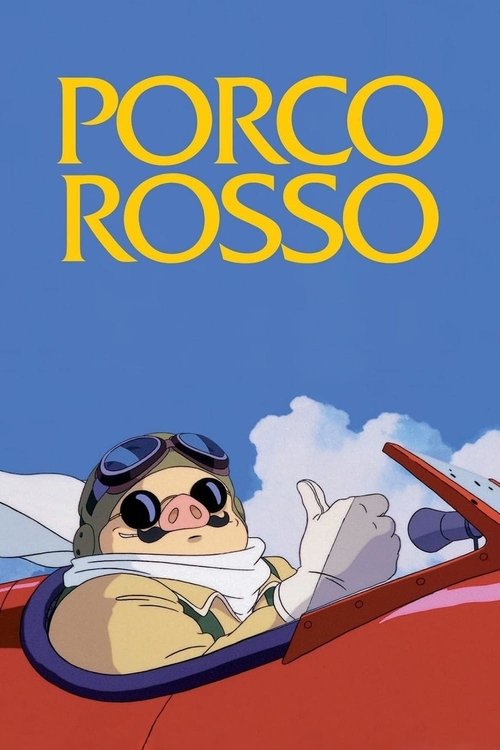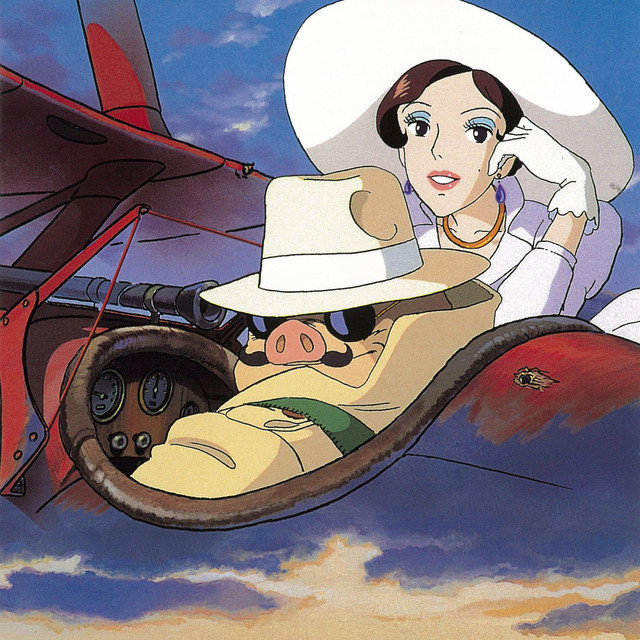
Album: 紅の豚 サウンドトラック
In the smoky ambiance of an Adriatic seaside bar, a piano plays a gentle jazz melody that seems to carry the weight of memory itself. This is how audiences first encounter “Times of Wind – When People Could Be Human” from Joe Hisaishi’s soundtrack to Porco Rosso, a composition that would become one of his most emotionally complex works. Yet behind this seemingly simple piano piece lies a fascinating creative journey that reveals as much about artistic collaboration as it does about the power of musical storytelling.
The story begins not with notes or melodies, but with poetry. Director Hayao Miyazaki, recognizing that his latest film carried deeply personal themes, handed Hisaishi six poems as creative inspiration: “Flying Boat Pilot’s Tango,” “Ascension,” “Adriatic Sea at Twilight,” “Night Flight,” “Secret Garden,” and “Merry-go-round.” These weren’t musical instructions but emotional roadmaps, designed to help the composer understand the film’s inner landscape. For Hisaishi, this unconventional approach represented both an opportunity and a challenge – how do you translate poetry into music while serving a story about loss, love, and the passage of time?
The choice of jazz piano for this particular piece wasn’t arbitrary. Set in the 1920s – the legendary Jazz Age – Porco Rosso demanded musical authenticity that went beyond surface decoration. The era when jazz was reaching its creative peak provided the perfect sonic palette for exploring the relationship between protagonist Marco and the enigmatic Gina. When the melody first emerges in the film, played on a bar piano, it carries both the sophistication of the period and the melancholy of characters who have lived through too much history.
Yet Hisaishi’s creative process wasn’t without its complications. Years later, he would reflect with notable humility on his approach to the project: “Miyazaki’s personal feelings came through so strongly in this film. I should have pulled back more, but there were parts where I leaned toward an action-adventure style. I still regret that.” This admission reveals the delicate balance required when scoring such an intimate work – the challenge of supporting a director’s vision without overwhelming it.
Miyazaki’s own instructions to Hisaishi were characteristically unconventional. According to producer Toshio Suzuki, the director’s request was simple yet puzzling: “Please make an embarrassing song. Please make it exciting.” This apparent contradiction – creating something both vulnerable and stirring – perfectly encapsulates the emotional complexity of “Times of Wind.” The piece needed to capture both the romantic yearning and the gentle embarrassment of middle-aged love, the excitement of possibility tempered by the wisdom of experience.
When Hisaishi delivered the completed composition, Miyazaki’s reaction was immediate and enthusiastic. The piano melody, written primarily in a minor key with subtle jazz harmonizations, managed to thread the needle between sentimentality and sophistication. The gentle swing rhythm evokes the era without feeling like pastiche, while the melodic line carries enough emotional weight to support the film’s most tender moments.
The recording process itself reflected Hisaishi’s commitment to authenticity. Despite the increasing prevalence of electronic music in film scores, he insisted on an acoustic approach, recording with a full 70-piece orchestra at Aoi Studio during May and June 1992. This decision wasn’t merely nostalgic – it was philosophical. In an era of technological innovation, Hisaishi chose to honor both the 1920s setting and the timeless nature of human emotion through organic instrumentation.
The piano arrangement in “Times of Wind” demonstrates Hisaishi’s sophisticated understanding of jazz idiom without sacrificing his distinctive compositional voice. The piece features characteristic jazz chord extensions and a subtle swing feel, but the melodic contour and harmonic progression remain unmistakably his own. It’s this synthesis – period authenticity filtered through personal artistic vision – that gives the composition its unique emotional resonance.
What makes this creative process particularly fascinating is how it illustrates the collaborative nature of film music at its best. Miyazaki’s poems provided emotional coordinates, his unconventional requests pushed Hisaishi toward unexplored territory, and the composer’s willingness to reflect critically on his own work demonstrates the kind of artistic maturity that produces lasting music. The result isn’t just a period piece or a romantic theme – it’s a meditation on what it means to remain human in a world that seems increasingly mechanical.
Today, “Times of Wind – When People Could Be Human” stands as evidence of how the most affecting film music often emerges from the most unexpected creative processes. Sometimes the path to musical truth leads through poetry, sometimes through contradiction, and sometimes through the simple but profound act of one artist trusting another to translate feeling into sound. In those gentle jazz piano chords, we hear not just the echo of the 1920s, but the timeless sound of human longing itself.
- 時代の風-人が人でいられた時-Now Playing
- MAMMAIUTORead Review
- Addio!Read Review
- 帰らざる日々Read Review
- セピア色の写真Read Review
- セリビア行進曲Read Review
- Flying boatmenRead Review
- Doom-雲の罠-Read Review
- Porco e BellaRead Review
- Fio-SeventeenRead Review
- ピッコロの女たちRead Review
- FriendRead Review
- Partner shipRead Review
- アドリアの海へRead Review
- 遠き時代を求めてRead Review
- 荒野の一目惚れRead Review
- 夏の終わりにRead Review
- 失われた魂-LOST SPIRIT-Read Review
- Dog fightRead Review
- Porco e Bella-Ending-Read Review