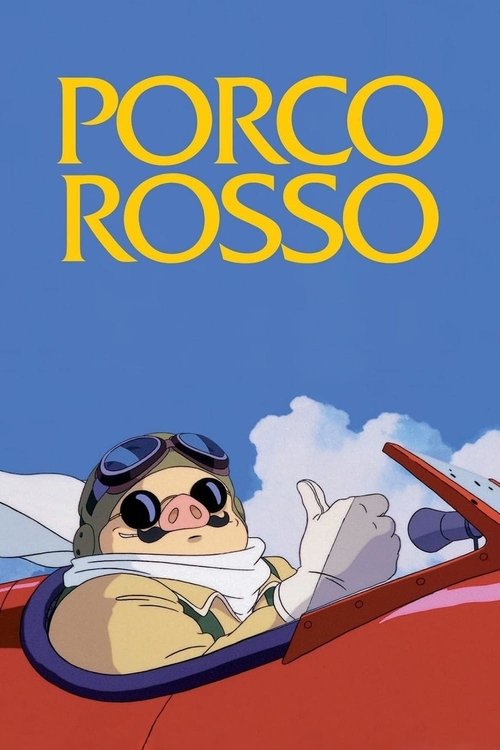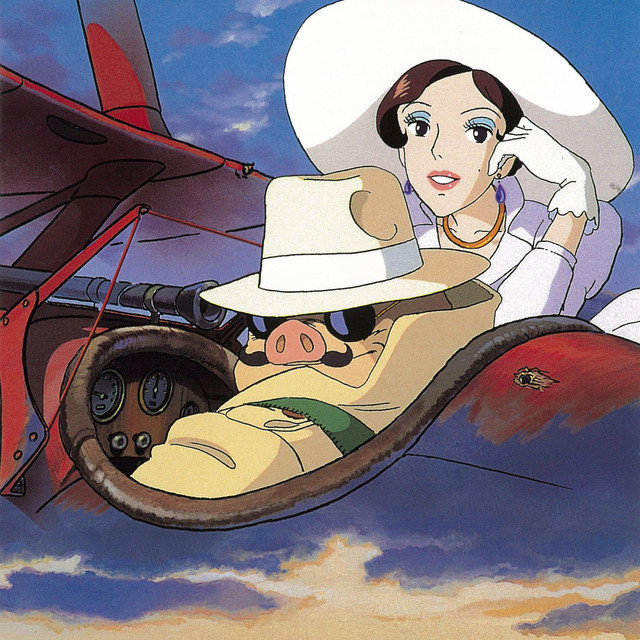
Album: 紅の豚 サウンドトラック
Picture this: you’re composing music for an animated film set in 1920s Europe while simultaneously working on a personal jazz album inspired by the exact same era. Coincidence? Joe Hisaishi doesn’t think so. When Hayao Miyazaki chose the Jazz Age as the backdrop for ‘Porco Rosso,’ Hisaishi was already deep into creating ‘My Lost City,’ his solo album inspired by F. Scott Fitzgerald’s literary world of the 1920s. “I felt something truly destined about it, as artists living in the same era,” Hisaishi reflected, and this cosmic alignment would profoundly shape one of Studio Ghibli’s most emotionally complex soundtracks.
‘To the Adriatic Sea’ emerges from this intersection of fate and artistic vision, but its creation story reveals something deeper about the delicate dance between composer and director. Miyazaki didn’t simply hand Hisaishi a script and expect magic. Instead, he offered six carefully crafted poems as creative anchors: ‘Seaplane Pilot’s Tango,’ ‘Ascension,’ ‘Twilight on the Adriatic Sea,’ ‘Night Flight,’ ‘Secret Garden,’ and ‘Merry-Go-Round.’ These weren’t just thematic suggestions; they were windows into the director’s soul, sharing the emotional landscape he envisioned for his story of a cursed pilot and the woman who waited for him.
The jazz piano foundation of ‘To the Adriatic Sea’ wasn’t merely an aesthetic choice—it was historically authentic. The 1920s represented the golden age of jazz, when piano bars and speakeasies defined urban nightlife across Europe and America. When the melody first appears in the film, drifting from a tavern piano where Gina performs, it carries the weight of period authenticity. Hisaishi understood that Marco and Gina’s relationship needed to be expressed through the musical language of their time, making jazz piano not just appropriate but essential.
Yet this historical accuracy came with creative tension. Hisaishi later admitted to a crucial misjudgment in his approach: “Miyazaki’s personal feelings came through so strongly in this film. I should have pulled back more, but I kept leaning toward action-film scoring in certain parts. I still regret that.” This confession reveals the composer’s ongoing struggle to balance his instincts with the director’s vision, particularly in a film where subtlety trumped spectacle.
The directive Miyazaki gave through producer Toshio Suzuki was both simple and challenging: “Please create embarrassing music. Please make it moving.” This unusual request spoke to the vulnerable heart of ‘Porco Rosso’—a story where a world-weary pilot maintains emotional distance while yearning for connection. ‘To the Adriatic Sea’ needed to capture that embarrassing vulnerability of love remembered and love deferred.
Musically, Hisaishi crafted the piece in a gentle swing tempo, allowing the jazz piano to breathe with nostalgic spaces between phrases. The melody moves primarily in stepwise motion with occasional gentle leaps, creating an intimate conversational quality that mirrors the unspoken dialogue between Marco and Gina. The harmonic progression follows classic jazz standards of the era, with sophisticated chord substitutions that add emotional complexity without overwhelming the tender melodic line.
The genius of ‘To the Adriatic Sea’ lies in how it functions both as period piece and emotional geography. When Gina plays these melodies, she’s not just entertaining customers—she’s maintaining a musical shrine to her relationship with Marco. Every note carries the weight of their shared past and uncertain future. The Adriatic Sea becomes more than a location; it’s a metaphor for the vast emotional distance between two people who love each other but remain separated by pride, fear, and circumstance.
Hisaishi’s concurrent work on ‘My Lost City’ proved providential, as both projects explored themes of lost love and faded dreams through the lens of 1920s aesthetics. The album’s jazz sensibilities informed his approach to ‘Porco Rosso,’ while the film’s emotional demands deepened his understanding of how period music could serve contemporary storytelling.
When Miyazaki heard the completed composition, his joy was unmistakable. Hisaishi had successfully navigated the challenge of creating music that felt both authentic to its period and emotionally honest about human connection. ‘To the Adriatic Sea’ doesn’t simply accompany the film’s romantic subplot—it embodies the ache of love suspended in time.
This convergence of historical research, poetic inspiration, and emotional honesty demonstrates why certain film music transcends its original context. ‘To the Adriatic Sea’ works because Hisaishi understood that jazz piano wasn’t just the right sound for 1920s Europe—it was the right language for expressing the complex emotions of characters caught between their past and an uncertain future, sailing endless waters toward each other but never quite arriving.
- 時代の風-人が人でいられた時-Read Review
- MAMMAIUTORead Review
- Addio!Read Review
- 帰らざる日々Read Review
- セピア色の写真Read Review
- セリビア行進曲Read Review
- Flying boatmenRead Review
- Doom-雲の罠-Read Review
- Porco e BellaRead Review
- Fio-SeventeenRead Review
- ピッコロの女たちRead Review
- FriendRead Review
- Partner shipRead Review
- アドリアの海へNow Playing
- 遠き時代を求めてRead Review
- 荒野の一目惚れRead Review
- 夏の終わりにRead Review
- 失われた魂-LOST SPIRIT-Read Review
- Dog fightRead Review
- Porco e Bella-Ending-Read Review