Album: 紅の豚 サウンドトラック
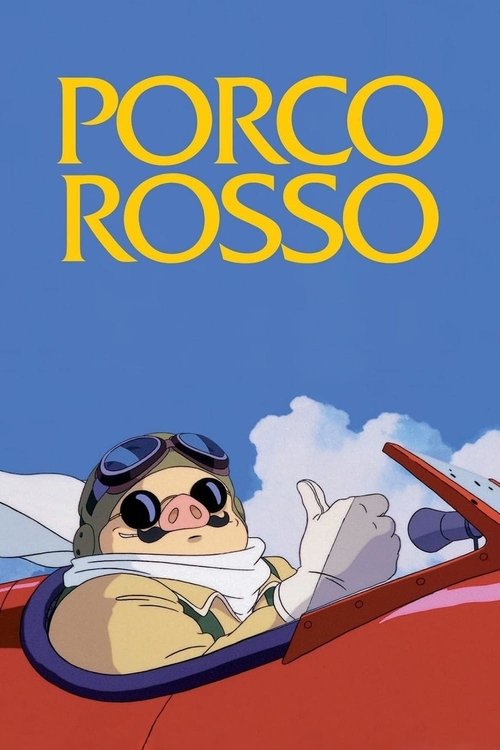
What happens when a master animator hands a composer six mysterious poems and asks him to create magic? In the case of Studio Ghibli’s ‘Porco Rosso’ and its hauntingly beautiful track ‘At Summer’s End’ (Natsu no Owari ni), the answer reveals one of the most fascinating creative collaborations in film music history.
Hayao Miyazaki’s approach to commissioning Joe Hisaishi for the 1992 film was unconventional, to say the least. Rather than providing detailed scene descriptions or emotional cues, Miyazaki handed Hisaishi six poems: ‘Flying Boat Pilot’s Tango,’ ‘Ascension,’ ‘Twilight Over the Adriatic Sea,’ ‘Night Flight,’ ‘Secret Garden,’ and ‘Merry-Go-Round.’ These weren’t just creative inspiration—they were primary source material for sharing the film’s vision, a roadmap written in verse rather than storyboards.
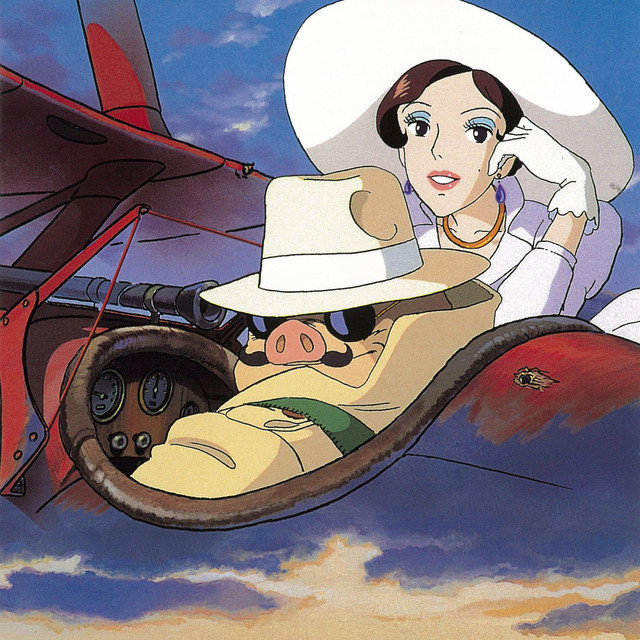
‘At Summer’s End’ emerges from this poetic foundation as perhaps the most emotionally complex piece in the entire soundtrack. Set in the jazz-soaked atmosphere of 1920s Europe, the composition captures the melancholy romance between the cursed pilot Marco and the nightclub singer Gina. The track unfolds in E-flat major with a deliberate, walking tempo that mirrors the weighted steps of lovers caught between past and future.
Hisaishi’s deep connection to jazz wasn’t accidental. During his student years, he immersed himself in the works of Miles Davis, John Coltrane, and particularly Mal Waldron, whose piano style left an indelible mark on his compositional approach. While many know Hisaishi as an orchestral composer and minimalist, his jazz sensibilities run surprisingly deep. This background proved essential when tackling ‘Porco Rosso,’ where period authenticity demanded genuine understanding of the Jazz Age aesthetic.
The 1920s setting wasn’t merely decorative—it was the key to unlocking the entire musical approach. Jazz had exploded during this era, earning the decade its nickname ‘The Jazz Age.’ When Hisaishi chose to represent Marco and Gina’s relationship through jazz piano, he wasn’t just making an artistic choice; he was making a historically informed decision that grounded the fantasy in authentic period atmosphere. The music first appears as diegetic sound—piano jazz emanating from the hotel bar—before evolving into the film’s emotional core.
The creative process took an unexpected turn when Hisaishi completed his solo album ‘My Lost City’ around the same time. When he presented the finished album to Miyazaki, the director’s reaction was immediate and enthusiastic: he wanted everything from the album for ‘Porco Rosso.’ This wasn’t hyperbole—Miyazaki genuinely felt the album’s mood captured exactly what he envisioned for his film. In fact, the opening sequence was specifically written with ‘My Lost City’s’ track ‘1920~Age of Illusion’ in mind, while another piece, ‘Madness,’ was incorporated directly into the canal takeoff scene.
This convergence of Hisaishi’s solo work with the film score created something unprecedented in their collaboration. Two major elements—the jazz aesthetic and the integration of pre-existing solo compositions—gave the ‘Porco Rosso’ soundtrack a unique character that distinguished it from their previous four collaborations. These weren’t just stylistic choices; they were the musical DNA that elevated the film beyond simple aviation adventure into something far more emotionally complex.
‘At Summer’s End’ embodies this synthesis perfectly. The piece features Hisaishi’s characteristic harmonic sophistication layered over a jazz foundation that feels both period-appropriate and timelessly emotional. The melody moves with the kind of bittersweet nostalgia that defines the best jazz ballads, while subtle orchestral colors add cinematic depth. It’s neither purely jazz nor purely orchestral—it’s something new, born from the marriage of Hisaishi’s classical training and his love for jazz legends like Waldron.
The track’s instrumentation reflects this hybrid approach: solo piano carries the primary melody, supported by muted brass that echo 1920s big band arrangements, while strings provide harmonic cushioning that’s distinctly Hisaishi. The result sounds like memory itself—warm, slightly hazy, tinged with longing for something that might never return.
This creative alchemy—poems becoming music, solo album merging with film score, historical research informing emotional expression—demonstrates why the Miyazaki-Hisaishi partnership has endured for decades. ‘At Summer’s End’ isn’t just accompaniment to animated images; it’s a standalone meditation on love, loss, and the passage of time, capable of moving listeners who’ve never seen the film.
The success of this approach proved that sometimes the most direct path to emotional truth runs through the most indirect creative methods. Six poems, a love for jazz, and one director’s instinctive recognition of musical rightness combined to create a soundtrack that feels both deeply rooted in its era and utterly contemporary in its emotional honesty.
- 時代の風-人が人でいられた時-Read Review
- MAMMAIUTORead Review
- Addio!Read Review
- 帰らざる日々Read Review
- セピア色の写真Read Review
- セリビア行進曲Read Review
- Flying boatmenRead Review
- Doom-雲の罠-Read Review
- Porco e BellaRead Review
- Fio-SeventeenRead Review
- ピッコロの女たちRead Review
- FriendRead Review
- Partner shipRead Review
- アドリアの海へRead Review
- 遠き時代を求めてRead Review
- 荒野の一目惚れRead Review
- 夏の終わりにNow Playing
- 失われた魂-LOST SPIRIT-Read Review
- Dog fightRead Review
- Porco e Bella-Ending-Read Review