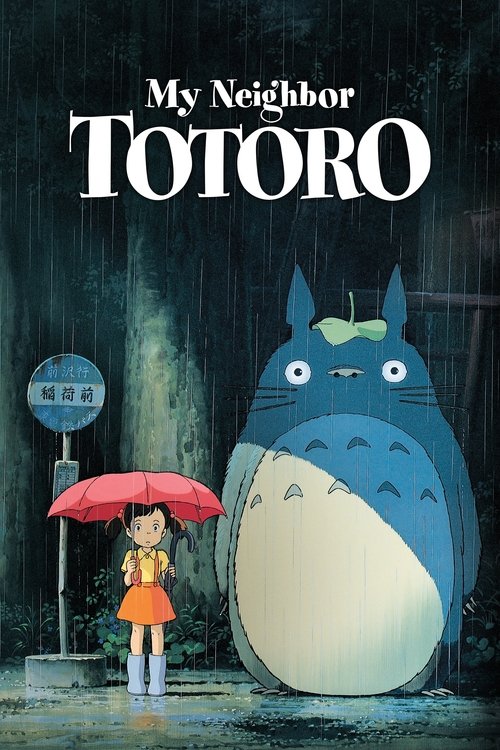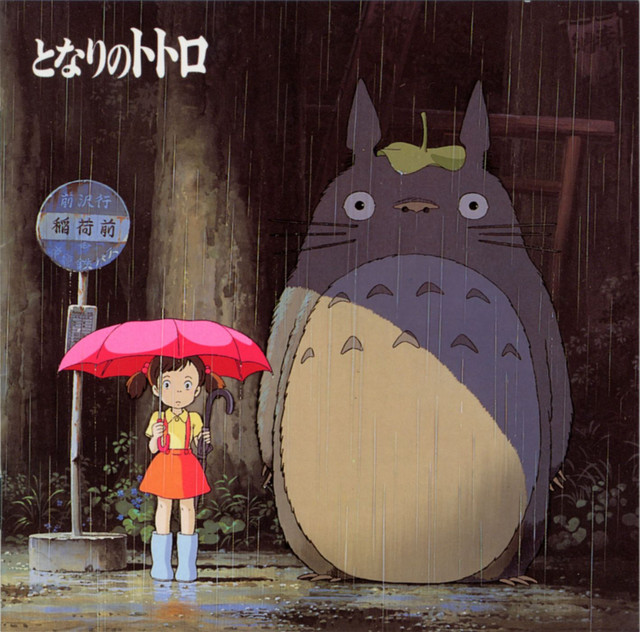
Album: となりのトトロ イメージ・ソング集
What happens when a composer known for sweeping orchestral arrangements decides to tell stories through voice instead of instruments? For Joe Hisaishi, this question led to one of animation music’s most unusual creative experiments: the My Neighbor Totoro Image Song Collection, featuring the touching track ‘Maigo’ (Lost Child).
In 1987, as Studio Ghibli prepared to bring Hayao Miyazaki’s forest sprites to life, the director made an unexpected request. Rather than rushing straight into orchestral compositions, Miyazaki wanted to emphasize songs in the project. Hisaishi’s response was characteristically bold: ‘Let’s create an entire image album of vocal pieces.’ This decision would reshape how animated films approached musical storytelling.
The concept was unprecedented in Japanese animation. Instead of the usual instrumental approach, Hisaishi proposed creating ten complete songs before touching the film’s soundtrack. This wasn’t just unusual – it was revolutionary. The album would function as a song collection, each piece designed to capture emotional moments that pure orchestration might struggle to convey.
Miyazaki’s vision for lyrical collaboration came from an unexpected source. After reading ‘Iya Iya En’ by Nakazawa Rieko, the director experienced what he described as ‘scales falling from his eyes.’ The children’s author’s understanding of childhood wonder aligned perfectly with Totoro’s gentle magic. At Miyazaki’s insistence, Nakazawa was brought aboard to craft lyrics that would bridge the gap between adult nostalgia and childhood innocence.
Nakazawa ultimately wrote ten poems, which through careful discussion were refined into six finished songs. Among these was ‘Maigo,’ a piece that exemplifies Hisaishi’s philosophy about vocal music’s unique power. The song, written in a gentle 4/4 tempo with simple piano accompaniment, captures the vulnerable emotion of a lost child through both melody and text – something purely instrumental music might only suggest.
For Hisaishi, the choice to prioritize vocals wasn’t arbitrary. ‘Daily life sequences are numerous,’ he explained, ‘so I thought songs would create clearer scene imagery than instrumental pieces.’ Totoro’s story unfolds through quiet domestic moments rather than dramatic plot points, and Hisaishi recognized that sung emotions could fill narrative gaps that orchestration alone might leave empty.
This creative process revealed Hisaishi’s collaborative spirit in unexpected ways. During the album’s development, Miyazaki heard demo recordings where Hisaishi had sung guide vocals for the compositions. Impressed by the composer’s unexpected vocal quality, the director encouraged him to perform one track himself. This led to Hisaishi’s rare vocal performance on ‘Chiisana Shashin’ (Small Photograph), demonstrating how creative partnerships can push artists beyond their usual boundaries.
The album’s creation wasn’t without its challenges. Simultaneously, Hisaishi was composing music for ‘Gekigeki ANZUCHI,’ a dark theatrical production featuring Sawada Kenji and Yakusho Koji at Saison Theater. ‘On one hand, a horrifying demonic world. Working on that pure, innocent world simultaneously – I nearly went mad,’ Hisaishi later reflected. This creative tension between projects highlights the mental flexibility required for his diverse artistic output.
‘Maigo’ stands as a perfect example of how this vocal-first approach succeeded. The song’s simple structure – built around a descending melodic phrase in C major – allows the emotional weight of being lost to emerge through both Nakazawa’s lyrics and the performer’s interpretation. Where an instrumental version might rely on dramatic orchestration, the vocal arrangement trusts in subtlety and emotional directness.
Hisaishi’s biggest concern during the project wasn’t technical but narrative. ‘The story’s weakness meant figuring out how and where to provide reinforcement was the most troubling aspect,’ he admitted. The Image Song Collection became his solution – a musical foundation that could support the film’s gentle pacing and episodic structure.
This experimental album ultimately influenced how Hisaishi approached the film’s final soundtrack. Having explored each emotional beat through song, he could craft instrumental pieces that complemented rather than duplicated these vocal explorations. ‘Maigo’ and its companion pieces proved that animation music could function as both storytelling device and standalone art.
The success of this unconventional approach validated Hisaishi’s instinct about vocal music’s narrative power. By treating songs as emotional blueprints rather than afterthoughts, he created a template that influenced decades of animation music. The Image Song Collection remains a fascinating glimpse into how creative risks can reshape entire artistic approaches.
Today, ‘Maigo’ endures as more than just a charming children’s song. It represents a moment when a composer trusted voice over instrumentation, collaboration over isolation, and emotional honesty over technical complexity. In doing so, Hisaishi created not just music, but a new way of thinking about how songs can carry stories forward.
- となりのトトロRead Review
- 風のとおり道Read Review
- さんぽRead Review
- まいごNow Playing
- すすわたりRead Review
- ねこバスRead Review
- ふしぎしりとりうたRead Review
- おかあさんRead Review
- 小さな写真Read Review
- ドンドコまつりRead Review
- 風のとおり道(インストゥルメンタル)Read Review