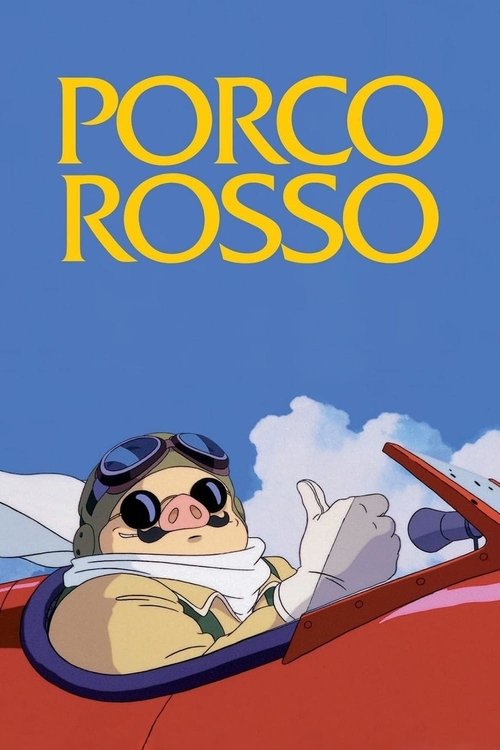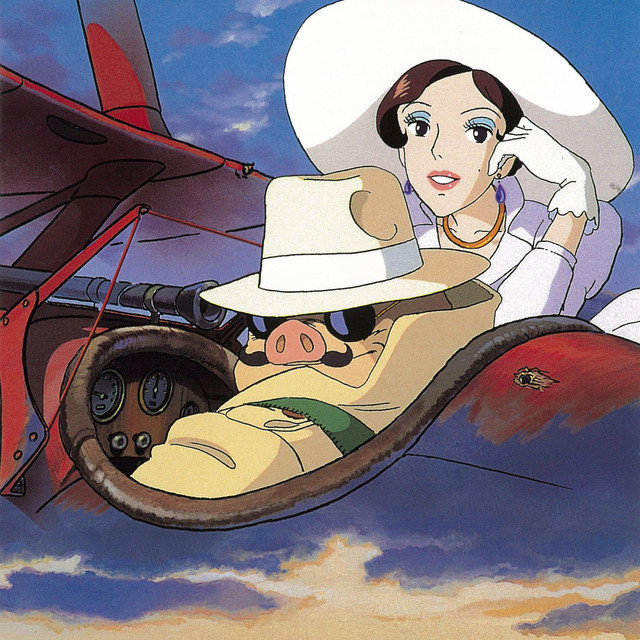
Album: 紅の豚 サウンドトラック
What happens when a celebrated composer decides to poke fun at military pomposity through music? Joe Hisaishi’s “Flying boatmen” from the Porco Rosso soundtrack provides a delightful answer, serving as both musical comedy and character study wrapped in the golden age of jazz.
The track functions as the theme for the Mamma Aiuto gang, a group of sky pirates whose bark is considerably worse than their bite. Hisaishi crafted this piece as a deliberate parody of military marches, employing the familiar structure and rhythmic patterns of martial music while injecting subtle musical jokes that mirror the pirates’ inflated sense of their own prowess.
The brilliance lies in how Hisaishi uses traditional march elements—steady 4/4 time signature, brass-heavy orchestration, and triumphant melodic lines—but introduces intentional musical stumbles and overly grandiose flourishes that betray the gang’s actual incompetence. The result is music that sounds heroic on the surface but contains enough musical winks to suggest these aren’t exactly the most fearsome pirates of the Adriatic.
This approach reflects a broader creative philosophy that emerged during one of the most serendipitous periods of Hisaishi’s career. While working on Porco Rosso, the composer was simultaneously developing his solo album “My Lost City,” inspired by F. Scott Fitzgerald’s writings about the 1920s Jazz Age. The timing couldn’t have been more perfect—Hayao Miyazaki had chosen the same era as the setting for his aviation romance.
“I felt something very fateful about it,” Hisaishi later reflected on this coincidence. “As artists living in the same era, we were both drawn to that particular time period.” This wasn’t mere chance; both creators recognized something compelling about the 1920s that resonated with their artistic sensibilities.
The Jazz Age represented a fascinating contradiction—a time of unprecedented optimism shadowed by underlying disillusionment following World War I. This duality perfectly matched the tone Miyazaki wanted for Porco Rosso, where romantic adventure coexists with war-weary cynicism. Hisaishi’s decision to incorporate jazz elements throughout the score wasn’t just historically accurate; it was emotionally essential.
When Hisaishi presented the completed “My Lost City” album to Miyazaki, the director’s reaction was immediate: “I want all of those songs, I want them all for Porco Rosso.” This enthusiasm led to unprecedented integration between Hisaishi’s personal artistic project and the film score. The opening theme drew directly from “1920~Age of Illusion,” while the canal takeoff sequence featured “Madness” virtually unchanged.
This creative cross-pollination brought two unique elements to the Porco Rosso soundtrack that distinguished it from Hisaishi’s previous Studio Ghibli collaborations. First, the prominent use of jazz idioms—particularly jazz piano representing the relationship between protagonist Marco and singer Gina—grounded the score in its historical setting. The music literally sounds like it could emerge from the tavern piano where these characters first encounter each other.
Second, the incorporation of pre-existing compositions from “My Lost City” created an unusual artistic dialogue between Hisaishi’s personal creative vision and his collaborative work with Miyazaki. Rather than writing entirely new themes, he was adapting and expanding musical ideas he’d already explored, creating a more intimate connection between composer and score.
“Flying boatmen” exemplifies how these elements work together. While the piece functions as character music for the bumbling pirates, its march-like structure and period-appropriate orchestration help establish the 1920s setting. The satirical edge prevents the music from taking itself too seriously, matching the film’s blend of adventure and comedy.
The track’s playful approach to military music also reflects Hisaishi’s broader understanding of how music can reveal character. Instead of simply composing “villain music” for the pirates, he created something that exposes their fundamental nature—they’re playing at being dangerous rather than actually embodying menace. The music becomes complicit in their self-deception while simultaneously revealing the truth to the audience.
This sophisticated approach to musical characterization demonstrates why Hisaishi’s collaboration with Miyazaki has proven so enduring. Both artists understand that effective storytelling often lies in the space between what characters believe about themselves and what the audience discovers about them.
The success of “Flying boatmen” and the broader Porco Rosso soundtrack proved that film music could serve multiple masters—historical authenticity, character development, narrative support, and pure musical enjoyment. By embracing both jazz traditions and personal artistic vision, Hisaishi created something that transcended typical film scoring, offering music that works both within the film’s context and as standalone artistic expression.
In the end, those bumbling sky pirates became the unlikely catalyst for one of Hisaishi’s most innovative scores, proving that even musical comedy can carry profound artistic weight when crafted with sufficient imagination and care.
- 時代の風-人が人でいられた時-Read Review
- MAMMAIUTORead Review
- Addio!Read Review
- 帰らざる日々Read Review
- セピア色の写真Read Review
- セリビア行進曲Read Review
- Flying boatmenNow Playing
- Doom-雲の罠-Read Review
- Porco e BellaRead Review
- Fio-SeventeenRead Review
- ピッコロの女たちRead Review
- FriendRead Review
- Partner shipRead Review
- アドリアの海へRead Review
- 遠き時代を求めてRead Review
- 荒野の一目惚れRead Review
- 夏の終わりにRead Review
- 失われた魂-LOST SPIRIT-Read Review
- Dog fightRead Review
- Porco e Bella-Ending-Read Review