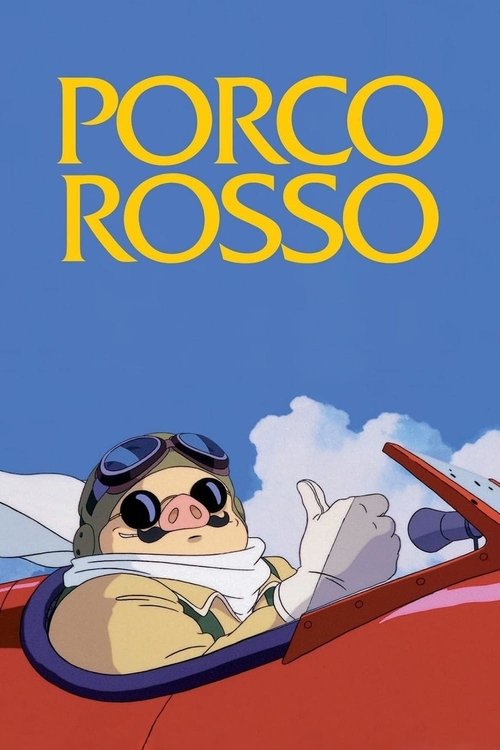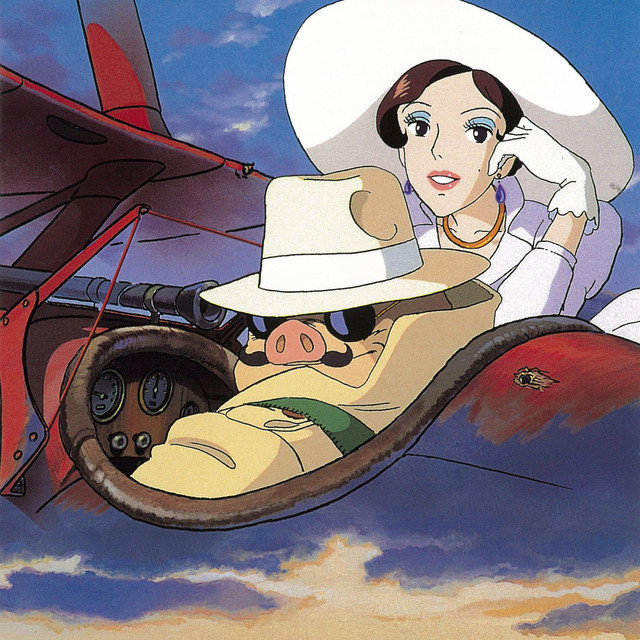
Album: 紅の豚 サウンドトラック
What happens when a director hands his composer six mysterious poems and asks him to create music for a story about a cursed pig pilot? In the case of Joe Hisaishi and Hayao Miyazaki’s collaboration on ‘Porco Rosso,’ it resulted in one of Studio Ghibli’s most sophisticated musical scores, exemplified perfectly by the closing track ‘Porco e Bella-Ending-’ from the film’s soundtrack.
The genesis of this musical journey began with an unusual creative exchange. Miyazaki, seeking to convey the essence of his 1920s Adriatic adventure, presented Hisaishi with six poems: ‘Flying Boat Pilot’s Tango,’ ‘Ascent,’ ‘Adriatic Twilight,’ ‘Night Flight,’ ‘Secret Garden,’ and ‘Merry-Go-Round.’ These weren’t mere suggestions – they were emotional blueprints, literary windows into the soul of a story about love, loss, and the weight of living between worlds.
This poetic foundation would prove crucial in shaping ‘Porco e Bella-Ending-,’ a piece that captures the film’s bittersweet conclusion with remarkable emotional depth. The track serves as more than just credits music; it’s a musical epilogue that resolves the complex relationship between Marco (Porco) and Gina, two characters bound by history and separated by circumstance.
The choice to embrace jazz as the film’s musical language wasn’t arbitrary. Set in the 1920s Jazz Age, when the genre was reshaping popular music across Europe and America, the decision made perfect historical sense. Hisaishi, drawing from his deep appreciation of jazz legends like Miles Davis, John Coltrane, and particularly Mal Waldron, understood that jazz piano could express the sophisticated melancholy that defined both the era and the characters’ emotional landscape.
Waldron’s influence on Hisaishi proves particularly relevant to understanding ‘Porco e Bella-Ending-.’ Known for his introspective, harmonically rich approach to jazz piano, Waldron’s style resonated with Hisaishi’s own sensibilities as both a minimalist composer and orchestral arranger. This jazz foundation allowed Hisaishi to create music that felt authentically period-appropriate while maintaining his distinctive compositional voice.
The creative process took an unexpected turn when Hisaishi completed his solo album ‘My Lost City’ around the same time. When Miyazaki heard it, his reaction was immediate and enthusiastic: he wanted ‘all of it’ for ‘Porco Rosso.’ This wasn’t mere enthusiasm – it was recognition that Hisaishi had tapped into something essential about the film’s emotional core. The album’s exploration of urban longing and nostalgic reflection perfectly aligned with the story of a man transformed by war, living in exile from his former self.
This convergence of jazz sensibilities and Hisaishi’s personal musical explorations created something unprecedented in his Ghibli scores. ‘Porco e Bella-Ending-’ embodies this synthesis, featuring delicate jazz piano work over subtle orchestral textures. The piece unfolds in a contemplative B-flat major, with a gentle 4/4 rhythm that suggests both movement and reflection – appropriate for a story about journeys both external and internal.
What makes this track particularly compelling is how it resolves the film’s central tension without providing easy answers. The music suggests reconciliation and acceptance rather than traditional romantic resolution. Like the best jazz standards, it finds beauty in complexity, in the spaces between notes where meaning accumulates.
The influence of those six original poems remains audible throughout the piece. ‘Adriatic Twilight’ seems to inform the track’s golden, nostalgic tonality, while ‘Secret Garden’ appears in the intimate, private quality of the piano work. The ‘Merry-Go-Round’ reference manifests in the cyclical harmonic progressions that suggest both continuity and gentle motion.
Hisaishi’s background as both an orchestral composer and minimalist served him well in creating this synthesis. His ability to distill complex emotions into essential musical gestures – a hallmark of his minimalist training – combined perfectly with jazz’s improvisational spirit and emotional directness. The result is music that feels both carefully crafted and spontaneously expressive.
‘Porco e Bella-Ending-’ represents more than just film music; it’s evidence of how collaborative creativity can transcend individual artistic vision. Miyazaki’s poems provided the emotional landscape, his enthusiasm for ‘My Lost City’ offered creative permission, and Hisaishi’s jazz influences supplied the musical vocabulary. Together, these elements created a piece that captures the sophisticated melancholy of interwar Europe while remaining unmistakably personal.
In the broader context of Hisaishi’s career, this track demonstrates his versatility beyond the orchestral grandeur typically associated with Ghibli films. It reveals a composer comfortable with intimate expression, someone who understands that sometimes the most powerful musical moments emerge from restraint rather than spectacle. The jazz elements don’t feel like pastiche or historical recreation – they feel like natural extensions of the emotional truth at the story’s heart.
Ultimately, ‘Porco e Bella-Ending-’ succeeds because it honors both its historical setting and its contemporary creation. It sounds like authentic 1920s jazz because Hisaishi understood the emotional honesty that made that music powerful, while maintaining the sophisticated harmonic and orchestral sensibilities that define his mature compositional style. Six poems became a musical language, and that language found its most eloquent expression in this gentle, profound closing statement.
- 時代の風-人が人でいられた時-Read Review
- MAMMAIUTORead Review
- Addio!Read Review
- 帰らざる日々Read Review
- セピア色の写真Read Review
- セリビア行進曲Read Review
- Flying boatmenRead Review
- Doom-雲の罠-Read Review
- Porco e BellaRead Review
- Fio-SeventeenRead Review
- ピッコロの女たちRead Review
- FriendRead Review
- Partner shipRead Review
- アドリアの海へRead Review
- 遠き時代を求めてRead Review
- 荒野の一目惚れRead Review
- 夏の終わりにRead Review
- 失われた魂-LOST SPIRIT-Read Review
- Dog fightRead Review
- Porco e Bella-Ending-Now Playing