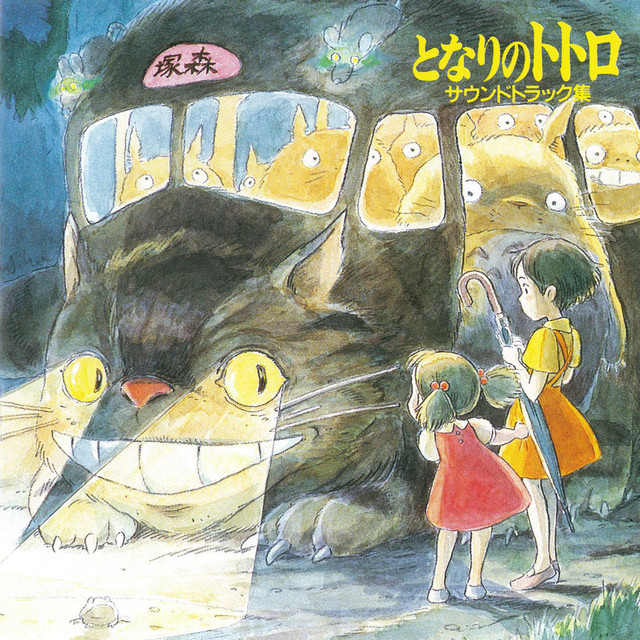
Album: となりのトトロ サウンドトラック集
The gentle piano melody that opens “Okaasan” (Mother) from My Neighbor Totoro’s soundtrack carries within it one of cinema’s most profound musical experiments. While audiences worldwide have been moved by this tender composition, few realize they’re experiencing the result of Joe Hisaishi’s radical departure from conventional film scoring—a creative risk that nearly went in the opposite direction.
For Hisaishi, the Totoro project represented uncharted territory in more ways than one. This was the first time Hayao Miyazaki had taken direct control of the musical discussions, stepping forward to lead the creative process himself. “Takahata-san is being sneaky,” Miyazaki reportedly said during these sessions, referencing his colleague’s previous collaborations with Hisaishi. The shift in dynamics created both opportunity and pressure for the composer.
“Okaasan” exemplifies Hisaishi’s revolutionary approach to children’s film music. Written in a flowing 4/4 time with delicate string arrangements, the piece deliberately avoids the saccharine orchestrations typical of family entertainment. “If I write ordinary orchestral music alone, it becomes just another conventional children’s movie,” Hisaishi explained. This philosophy drove him to infuse even the most intimate moments with subtle ethnic influences and minimalist techniques.
The composition process revealed Hisaishi’s hands-on approach to crafting authentic sounds. For the ethnic percussion elements that appear throughout the soundtrack, including subtle tabla rhythms that complement “Okaasan,” Hisaishi performed the instruments himself. This personal involvement in every sonic detail reflects his belief that genuine expression requires direct connection between composer and sound source.
Originally, Hisaishi had planned for synthesizers to dominate the Totoro soundtrack, with orchestral elements playing a supporting role. However, illness during the recording process forced a dramatic shift in the instrumentation balance. What emerged was approximately sixty percent orchestra to forty percent synthesizer—the reverse of his initial vision. “As a result, having more orchestra might have made it easier to listen to,” he reflected, though the comment hints at his complex relationship with accessibility in his work.
This restructuring proved crucial for pieces like “Okaasan.” The increased orchestral presence allowed Hisaishi to explore the emotional depth that pure electronic sounds might have masked. The piece builds from solo piano to include gentle strings and woodwinds, creating an intimate chamber music feeling that perfectly captures the maternal themes without resorting to obvious emotional manipulation.
Hisaishi’s approach to the entire Totoro soundtrack followed a sophisticated structural philosophy he had developed since his work on Nausicaä. Rather than segregating ethnic and orchestral elements into separate pieces, he sought to integrate both approaches within individual compositions. “Sanpo” (Walking) and “Tonari no Totoro” served as main themes, while “Kaze no Toorimichi” (Path of the Wind) became what he called the “hidden theme” for scenes involving the forest spirits.
For Hisaishi, working with Miyazaki represents something far beyond a professional collaboration. “It’s a place of trials and training. It’s also a place where I can confirm my own identity, so I treasure it greatly. Miyazaki-san’s films are especially the most important work for me,” he has said. This relationship pushed him to avoid musical safety nets and explore new territories with each project.
“Okaasan” demonstrates this philosophy in miniature. Rather than relying on conventional maternal musical tropes—sweeping melodies or overly sentimental harmonies—Hisaishi crafted something more nuanced. The piece moves through subtle key modulations while maintaining a consistent gentle rhythm, creating emotional movement without dramatic peaks. This restraint requires listeners to engage more actively with the music, drawing them into the film’s emotional world rather than overwhelming them.
The success of this approach extended beyond individual pieces to reshape how animated films could sound. By proving that young audiences could appreciate sophisticated musical concepts, Hisaishi opened possibilities for future composers working in family entertainment. The delicate balance between accessibility and artistic integrity that “Okaasan” represents became a template for emotionally honest film music.
Listening to “Okaasan” today, one hears not just a beautiful melody but the sound of creative courage. In choosing subtlety over obviousness, ethnic influences over pure Western orchestration, and emotional honesty over manipulation, Hisaishi created something that honors both its young audience and the complex emotions of the story it serves. The piece stands as evidence that the most profound musical moments often emerge from the greatest creative risks.
- さんぽ-オープニング主題歌-Read Review
- 五月の村Read Review
- オバケやしき!Read Review
- メイとすすわたりRead Review
- 夕暮れの風Read Review
- こわくないRead Review
- おみまいにいこうRead Review
- おかあさんNow Playing
- 小さなオバケRead Review
- トトロRead Review
- 塚森の大樹Read Review
- まいごRead Review
- 風のとおり道(インストゥルメンタンル)Read Review
- ずぶぬれオバケRead Review
- 月夜の飛行Read Review
- メイがいないRead Review
- ねこバスRead Review
- よかったねRead Review
- となりのトトロ-エンディング主題歌-Read Review
- さんぽ(合唱つき)Read Review