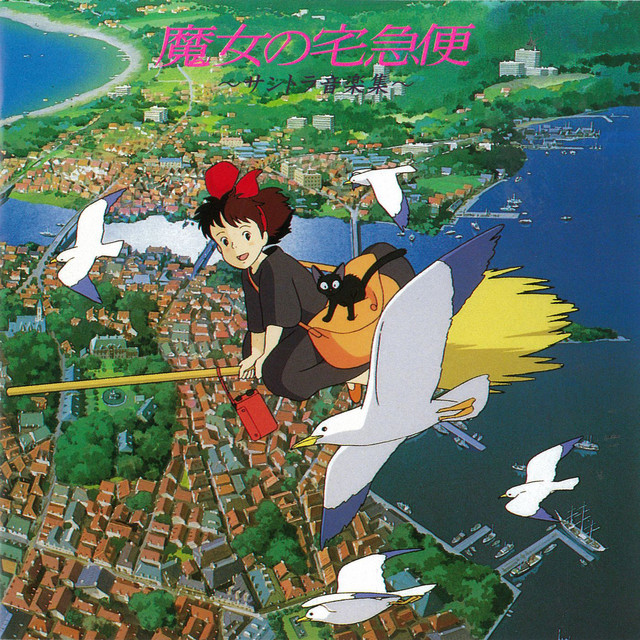
Album: 魔女の宅急便 サントラ音楽集
Picture this: you’ve just returned from a month-long recording session in New York, jet-lagged and exhausted. The next morning, you’re sitting in a conference room discussing the musical score for what would become one of anime’s most beloved films. Two days later, you’re conducting a full orchestra. This wasn’t a nightmare—it was Joe Hisaishi’s reality while creating the soundtrack for Kiki’s Delivery Service, including the enchanting piece “Paatii ni Maniaowanai” (Won’t Make It to the Party).
The summer of 1989 presented Hisaishi with an almost impossible challenge. His work schedule had been derailed by overlapping commitments, leaving just weeks to compose, arrange, and record an entire orchestral score for Studio Ghibli’s latest production. The film was set to premiere nationwide on July 29th, and there was no room for delay. In an era before digital shortcuts and computer-assisted composition, this timeline would be considered insane by today’s standards.
Yet from this pressure cooker emerged some of Hisaishi’s most innovative work. “Won’t Make It to the Party” exemplifies his revolutionary approach to film scoring during this period. Rather than relying on his usual arsenal of synthesizers, Hisaishi deliberately stripped away electronic elements in favor of organic, acoustic sounds. The piece dances in a lilting 3/4 time signature, its waltz-like rhythm infused with Mediterranean warmth that transports listeners to the fictional European town of Koriko.
The instrumentation tells its own story. Hisaishi incorporated the dulcimer—a folk instrument that predates the modern piano—alongside guitars and accordions to create what he described as a “European ethnic dance” atmosphere. These weren’t arbitrary choices; each instrument carried cultural DNA that would help establish the film’s old-world charm. The dulcimer’s hammered strings create a particular timbre that bridges ancient and contemporary musical worlds, much like Kiki herself bridges the magical and mundane.
What makes “Won’t Make It to the Party” particularly fascinating is its role within Hisaishi’s broader philosophical approach to the film’s score. Throughout Kiki’s Delivery Service, he deliberately emphasized wind instruments—ocarinas, accordions, woodwinds—creating what music analysts have identified as a sonic representation of breath itself. In Japanese aesthetic philosophy, breath equals wind, and wind represents both the literal force that allows Kiki to fly and the metaphorical life force that drives her character development.
This breathing metaphor extends beyond mere symbolism. When you listen to “Won’t Make It to the Party,” notice how the accordion’s bellows create natural musical phrases that mirror human respiration. The piece ebbs and flows like wind through European cobblestone streets, never rushing despite its playful energy. It’s music that breathes with the film’s pacing, supporting narrative tension without overwhelming it.
Hisaishi’s creative process during this period reveals a composer at the height of his powers, working under constraints that would paralyze lesser artists. After returning from New York in June, he had to immediately shift mental gears from whatever project had taken him overseas to inhabiting the world of a teenage witch learning independence. The additional compositions and arrangements had to be completed “in the blink of an eye,” as one observer noted, before full orchestral recording sessions in early July.
This compressed timeline actually served the music well. There was no time for overthinking or excessive revision—only pure instinct guided by decades of compositional experience. “Won’t Make It to the Party” captures this spontaneous energy while maintaining sophisticated musical architecture. The piece suggests hurried preparation for a celebration, its slightly frantic but joyful character perfectly matching both its title and the film’s themes of youthful anxiety and social belonging.
The decision to minimize synthesizers wasn’t just aesthetic—it was philosophical. Hisaishi recognized that Kiki’s Delivery Service, unlike some earlier Ghibli films, demanded grounded realism despite its magical elements. The story explores genuine human emotions: homesickness, friendship, loss of confidence, and the gradual discovery of one’s place in the world. Synthetic sounds would have created emotional distance from these universal experiences.
Interestingly, while Hisaishi crafted this intimate, acoustic score, the film’s directors chose contemporary pop music for specific scenes. Yumi Matsutoya’s songs provided urban sophistication that contrasted beautifully with Hisaishi’s pastoral orchestrations. This creative tension between old and new, acoustic and electric, magical and mundane, runs through every measure of “Won’t Make It to the Party.”
Listening to this piece today, it’s remarkable to consider that such carefully crafted music emerged from what was essentially an emergency production schedule. Hisaishi’s ability to channel creative pressure into musical gold speaks to both his technical mastery and deep understanding of how music serves storytelling. “Won’t Make It to the Party” doesn’t just accompany Kiki’s adventures—it embodies the breathless excitement of discovering one’s capabilities under pressure, much like its composer did during those frantic weeks in 1989.
- 晴れた日に…Read Review
- 旅立ち
- 海の見える街Read Review
- 空とぶ宅急便Read Review
- パン屋の手伝いRead Review
- 仕事はじめRead Review
- 身代わりジジRead Review
- ジェフRead Review
- 大忙しのキキRead Review
- パーティーに間に合わないNow Playing
- オソノさんのたのみ事…Read Review
- プロペラ自転車Read Review
- とべない!Read Review
- 傷心のキキRead Review
- ウルスラの小屋へRead Review
- 神秘なる絵Read Review
- 暴飛行の自由の冒険号Read Review
- おじいさんのデッキブラシRead Review
- デッキブラシでランデブーRead Review