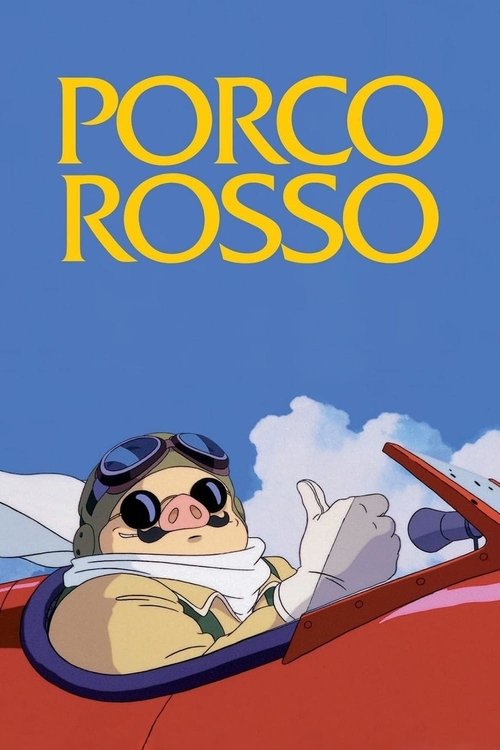
Album: 紅の豚 サウンドトラック
What happens when a minimalist composer known for sweeping orchestral arrangements suddenly dives headfirst into 1920s jazz? For Joe Hisaishi, this creative challenge came in the form of ‘Addio!’ from the Porco Rosso soundtrack, a piece that would fundamentally reshape his approach to film scoring.
The genesis of this musical transformation began with an unusual gift from director Hayao Miyazaki. Rather than lengthy discussions about mood or atmosphere, Miyazaki handed Hisaishi six poems: ‘The Aviator’s Tango,’ ‘Ascension,’ ‘Twilight Adriatic Sea,’ ‘Night Flight,’ ‘Secret Garden,’ and ‘Merry-Go-Round.’ These verses served as creative blueprints, capturing the essence of what would become one of Studio Ghibli’s most musically adventurous films.
‘Addio!’ emerges from this poetic foundation as a perfect example of Hisaishi’s ability to absorb and reinterpret musical traditions. The piece, written in the key of B-flat major with a languid tempo that mirrors the lazy afternoon atmosphere of an Italian café, represents the composer’s deep dive into jazz piano idioms. This wasn’t merely pastiche – Hisaishi’s longtime fascination with Miles Davis, John Coltrane, and particularly Mal Waldron had been brewing since his student days, waiting for the right moment to surface.
The influence of Mal Waldron proves especially crucial in understanding ‘Addio!’ Waldron’s sparse, contemplative piano style – characterized by deliberate pauses and emotional restraint – permeates the piece. Hisaishi adopts this approach, allowing silence to carry as much weight as the notes themselves. The melody unfolds with the unhurried grace of someone savoring a conversation over wine, each phrase carefully considered rather than rushed.
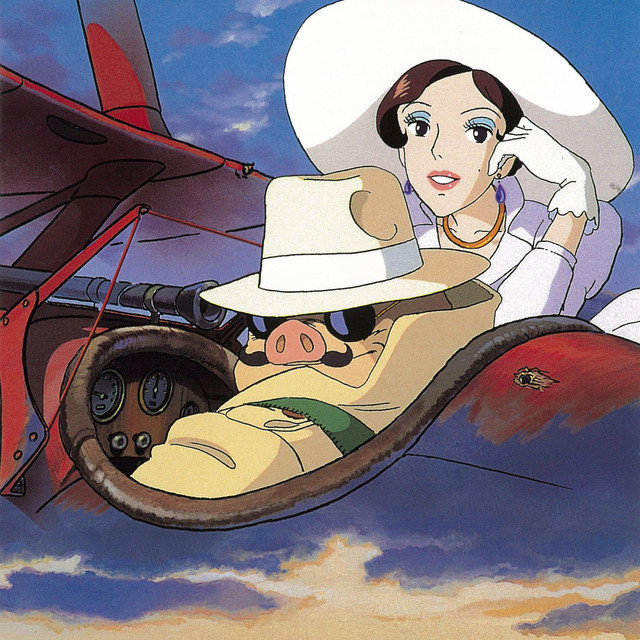
What makes ‘Addio!’ particularly fascinating is how it functions within the film’s narrative structure. The piece first appears during a tavern scene, where piano jazz provides the perfect period-appropriate backdrop for the relationship between Marco and Gina. The 1920s jazz age setting demanded authentic musical language, and Hisaishi’s choice of jazz piano wasn’t just stylistic – it was historically essential. The era’s cultural zeitgeist, with its blend of romanticism and melancholy, found perfect expression through the idiom that defined the decade.
The creation of ‘Addio!’ was also influenced by Hisaishi’s solo album ‘My Lost City,’ which had caught Miyazaki’s attention in a significant way. Upon hearing the album, the director famously declared he wanted ‘all of it’ for Porco Rosso. This enthusiasm led to an unprecedented musical approach where Hisaishi’s personal artistic explorations became directly integrated into the film score. ‘Addio!’ benefits from this crossover, carrying the intimate, personal quality of solo piano work while serving the larger narrative needs of the film.
The piece showcases Hisaishi’s remarkable ability to channel different musical personalities. While his reputation rests primarily on minimalist orchestration and sweeping melodic lines, ‘Addio!’ reveals his fluency in jazz harmony and rhythm. The left hand maintains a gentle walking bass pattern while the right hand explores bluesy inflections and sophisticated chord voicings that would make any jazz pianist proud.
This musical versatility reflects a deeper philosophical approach to composition. Rather than viewing different genres as separate territories, Hisaishi treats them as different colors on the same palette. Jazz elements don’t compete with his minimalist sensibilities – they enhance them. The restraint and repetition characteristic of minimalism find natural parallels in jazz’s use of vamps and modal exploration.
The recording of ‘Addio!’ captures the authentic feel of 1920s salon performance, with close-mic placement that emphasizes the piano’s mechanical action and the subtle ambient noise that would naturally occur in an intimate venue. This attention to sonic authenticity extends Hisaishi’s compositional vision into the realm of sound design.
Perhaps most remarkably, ‘Addio!’ demonstrates how two seemingly incompatible creative elements – jazz improvisation and minimalist precision – can create something entirely new. The piece maintains the structural clarity that defines Hisaishi’s best work while embracing the emotional spontaneity that makes jazz compelling.
This synthesis would prove influential beyond Porco Rosso itself. The success of integrating jazz elements into his film scoring palette opened new creative possibilities for Hisaishi, showing that his musical identity could expand without losing its essential character. ‘Addio!’ stands as evidence that great composers don’t just master one style – they transform every style they touch into something uniquely their own.
In the end, ‘Addio!’ represents more than just a beautiful piece of film music. It’s a document of artistic growth, showing how a composer can honor both tradition and innovation simultaneously, creating something that feels both historically authentic and personally distinctive.
- 時代の風-人が人でいられた時-Read Review
- MAMMAIUTORead Review
- Addio!Now Playing
- 帰らざる日々Read Review
- セピア色の写真Read Review
- セリビア行進曲Read Review
- Flying boatmenRead Review
- Doom-雲の罠-Read Review
- Porco e BellaRead Review
- Fio-SeventeenRead Review
- ピッコロの女たちRead Review
- FriendRead Review
- Partner shipRead Review
- アドリアの海へRead Review
- 遠き時代を求めてRead Review
- 荒野の一目惚れRead Review
- 夏の終わりにRead Review
- 失われた魂-LOST SPIRIT-Read Review
- Dog fightRead Review
- Porco e Bella-Ending-Read Review