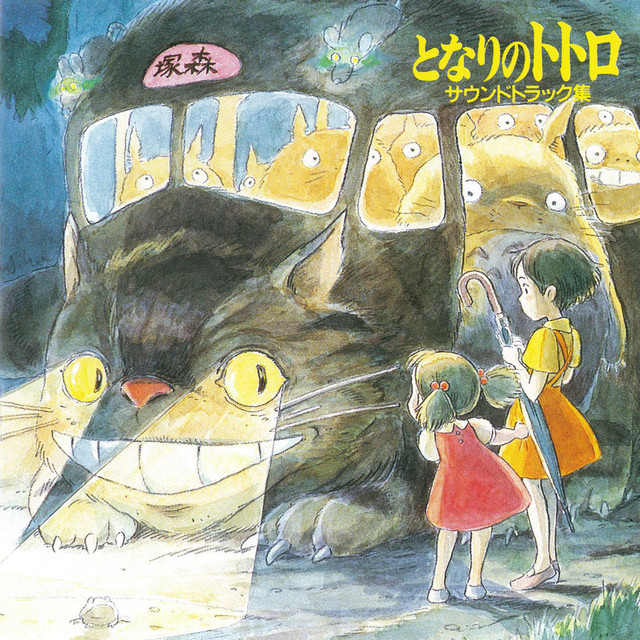
Album: となりのトトロ サウンドトラック集
When Joe Hisaishi composed ‘Maigo’ (Lost Child) for the My Neighbor Totoro soundtrack, he faced a creative challenge that would define his approach to scoring intimate animated films. How do you create music that supports a gentle story without overwhelming it? How do you avoid the trap of making ‘just another children’s movie’? The answer lies in a delicate balance that Hisaishi has been perfecting since his work on Nausicaä.
‘Maigo’ serves as a perfect example of Hisaishi’s dual-natured approach to film scoring. The piece emerges from his conviction that ordinary orchestral arrangements alone would reduce Totoro to a conventional children’s film. Instead, he deliberately infused ethnic elements into the score, creating what he calls a ‘minimal music’ sensibility that gives even simple melodies an exotic atmosphere.
The composition itself reflects this philosophy beautifully. Built around a gentle, repetitive melodic pattern in a major key, ‘Maigo’ moves at a measured tempo that mirrors a child’s uncertain steps. But listen closely, and you’ll hear the subtle percussion elements that elevate it beyond typical orchestral fare. Hisaishi personally played the tabla drums that appear throughout the soundtrack, sampling his own performances to create the ethnic textures that distinguish Totoro from more conventional animated scores.
This hands-on approach reveals much about Hisaishi’s creative process. Rather than delegating ethnic instrument parts to session musicians, he chose to learn and perform these elements himself. The tabla sounds in ‘Maigo’ and other Totoro pieces carry the composer’s own rhythmic sensibilities, creating an organic fusion between Western orchestration and world music influences.
The structural philosophy behind ‘Maigo’ also illuminates Hisaishi’s broader approach to the Totoro project. He recognized early that the film’s abundance of daily life sequences called for a different musical strategy than his previous work. Where action-driven narratives might demand dramatic instrumental pieces, Totoro’s gentle storyline needed something more nuanced.
This led to his decision to create the soundtrack as what he called a ‘song collection’ – pieces with vocal elements that could more clearly convey scene-specific imagery. ‘Maigo’ functions within this framework as a bridge piece, supporting moments of uncertainty and discovery without drawing attention away from the animation’s subtle emotional beats.
Hisaishi’s restraint in composing ‘Maigo’ reflects his understanding of the film’s unique dramatic structure. He deliberately avoided writing ‘strong music’ that might disconnect from the screen action. This wasn’t simply about volume or intensity – it was about emotional weight. In a story where the most dramatic moments involve a child briefly losing her way or discovering magical creatures, musical bombast would feel jarringly inappropriate.
The composer walked a tightrope between childlike simplicity and sophisticated musicality. Too far toward simplicity, and the music would devolve into nursery rhyme territory. Too complex, and it would overshadow the gentle narrative. ‘Maigo’ hits that sweet spot, with its repetitive melodic cells creating hypnotic comfort while the ethnic percussion adds layers of interest for adult listeners.
This balancing act extends to the track’s role within the album’s larger architecture. Hisaishi built the Totoro soundtrack around main themes like ‘Sanpo’ (Walking) and the title track, with ‘Kaze no Toorimichi’ (Path of the Wind) serving as what he called a ‘hidden theme’ for tree-related scenes. ‘Maigo’ functions as connective tissue, supporting character moments without competing with these more prominent musical statements.
The ethnic-orchestral fusion that defines ‘Maigo’ has remained a consistent element in Hisaishi’s work since Nausicaä. But Totoro marked a refinement of this approach, proving that such musical multiculturalism could support intimate storytelling as effectively as epic adventure. The success of pieces like ‘Maigo’ validated Hisaishi’s belief that animated films could transcend their target demographics through sophisticated musical choices.
Listening to ‘Maigo’ today, decades after its creation, reveals how Hisaishi’s philosophical approach to film scoring created something unexpectedly durable. The piece works equally well as background music during the film’s quieter moments and as standalone listening that evokes childhood wonder without condescension. That dual functionality – serving both narrative and musical purposes – represents the kind of creative problem-solving that has made Hisaishi’s work so enduring.
In ‘Maigo,’ we hear not just a lovely piece of film music, but a crystallization of Joe Hisaishi’s artistic philosophy: that children’s entertainment deserves the same musical sophistication as any other genre, and that the gentlest stories sometimes require the most thoughtful musical support.
- さんぽ-オープニング主題歌-Read Review
- 五月の村Read Review
- オバケやしき!Read Review
- メイとすすわたりRead Review
- 夕暮れの風Read Review
- こわくないRead Review
- おみまいにいこうRead Review
- おかあさんRead Review
- 小さなオバケRead Review
- トトロRead Review
- 塚森の大樹Read Review
- まいごNow Playing
- 風のとおり道(インストゥルメンタンル)Read Review
- ずぶぬれオバケRead Review
- 月夜の飛行Read Review
- メイがいないRead Review
- ねこバスRead Review
- よかったねRead Review
- となりのトトロ-エンディング主題歌-Read Review
- さんぽ(合唱つき)Read Review