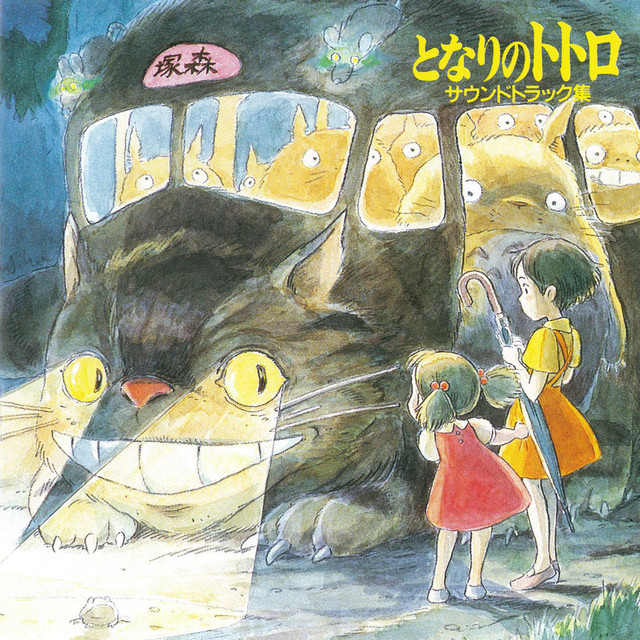
Album: となりのトトロ サウンドトラック集
In the annals of film music history, few songs have emerged from such serendipitous circumstances as ‘Sanpo’ from My Neighbor Totoro. What began as a simple demo recording by vocalist Azumi Inoue became one of Studio Ghibli’s most beloved opening themes, fundamentally reshaping how composer Joe Hisaishi approached children’s cinema.
The story begins with a change of plans. Originally, ‘Sanpo’ (meaning ‘Stroll’) was destined to be performed by the Suginami Children’s Choir, a logical choice for a film about childhood wonder. However, when Inoue recorded her demonstration version to guide the young singers, something unexpected happened. Her warm, grounding vocal quality convinced the production team that her voice provided exactly the ‘backbone’ the song needed. In an unprecedented move, they decided to use her demo recording directly in the final film.
For Inoue, this represented a career first. ‘This kind of experience happened only with this one song, before or since,’ she later reflected. The spontaneous decision speaks to a broader philosophy that would come to define Hisaishi’s work: sometimes the most authentic expression emerges not from elaborate planning, but from capturing genuine moments of musical discovery.
This approach aligned perfectly with Hisaishi’s evolving sonic philosophy for animated films. Since his work on Nausicaä of the Valley of the Wind, he had been deliberately balancing ethnic musical elements with traditional orchestral arrangements. ‘If I wrote songs using only conventional orchestra, it would become just an ordinary children’s film,’ Hisaishi explained. This insight drove him to infuse ‘Sanpo’ and the broader Totoro soundtrack with what he called ‘minimalist music with a slightly ethnic atmosphere.’
The composer’s hands-on approach extended beyond composition into performance. Rather than sourcing ethnic percussion samples, Hisaishi personally recorded himself playing the tabla, an Indian hand drum that adds subtle rhythmic complexity beneath the song’s deceptively simple melody. This personal touch reflects his commitment to authentic sound creation, even in the smallest details.
‘Sanpo’ itself embodies this philosophy beautifully. Built around a gently ascending melody in a major key, the song maintains childlike innocence while incorporating sophisticated harmonic progressions that prevent it from becoming saccharine. The ethnic percussion elements provide textural interest without overwhelming the vocal line, creating what Hisaishi described as a successful structural balance between ‘ethnic elements and ordinary orchestral music.’
The decision to feature songs prominently in Totoro’s soundtrack, rather than relying solely on instrumental pieces, emerged from practical storytelling considerations. Hisaishi recognized that the film’s emphasis on daily life sequences required a different musical approach. ‘Because there are many everyday scenes, I thought songs would give a clearer image of those scenes than instrumental pieces,’ he noted. This represented a significant departure from conventional film scoring wisdom, which typically reserves songs for specific dramatic moments.
The composer initially created what he called an ‘image album’ as a ‘song collection,’ understanding that the film’s narrative structure relied more on emotional atmosphere than traditional plot progression. This presented unique challenges: ‘The weak story element made me worry most about where and how to strengthen it.’ Songs like ‘Sanpo’ became crucial tools for establishing emotional continuity across the film’s episodic structure.
Within the soundtrack’s architecture, ‘Sanpo’ serves alongside ‘My Neighbor Totoro’ as a main theme, while Hisaishi developed what he termed a ‘hidden theme’ called ‘Path of the Wind’ (‘Kaze no Torimichi’) for scenes featuring the forest spirits. This three-tier thematic structure allowed him to maintain musical cohesion while providing distinct emotional colors for different aspects of the story.
The success of this approach validated Hisaishi’s instincts about avoiding conventional children’s film music. By embracing ethnic influences, personal performance, and song-based storytelling, he created a soundtrack that speaks to both children and adults without condescension. ‘Sanpo’ remains a perfect encapsulation of this philosophy: a song that captures childhood wonder while maintaining musical sophistication, born from a spontaneous decision to trust in authentic expression over calculated production.
The legacy of ‘Sanpo’ extends beyond its original context, demonstrating how thoughtful integration of diverse musical elements can create something genuinely universal. In an industry often driven by market research and focus groups, the story of this demo-turned-classic serves as a reminder that sometimes the most powerful artistic choices emerge from trusting instinct over convention.
- さんぽ-オープニング主題歌-Now Playing
- 五月の村Read Review
- オバケやしき!Read Review
- メイとすすわたりRead Review
- 夕暮れの風Read Review
- こわくないRead Review
- おみまいにいこうRead Review
- おかあさんRead Review
- 小さなオバケRead Review
- トトロRead Review
- 塚森の大樹Read Review
- まいごRead Review
- 風のとおり道(インストゥルメンタンル)Read Review
- ずぶぬれオバケRead Review
- 月夜の飛行Read Review
- メイがいないRead Review
- ねこバスRead Review
- よかったねRead Review
- となりのトトロ-エンディング主題歌-Read Review
- さんぽ(合唱つき)Read Review