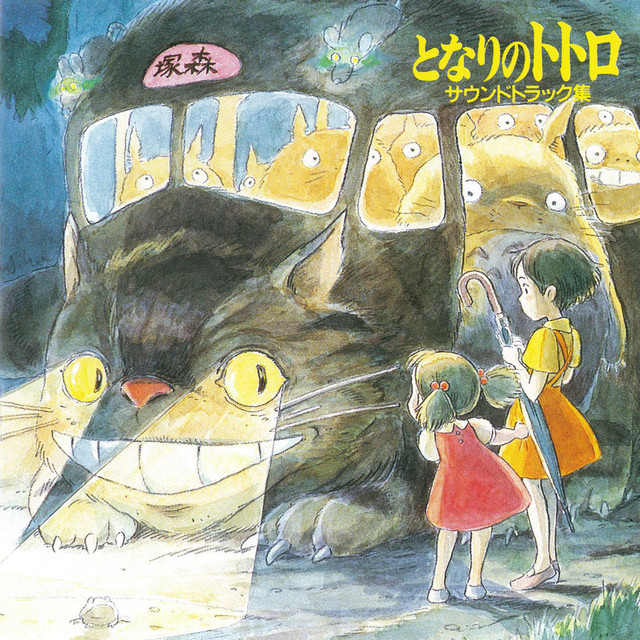
Album: となりのトトロ サウンドトラック集
What happens when a director counts beats with his fingers and declares there are too many notes? In the case of My Neighbor Totoro’s main theme, it leads to one of cinema’s most beloved musical moments. The collaboration between director Hayao Miyazaki and composer Joe Hisaishi on “Totoro” reveals a creative process built on intuition, trust, and the power of minimalism.
The song that would become synonymous with Studio Ghibli magic began with an unusual rhythmic foundation: seven beats per measure. This wasn’t a conscious compositional choice but rather the result of Miyazaki’s instinctive feedback. When presented with Hisaishi’s initial version, the director simply stated that there were “too many sounds.” What followed was a meticulous process of subtraction, with Hisaishi counting “one, two, three, four, five, six, seven… pause” while adjusting the mix, removing and adding elements with each pass until the music perfectly matched Miyazaki’s vision.
This seven-beat rhythm creates an inherently off-balance feeling that mirrors the otherworldly nature of Totoro himself. Unlike the predictable four-four time signature that dominates popular music, the seven-beat pattern keeps listeners slightly unsettled, never quite knowing when the next downbeat will arrive. It’s this musical uncertainty that helps transport audiences into a world where forest spirits might actually exist.
Miyazaki’s attraction to Hisaishi’s minimalist approach wasn’t accidental. The director praised what he called the “genderless quality” of minimal music, explaining that emphasizing mystery too heavily would feel forced, while making it too familiar would strip away its magic. Hisaishi’s minimalist techniques—repetitive patterns, gradual harmonic shifts, and sparse orchestration—created what Miyazaki described as “mysterious but not overly mysterious, strangely intimate.”
This philosophy extended beyond the main theme to shape the entire soundtrack’s architecture. Hisaishi deliberately balanced ethnic instrumentation with traditional orchestral arrangements, a structural approach he’d been developing since his work on Nausicaä. For Totoro, he positioned “Sanpo” (Stroll) and the main “Totoro” theme as primary motifs, while “Kaze no Toorimichi” (Path of the Wind) served as what he called a “shadow theme” for the film’s more contemplative moments.
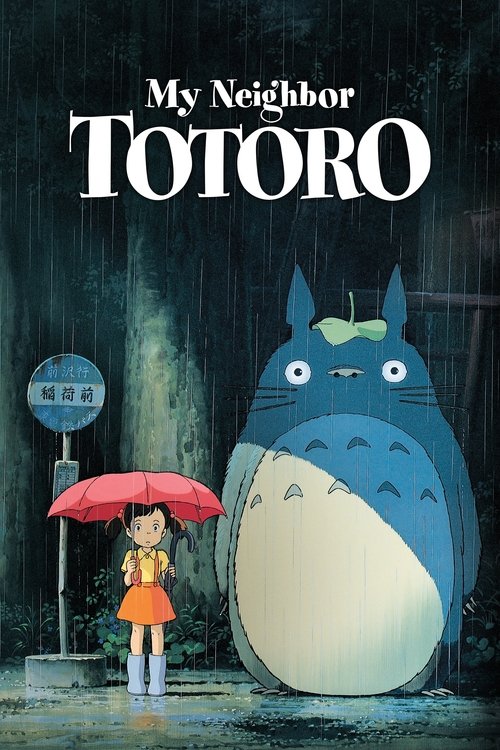
Perhaps the most revealing story involves the famous bus stop sequence, where Satsuki and Mei encounter Totoro while waiting in the rain. Initially, Miyazaki insisted no music was needed for this pivotal scene. Producer Toshio Suzuki, recognizing the sequence’s importance, secretly consulted with director Isao Takahata, who advised that minimalist music would be perfect and that Hisaishi could absolutely deliver it.
When Hisaishi composed the piece for this scene, he created something that exists in the spaces between notes as much as in the notes themselves. Gentle string patterns weave through sustained harmonies, punctuated by subtle percussion that mirrors raindrops. The music doesn’t announce Totoro’s magical presence; instead, it creates an atmosphere where magic feels possible, even inevitable.
The impact was immediate and profound. Upon hearing the completed sequence, Miyazaki enthusiastically declared it “a wonderful song” and showed no memory of ever objecting to music in the scene. More importantly, the music transformed how audiences experienced Totoro himself. As Suzuki later reflected, the bus stop encounter might not have achieved its legendary status without that musical accompaniment. The music didn’t just support the visuals—it convinced adult viewers to believe in Totoro’s existence.
This belief-inducing power speaks to Hisaishi’s deeper understanding of how music functions in animated storytelling. Rather than simply scoring what’s happening on screen, he creates emotional landscapes that allow viewers to inhabit the film’s world more completely. The “Totoro” theme, with its unusual seven-beat structure and minimalist aesthetic, becomes a sonic bridge between the mundane world of rural Japan and the magical realm where forest spirits dwell.
The song’s enduring appeal lies in this perfect balance between familiarity and strangeness. Children respond to its gentle, folk-like melody and steady pulse, while adults find themselves drawn into its subtle complexities and harmonic sophistications. Like Totoro himself, the music is simultaneously ancient and innocent, mysterious and approachable.
Through “Totoro,” Hisaishi and Miyazaki demonstrated that the most powerful film music often emerges from collaboration, intuition, and the courage to trust in subtlety. Their willingness to count beats, subtract sounds, and embrace the unexpected rhythms of seven-beat measures created not just a memorable theme, but a musical doorway into childhood wonder. Sometimes the most magical moments in cinema happen not when everything is added, but when just enough is taken away.
- さんぽ-オープニング主題歌-Read Review
- 五月の村Read Review
- オバケやしき!Read Review
- メイとすすわたりRead Review
- 夕暮れの風Read Review
- こわくないRead Review
- おみまいにいこうRead Review
- おかあさんRead Review
- 小さなオバケRead Review
- トトロNow Playing
- 塚森の大樹Read Review
- まいごRead Review
- 風のとおり道(インストゥルメンタンル)Read Review
- ずぶぬれオバケRead Review
- 月夜の飛行Read Review
- メイがいないRead Review
- ねこバスRead Review
- よかったねRead Review
- となりのトトロ-エンディング主題歌-Read Review
- さんぽ(合唱つき)Read Review